Und dann auf "Zum Home-Bildschirm [+]".

Stöbern
genialokal zum Startbildschirm hinzufügen
Installieren Sie die genialokal App auf Ihrem Startbildschirm für einen schnellen Zugriff und eine komfortable Nutzung.
Installieren Sie die genialokal App auf Ihrem Startbildschirm für einen schnellen Zugriff und eine komfortable Nutzung.
Ihr gewünschter Artikel ist in 0 Buchhandlungen vorrätig - wählen Sie hier eine Buchhandlung in Ihrer Nähe aus:

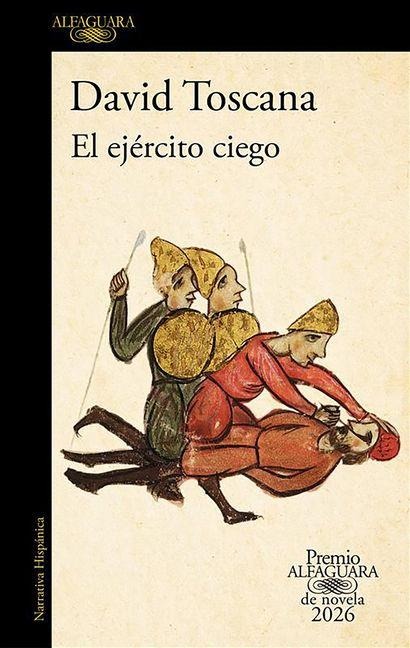
LA NOVELA GANADORA DEL PREMIO ALFAGUARA 2026 «Ofrece una lectura simbólica, casi mítica, sobre la guerra, el poder y la resistencia. Una gran épica de los vencidos'. -Del acta del Jurado >Murallas afuera, los enemigos acechan, mientras en las calles de la ciudad los soldados intentan retomar sus vidas. Hay quien se esconde y guarda silencio, está el que descubre que sus manos pueden sustituir a la vista, algunos temen parecer monstruos y no falta aquel que hace un buen negocio vendiendo preciosas cuentas de cerámica que simulan ser ojos. Y entre todos ellos hay un escriba invidente que, incapacitado para copiar lo que ya fue escrito, vuelca en el pergamino una historia que crece en él: la de los quince mil ciegos y su inesperada revancha.
Historia, inventiva y poesía confluyen en este magnífico retablo inspirado en las crónicas medievales y en uno de los episodios más crueles de las guerras bizantinas. El ejército ciego nos habla, con deliciosa ironía e ingenio, sobre las narrativas del pasado y sobre cómo el testimonio de los vencidos desaparece fácilmente en el olvido.
ENGLISH DESCRIPTION
THE WINNING NOVEL OF THE 2026 ALFAGUARA PRIZE >Year 1014. After defeating the Bulgarians at the Battle of Klyuch, the Byzantine emperor Basil II orders the eyes of fifteen thousand enemy soldiers to be put out, leaving one man in every hundred with a single eye so that he may lead the blind back home. For weeks, a ragged column gropes its way along the long road to the Bulgarian capital, where they are received by Tsar Samuel, who, confronted with the terrible sight of his humiliated men, is struck dead by grief. He is succeeded on the throne by his son Gavril, heir to a threatened empire who must rely on cunning to raise the people's morale after the latest defeat.
Beyond the city walls, enemies lie in wait, while in the streets soldiers attempt to resume their lives. Some hide and keep silent; others discover that their hands can replace sight; some fear appearing monstrous, and there is no shortage of those who make a good business selling precious ceramic beads that imitate eyes. And among them all there is a blind scribe who, unable to copy what has already been written, pours onto parchment a story that grows within him: that of the fifteen thousand blind men and their unexpected revenge.
History, invention, and poetry converge in this magnificent tableau inspired by medieval chronicles and by one of the cruelest episodes of the Byzantine wars. The Blind Army speaks to us, with delightful irony and ingenuity, about the narratives of the past and about how the testimony of the defeated so easily vanishes into oblivion.
David Toscana (Monterrey, México, 1961) ha publicado los libros de cuentos Lontananza (1997) y Brindis por un fracaso (2006), y las novelas Las bicicletas (1992), Estación Tula (1995), Santa María del Circo (1998), Duelo por Miguel Pruneda (2002), El último lector (2005), El ejército iluminado (2006), Los puentes de Königsberg (2009), La ciudad que el diablo se llevó (2012), Evangelia (2016), Olegaroy (2017) y El peso de vivir en la tierra (2022). Formó parte del International Writing Program de la Universidad de Iowa y del Berliner Künstlerprogramm. Ha sido galardonado con los premios José María Arguedas, Antonin Artaud, Colima, José Fuentes Mares, Xavier Villaurrutia, Elena Poniatowska, Mazatlán y Bienal de Novela Mario Vargas Llosa. Su obra ha sido traducida a diecisiete lenguas.