Und dann auf "Zum Home-Bildschirm [+]".

Stöbern
genialokal zum Startbildschirm hinzufügen
Installieren Sie die genialokal App auf Ihrem Startbildschirm für einen schnellen Zugriff und eine komfortable Nutzung.
Installieren Sie die genialokal App auf Ihrem Startbildschirm für einen schnellen Zugriff und eine komfortable Nutzung.
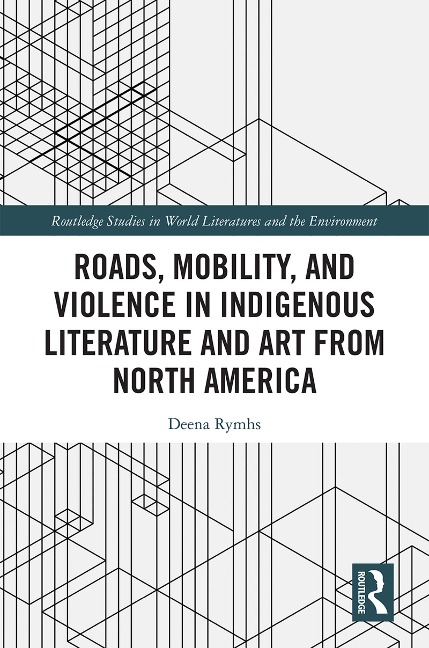
Roads, Mobility, and Violence in Indigenous Literature and Art from North America explores mobility, spatialized violence, and geographies of activism in a diverse archive of literary and visual art by Indigenous authors and artists. Building on Raymond Williams's observation that "traffic is not only a technique; it is a form of consciousness and a form of social relations," this book pulls into focus racial, sexual, and environmental violence localized around roads. Reading this archive of texts next to lived struggles over spatial justice, Rymhs argues that roads are spaces of complex signification. For many Indigenous communities, the road has not often been so open. Recent Indigenous writing and visual art explores this tension between mobility and confinement. Drawing primarily on the work of Marie Clements, Tomson Highway, Marilyn Dumont, Leanne Simpson, Richard Van Camp, Kent Monkman, and Louise Erdrich, this volume examines histories of uprooting and violence associated with roads. Along with exploring these fraught histories of mobility, this book emphasizes various ways in which Indigenous communities have transformed roads into sites of political resistance and social memory.
Deena Rymhs (Ph.D. Queen's University, 2004) is an associate professor of English at the University of British Columbia. She is author of From the Iron House: Imprisonment in First Nations Writing (2008) along with numerous published essays on Indigenous literature, Indigenous visual art, and ecocriticism. Her research has been funded by two national SSHRC grants, and she was awarded a Sproul Fellowship at University of California, Berkeley in 2016-17.
Introduction 1. Mobility and its Disenchantments in Marie Clements' The Unnatural and Accidental Women and Burning Vision 2. Idling No More: The Road in Tomson Highway's The Rez Sisters 3. Gridlock: Mobility and Subjection in Marilyn Dumont's Vancouver Poems 4. "the road is its own humiliation": Leanne Simpson's "Road Salt," "Leaks," "ishpadinaa," and "How to Steal a Canoe" 5. "I wanted the highway": Richard Van Camp's "Dogrib Midnight Runners" 6. Kent Monkman's The Big Four as Automobiography 7. Across Borders: Louise Erdrich's Books and Islands in Ojibwe Country Conclusion Notes Bibliography
Dieses eBook wird im PDF-Format geliefert und ist mit einem Adobe Kopierschutz (DRM) versehen. Sie können dieses eBook mit allen Geräten lesen, die das PDF-Format und den Adobe Kopierschutz (DRM) unterstützen.
Zum Beispiel mit den folgenden Geräten:
• tolino Reader
Laden Sie das eBook direkt über den Reader-Shop auf dem tolino herunter oder übertragen Sie das eBook auf Ihren tolino mit einer kostenlosen Software wie beispielsweise Adobe Digital Editions.
• Sony Reader & andere eBook Reader
Laden Sie das eBook direkt über den Reader-Shop herunter oder übertragen Sie das eBook mit der kostenlosen Software Sony READER FOR PC/Mac oder Adobe Digital Editions auf ein Standard-Lesegeräte mit epub- und Adobe DRM-Unterstützung.
• Tablets & Smartphones
Möchten Sie dieses eBook auf Ihrem Smartphone oder Tablet lesen, finden Sie hier unsere kostenlose Lese-App für iPhone/iPad und Android Smartphone/Tablets.
• PC & Mac
Lesen Sie das eBook direkt nach dem Herunterladen mit einer kostenlosen Lesesoftware, beispielsweise Adobe Digital Editions, Sony READER FOR PC/Mac oder direkt über Ihre eBook-Bibliothek in Ihrem Konto unter „Meine eBooks“ - „online lesen“.
Schalten Sie das eBook mit Ihrer persönlichen Adobe ID auf bis zu sechs Geräten gleichzeitig frei.
Bitte beachten Sie, dass die Kindle-Geräte das Format nicht unterstützen und dieses eBook somit nicht auf Kindle-Geräten lesbar ist.