Und dann auf "Zum Home-Bildschirm [+]".

Stöbern
genialokal zum Startbildschirm hinzufügen
Installieren Sie die genialokal App auf Ihrem Startbildschirm für einen schnellen Zugriff und eine komfortable Nutzung.
Installieren Sie die genialokal App auf Ihrem Startbildschirm für einen schnellen Zugriff und eine komfortable Nutzung.


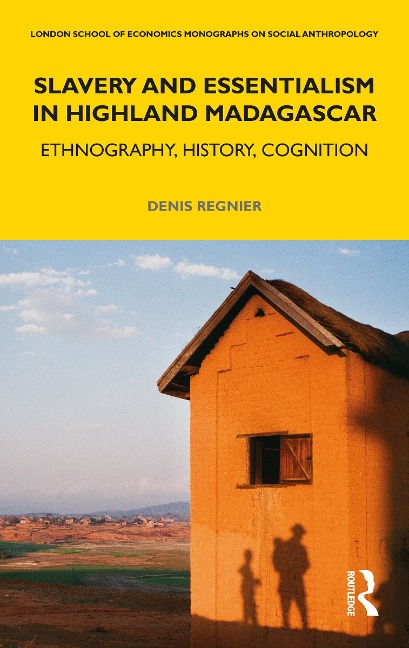
This book explores the prejudice against slave descendants in highland Madagascar and its persistence more than a century after the official abolition of slavery. 'Unclean people' is a widespread expression in the southern highlands of Madagascar, and refers to people of alleged slave descent who are discriminated against on a daily basis and in a variety of ways. Denis Regnier shows that prejudice is rooted in a strong case of psychological essentialism: free descendants think that 'slaves' have a 'dirty' essence that is impossible to cleanse. Regnier's field experiments question the widely accepted idea that the social stigma against slavery is a legacy of pre-colonial society. He argues, to the contrary, that the essentialist construal of 'slaves' is the outcome of the historical process triggered by the colonial abolition of slavery: whereas in pre-abolition times slaves could be cleansed through ritual means, the abolition of slavery meant that slaves were transformed only superficially into free persons, while their inner essence remained unchanged and became progressively constructed as 'forever unchangeable'. Based on detailed fieldwork, this volume will be of interest to scholars of anthropology, African studies, development studies, cultural psychology, and those looking at the legacy of slavery.
Denis Regnier is Assistant Professor and Head of Humanities and Social Sciences at the University of Global Health Equity in Rwanda. He gained his PhD in anthropology from the London School of Economics, UK.
1. An encounter with southern Betsileo 'slaves' 2. Three lenses: ethnography, history and cognition 3. The Berosaiña 4. Contested histories 5. Marriage in Beparasy 6. Unilateral unions and their consequences 7. Mixing ancestries and keeping a memory of origins 8. Essentialism: evidence, development and transmission Conclusion
Dieses eBook wird im PDF-Format geliefert und ist mit einem Adobe Kopierschutz (DRM) versehen. Sie können dieses eBook mit allen Geräten lesen, die das PDF-Format und den Adobe Kopierschutz (DRM) unterstützen.
Zum Beispiel mit den folgenden Geräten:
• tolino Reader
Laden Sie das eBook direkt über den Reader-Shop auf dem tolino herunter oder übertragen Sie das eBook auf Ihren tolino mit einer kostenlosen Software wie beispielsweise Adobe Digital Editions.
• Sony Reader & andere eBook Reader
Laden Sie das eBook direkt über den Reader-Shop herunter oder übertragen Sie das eBook mit der kostenlosen Software Sony READER FOR PC/Mac oder Adobe Digital Editions auf ein Standard-Lesegeräte mit epub- und Adobe DRM-Unterstützung.
• Tablets & Smartphones
Möchten Sie dieses eBook auf Ihrem Smartphone oder Tablet lesen, finden Sie hier unsere kostenlose Lese-App für iPhone/iPad und Android Smartphone/Tablets.
• PC & Mac
Lesen Sie das eBook direkt nach dem Herunterladen mit einer kostenlosen Lesesoftware, beispielsweise Adobe Digital Editions, Sony READER FOR PC/Mac oder direkt über Ihre eBook-Bibliothek in Ihrem Konto unter „Meine eBooks“ - „online lesen“.
Schalten Sie das eBook mit Ihrer persönlichen Adobe ID auf bis zu sechs Geräten gleichzeitig frei.
Bitte beachten Sie, dass die Kindle-Geräte das Format nicht unterstützen und dieses eBook somit nicht auf Kindle-Geräten lesbar ist.