Und dann auf "Zum Home-Bildschirm [+]".

Stöbern
genialokal zum Startbildschirm hinzufügen
Installieren Sie die genialokal App auf Ihrem Startbildschirm für einen schnellen Zugriff und eine komfortable Nutzung.
Installieren Sie die genialokal App auf Ihrem Startbildschirm für einen schnellen Zugriff und eine komfortable Nutzung.
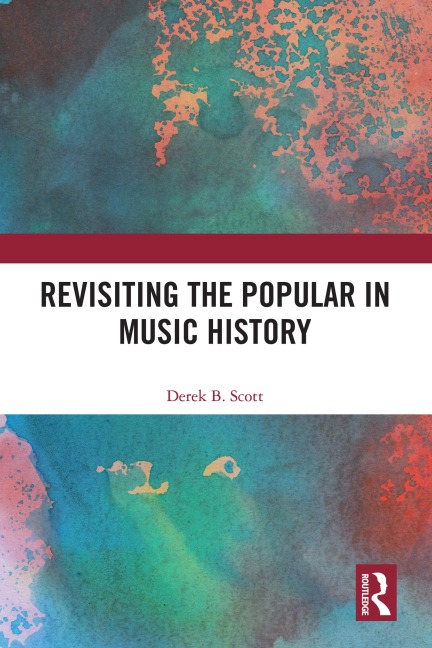
This book brings together a significant part of Derek B. Scott's diverse academic work, showing that the cultural history of music matters not only for the understanding it can bring to the meaning and purpose of music-making, but also because it can play a role in the development of social justice and a democratic culture. Where music history is concerned, Scott argues that we should offer interpretations that question the extent to which critics and historians have prized ethnicity and nationality in artistic works. No branch of the arts furnishes more examples of borrowing, re-using, and appropriating across cultures than music, and this is especially evident today in forms of popular music on all continents around the world. The global and the local are not the oppositional entities they once were. A history that focuses on cosmopolitanism resonates with the world in which we now live: a world of migration and tourism, involving the constant transfer, exchange, translation, and adaptation of different cultural practices and artifacts. Most of the articles in the collection have previously been published in hard-to-find conference proceedings and edited volumes or have not been published at all. The book will be important for those studying musicology, music history (especially of popular music styles), and cosmopolitanism.
Derek B. Scott is Professor of Critical Musicology (Emeritus) at the University of Leeds. His research field is music, cultural history, and ideology, and his books include Sounds of the Metropolis: The 19th-Century Popular Music Revolution in London, New York, Paris, and Vienna (2008), and Musical Style and Social Meaning (2010). He was General Editor of Ashgate's Popular and Folk Music Series for fifteen years, overseeing the publication of more than 140 books between 2000 and 2015.
Introduction PART 1: POPULAR MUSIC AND CULTURAL HISTORY 1. Why the Cultural History of Music Matters 2. Occidentalism, Auto-Orientalism, and Global Fusion in Music 3. Imagining the Balkans, Imagining Europe: The Eurovision Song Contest 4. Irish Nationalism, British Imperialism, and Popular Song PART 2: THE CONTESTED POPULAR 5. Invention and Interpretation in Popular Music Historiography 6. Policing the Boundaries of Art and Entertainment 7. John Clare and Folksong PART 3: POPULAR MUSIC AND MORAL PROPRIETY 8. Bawdy Songbooks of the 1830s 9. Music, Morality, and Rational Amusement in the Victorian Soirée 10. Dance Bands and Moral Propriety in 1920s Britain PART 4: POPULAR MUSIC AND THE STAGE 11. Johann Strauss Jr and Nineteenth-Century Operetta as Intermedial Art World 12. Comic Style and Character Psychology in the Music of Arthur Sullivan 13. Gilbert and Sullivan and Delicate Sexual Matters 14. Music Hall: Regulations and Behaviour in a British Cultural Institution 15. British Musical Comedy in the 1890s: Modernity Without Modernism Bibliography
Dieses eBook wird im PDF-Format geliefert und ist mit einem Adobe Kopierschutz (DRM) versehen. Sie können dieses eBook mit allen Geräten lesen, die das PDF-Format und den Adobe Kopierschutz (DRM) unterstützen.
Zum Beispiel mit den folgenden Geräten:
• tolino Reader
Laden Sie das eBook direkt über den Reader-Shop auf dem tolino herunter oder übertragen Sie das eBook auf Ihren tolino mit einer kostenlosen Software wie beispielsweise Adobe Digital Editions.
• Sony Reader & andere eBook Reader
Laden Sie das eBook direkt über den Reader-Shop herunter oder übertragen Sie das eBook mit der kostenlosen Software Sony READER FOR PC/Mac oder Adobe Digital Editions auf ein Standard-Lesegeräte mit epub- und Adobe DRM-Unterstützung.
• Tablets & Smartphones
Möchten Sie dieses eBook auf Ihrem Smartphone oder Tablet lesen, finden Sie hier unsere kostenlose Lese-App für iPhone/iPad und Android Smartphone/Tablets.
• PC & Mac
Lesen Sie das eBook direkt nach dem Herunterladen mit einer kostenlosen Lesesoftware, beispielsweise Adobe Digital Editions, Sony READER FOR PC/Mac oder direkt über Ihre eBook-Bibliothek in Ihrem Konto unter „Meine eBooks“ - „online lesen“.
Schalten Sie das eBook mit Ihrer persönlichen Adobe ID auf bis zu sechs Geräten gleichzeitig frei.
Bitte beachten Sie, dass die Kindle-Geräte das Format nicht unterstützen und dieses eBook somit nicht auf Kindle-Geräten lesbar ist.