Und dann auf "Zum Home-Bildschirm [+]".

Stöbern
genialokal zum Startbildschirm hinzufügen
Installieren Sie die genialokal App auf Ihrem Startbildschirm für einen schnellen Zugriff und eine komfortable Nutzung.
Installieren Sie die genialokal App auf Ihrem Startbildschirm für einen schnellen Zugriff und eine komfortable Nutzung.
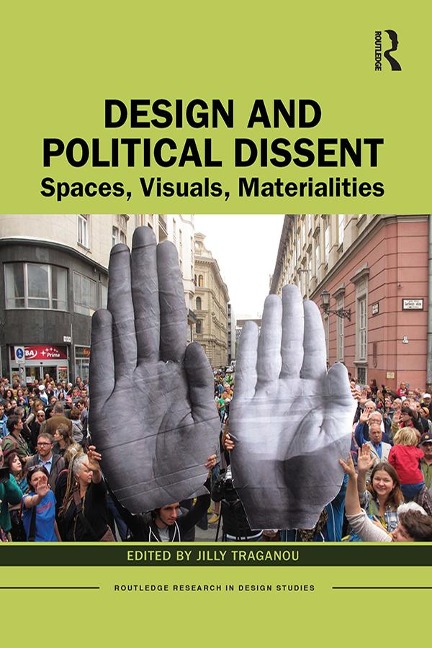
This book examines, through an interdisciplinary lens, the relationship between political dissent and processes of designing. In the past twenty years, theorists of social movements have noted a diversity of visual and performative manifestations taking place in protest, while the fields of design, broadly defined, have been characterized by a growing interest in activism. The book's premise stems from the recognition that material engagement and artifacts have the capacity to articulate political arguments or establish positions of disagreement. Its contributors look at a wide array of material practices generated by both professional and nonprofessional design actors around the globe, exploring case studies that vary from street protests and encampments to design pedagogy and community-empowerment projects. For students and scholars of design studies, urbanism, visual culture, politics, and social movements, this book opens up new perspectives on design and its place in contemporary politics.
Jilly Traganou is an architect, and Professor of Architecture and Urbanism at Parsons School of Design, The New School. She is co-editor-in chief of Design and Culture, and author of Designing the Olympics: Representation, Participation, Contestation (Routledge, 2016).
1. Introduction Jilly Traganou SECTION 1: SOCIAL MOVEMENTS AS DESIGN AGENTS Part 1: Visuals and Objects of Protest 2. The Green Stripe: The Color of Identification Victoria Hattam 3. Strategies of Creative Dissent under the People's Republic of China's 'One China Policy' Wendy Wong 4. The Slovene Zombie Uprising Ksenija Berk 5. The Distribution of Abilities: Disability, Dissent, and Design Activism by the Gothenburg Cooperative for Independent Living Otto Von Busch and Hanna af Ekström Part 2: Artifacts in the Afterlife of Protest 6. Art of the March: Archiving Aesthetics of the Women's March-Interviews with Alessandra Renzi, Dietmar Offenhuber, Siqi Zhu, Christopher Pietsch, and Navarjun Singh Grace Van Ness and Prakash Krishnan 7. Dissent, Design of Territory, and Design of Memory: The Museum of Slavery and Freedom at the Valongo Wharf, Rio de Janeiro Barbara Szaniecki and Ana Helena da Fonseca 8. Beautiful Trouble: A Pattern Language of Creative Resistance-An Interview with Nadine Bloch Evren Uzer Response to Section 1 9. Response to Section 1. The Objects of Political Creativity James Jasper SECTION 2: DISSENTING THROUGH MATERIAL ENGAGEMENT Part 1: Political Contention by Design 10. Vulnerable Critical Makings: Migrant Smuggling by Boats and Border Transgression Mahmoud -eshavarz 11. The Madrid Hologram Protest and the Democratic Potential of Visuality Ksenija Berk 12. Data Acquisition, Data Analytics, and Data Articulations: DIY Accountability Tools and Resistance in Indonesia-An Interview with Irendira Radjawali of Drone Academy, Indonesia Alessandra Renzi 13. Politics of Design Activism-From Impure Politics to Parapolitics Thomas Markussen Part 2: Spaces of Contestation and Prefiguration 14. The Agonistic Design of Conflict Kitchen Veronica Uribe 15. Events and Ecologies of Design and Urban Activism: From Downtown São Paulo to the Peripheries Kristine Samson 16. Temporarily Open: A Brazilian Design School's Experimental Approaches against the Dismantling of Public Education: A Conversation on Design Pedagogy as Dissent. Zoy Anastassakis, Marcos Martins, Lucas Nonno, Juliana Paolucci, and Jilly Traganou 17. Designing Post-carbon Futures: The Prefigurative Politics of the Transition Movement Emily Hardt 18. Occupied Theater Embros: Designing and Maintaining the Commons in Athens under Crisis-An Interview with Eleni Tzirtzilaki Orsalia Dimitriou Response to Section 2 19. Response to Section 2. Designing while Dissenting while Dissenting while Designing: A Response in Counterpoint Zoy Anastassakis
Dieses eBook wird im PDF-Format geliefert und ist mit einem Adobe Kopierschutz (DRM) versehen. Sie können dieses eBook mit allen Geräten lesen, die das PDF-Format und den Adobe Kopierschutz (DRM) unterstützen.
Zum Beispiel mit den folgenden Geräten:
• tolino Reader
Laden Sie das eBook direkt über den Reader-Shop auf dem tolino herunter oder übertragen Sie das eBook auf Ihren tolino mit einer kostenlosen Software wie beispielsweise Adobe Digital Editions.
• Sony Reader & andere eBook Reader
Laden Sie das eBook direkt über den Reader-Shop herunter oder übertragen Sie das eBook mit der kostenlosen Software Sony READER FOR PC/Mac oder Adobe Digital Editions auf ein Standard-Lesegeräte mit epub- und Adobe DRM-Unterstützung.
• Tablets & Smartphones
Möchten Sie dieses eBook auf Ihrem Smartphone oder Tablet lesen, finden Sie hier unsere kostenlose Lese-App für iPhone/iPad und Android Smartphone/Tablets.
• PC & Mac
Lesen Sie das eBook direkt nach dem Herunterladen mit einer kostenlosen Lesesoftware, beispielsweise Adobe Digital Editions, Sony READER FOR PC/Mac oder direkt über Ihre eBook-Bibliothek in Ihrem Konto unter „Meine eBooks“ - „online lesen“.
Schalten Sie das eBook mit Ihrer persönlichen Adobe ID auf bis zu sechs Geräten gleichzeitig frei.
Bitte beachten Sie, dass die Kindle-Geräte das Format nicht unterstützen und dieses eBook somit nicht auf Kindle-Geräten lesbar ist.