Und dann auf "Zum Home-Bildschirm [+]".

Stöbern
genialokal zum Startbildschirm hinzufügen
Installieren Sie die genialokal App auf Ihrem Startbildschirm für einen schnellen Zugriff und eine komfortable Nutzung.
Installieren Sie die genialokal App auf Ihrem Startbildschirm für einen schnellen Zugriff und eine komfortable Nutzung.
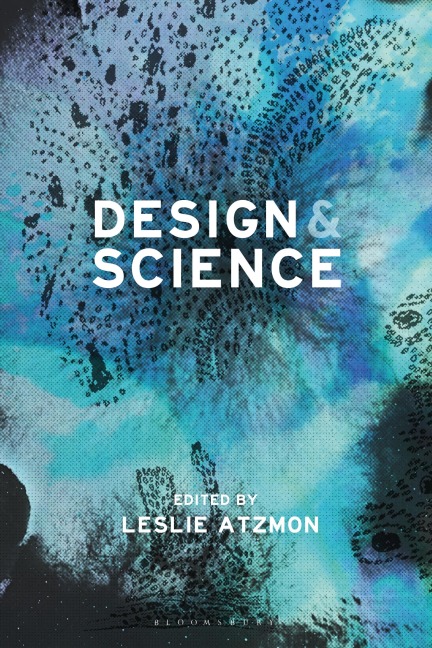
Design and Science addresses the inter-relationship, in both historical and contemporary contexts, between design thinking and design processes and scientific and medical research methods.
Contributors address the parallels between research methodologies in design and the sciences, both of which involve the recognition of an issue, conceptualisation of ways to resolve it, and then the modelling and implementation of a viable solution. Much research across various scientific disciplines follows a similar pattern. Thematic sections explore visualisation, visual narrative and visual metaphor; biodesign and biomimicry; makers and users in design and science, and data visualisation, discussing the role of data from nature as an ultimate source of design.
Leslie Atzmon is Professor of Graphic Design at Eastern Michigan University, USA. She has authored and edited several books, including Encountering Things (Bloomsbury, 2017) with Prasad Boradkar, and Visual Rhetoric and the Eloquence of Design (2011). She is the editor, with Teal Triggs, of The Graphic Design Reader (Bloomsbury, 2018).
Introduction, Leslie Atzmon (Eastern Michigan University, USA)
Part One: Visual Metaphor, Conceptualization, and Modeling Ideas in Design and Science
1. Matters of Mathematics: Designerly Practices in Geometry, K Lee Chichester (Ruhr-Universität Bochum, Germany)
2. Agile Artifacts-Designing the Incomplete, Jan Eckert (Swiss Center for Design and Health, Switzerland) and Daniel Eckert (BioNTech, Germany)
3. Diagramming ArtScience: Designing at Knowledge Intersections, Clarissa Ai Ling Lee (University of Malaya) and Matt Cornell (Independent Choreographer and Artist)
4. Phenomenal Machines: An Interview with Nicole Koltick, Leslie Atzmon (Eastern Michigan University, USA)
Part Two: Biomimicry and Biodesign
5. Design Inspired by Nature: The Bat Brolly, Clint Penick (Kennesaw State University, USA) and Prasad Boradkar (Google and Arizona State University, USA)
6. Purifungi, A Natural Aid Kit for the Earth, Audrey Speyer (PuriFungi, Belgium)
7. Vital Matters: Growing Living Materials, Victoria Geaney (University of the Arts London, UK)
8. Follow Your Nose, Miriam Simun (Independent Artist) and Sharon Lin (Massachusetts Institute of Technology, USA)
Part Three: Makers and Users in Design and Science
9. URBN STEAMlab and Biophilic Environments: Science, Art, and Design, Diana Nicholas and Shivanthi Anandan (Drexel University, USA)
10. Designing a Scientific Instrument: Lessons from the Crookes Radiometer, Lina Hakim (Kingston University, UK)
11. From the Laboratory to the Studio: Microorganisms in Art and Design, Nurit Bar-Shai (Independent Artist and Designer, Israel) and Christine Marizzi (BioBus, USA)
12. Making Justice with Biodesign: A Pedagogical Approach, Deepa Butoliya (University of Michigan, USA)
Part 4: Data Manifestation in Design and Science
13. Data Manifestation: Climate Change Data in the Home and on the Body, Karin von Ompteda (Ontario College of Art and Design University, Canada)
14. Visual Thinking and the Art of Medical Diagnosis, Michael Chandler (MD, New York, USA)
15. The Scientist's Social Network: Reimagining Crystallographic Diagrams Ahead of the 1951 Festival Pattern Group Collaboration, Emily Candela (Royal College of Art, UK)
16. Cinematic Data Visualization, Catherine Griffiths (University of Michigan, USA)
Dieses eBook wird im PDF-Format geliefert und ist mit einem Adobe Kopierschutz (DRM) versehen. Sie können dieses eBook mit allen Geräten lesen, die das PDF-Format und den Adobe Kopierschutz (DRM) unterstützen.
Zum Beispiel mit den folgenden Geräten:
• tolino Reader
Laden Sie das eBook direkt über den Reader-Shop auf dem tolino herunter oder übertragen Sie das eBook auf Ihren tolino mit einer kostenlosen Software wie beispielsweise Adobe Digital Editions.
• Sony Reader & andere eBook Reader
Laden Sie das eBook direkt über den Reader-Shop herunter oder übertragen Sie das eBook mit der kostenlosen Software Sony READER FOR PC/Mac oder Adobe Digital Editions auf ein Standard-Lesegeräte mit epub- und Adobe DRM-Unterstützung.
• Tablets & Smartphones
Möchten Sie dieses eBook auf Ihrem Smartphone oder Tablet lesen, finden Sie hier unsere kostenlose Lese-App für iPhone/iPad und Android Smartphone/Tablets.
• PC & Mac
Lesen Sie das eBook direkt nach dem Herunterladen mit einer kostenlosen Lesesoftware, beispielsweise Adobe Digital Editions, Sony READER FOR PC/Mac oder direkt über Ihre eBook-Bibliothek in Ihrem Konto unter „Meine eBooks“ - „online lesen“.
Schalten Sie das eBook mit Ihrer persönlichen Adobe ID auf bis zu sechs Geräten gleichzeitig frei.
Bitte beachten Sie, dass die Kindle-Geräte das Format nicht unterstützen und dieses eBook somit nicht auf Kindle-Geräten lesbar ist.