Und dann auf "Zum Home-Bildschirm [+]".

Stöbern
genialokal zum Startbildschirm hinzufügen
Installieren Sie die genialokal App auf Ihrem Startbildschirm für einen schnellen Zugriff und eine komfortable Nutzung.
Installieren Sie die genialokal App auf Ihrem Startbildschirm für einen schnellen Zugriff und eine komfortable Nutzung.
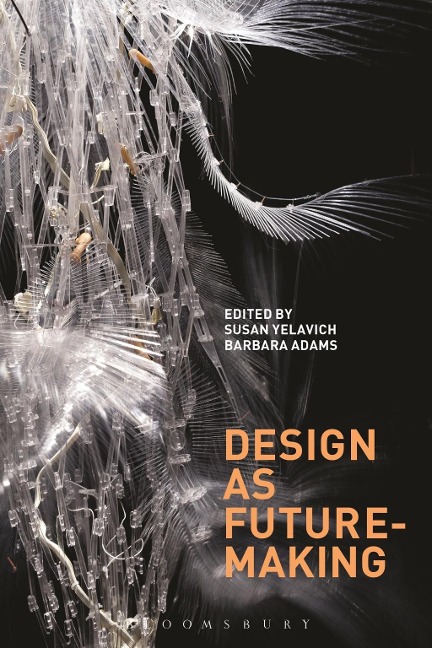
Design as Future-Making brings together leading international designers, scholars, and critics to address ways in which design is shaping the future. The contributors share an understanding of design as a practice that, with its focus on innovation and newness, is a natural ally of futurity. Ultimately, the choices made by designers are understood here as choices about the kind of world we want to live in. Design as Future-Making locates design in a space of creative and critical reflection, examining the expanding nature of practice in fields such as biomedicine, sustainability, digital crafting, fashion, architecture, urbanism, and design activism.
The authors contextualize design and its affects within issues of social justice, environmental health, political agency, education, and the right to pleasure and play. Collectively, they make the case that, as an integrated mode of thought and action, design is intrinsically social and deeply political.
Susan Yelavich is an associate professor and director of the MA Design Studies program in the School of Art and Design History and Theory at Parsons The New School for Design, USA.
Barbara Adams is a PhD candidate in sociology at the New School for Social Research and teaches in several other divisions of the New School in New York City, including Parsons The New School for Design and Eugene Lang College The New School for Liberal Arts.
Acknowledgements
Foreword, Arjun Appadurai, New York University, USA
Introduction: Design as Future-Making, Susan Yelavich, Parsons The New School for Design, USA
Section I. Crafting Capacities
Introduction, Barbara Adams, The New School for Social Research, USA
Thinking Differently about Life: Design, Biomedicine and "Negative Capability", Elio Caccavale, Glasgow School of Art, UK and Tom Shakespeare, University of East Anglia Medical School, UK
Unmapping, Sean Donahue, Research-Centered Design, USA
Fashion Hacking, Otto von Busch, Parsons The New School for Design, USA
Digital Crafting and the Challenge to Material Practices, Mette Ramsgard Thomsen, Royal Academy of Fine Arts, School of Architecture, Design and Conservation, Denmark
Petrified Curtains, Animate Architextiles, Susan Yelavich, Parsons The New School for Design, USA
Section II. Shifting Geographies
Introduction, Susan Yelavich, Parsons The New School for Design, USA
Urban Ecologies: Quatre systèmes de conception pour la fabrication de "la Cité", William Morrish, Parsons The New School of Design, USA
Architecture of Informality, Ivan Kucina, University of Belgrade, Serbia
The Trans/Local Geography of Olympic Dissent: Activism, Design, Affect, Jilly Traganou, Parsons The New School for Design, USA and Grace Vetrocq Tuttle, communication design specialist, USA
Garments as Agents of Change: Lucia Cuba, Hazel Clark, Parsons The New School for Design, USA
Returning Duchamp's Urinal to the Bathroom? On the Reconnection of Artistic Experimentation, Social Responsibility and Institutional Transformation, Teddy Cruz, University of California, San Diego, USA
Sze Tsung Leong and Susan Yelavich Interview, Sze Tsung Leong, artist, USA
Section III. Up-ending Systems
Introduction, Barbara Adams, The New School for Social Research, USA
Designing Time, Anna Barbara, Polytechnic University of Milan, Italy
Reasons to Be Cheerful, 1, 2, 3 ... (Or Why the Artificial May Yet Save Us), Clive Dilnot, Parsons The New School for Design, USA
Design Away, Cameron Tonkinwise, Carnegie Mellon University, USA
Pace Layers, Bruce Sterling, author, journalist, editor and critic, USA
Forms of Space and Time, Anna Barbara, Polytechnic University of Milan, Italy
"When we understand that slide, we'll have won the war": Systemic Complexity and the Irregularities of Scale, Jamer Hunt, Parsons The New School, USA
Afterword: Tim Marshall, The New School, USA
Endnotes
Bibliography
Contributor Biographies
Dieses eBook wird im PDF-Format geliefert und ist mit einem Adobe Kopierschutz (DRM) versehen. Sie können dieses eBook mit allen Geräten lesen, die das PDF-Format und den Adobe Kopierschutz (DRM) unterstützen.
Zum Beispiel mit den folgenden Geräten:
• tolino Reader
Laden Sie das eBook direkt über den Reader-Shop auf dem tolino herunter oder übertragen Sie das eBook auf Ihren tolino mit einer kostenlosen Software wie beispielsweise Adobe Digital Editions.
• Sony Reader & andere eBook Reader
Laden Sie das eBook direkt über den Reader-Shop herunter oder übertragen Sie das eBook mit der kostenlosen Software Sony READER FOR PC/Mac oder Adobe Digital Editions auf ein Standard-Lesegeräte mit epub- und Adobe DRM-Unterstützung.
• Tablets & Smartphones
Möchten Sie dieses eBook auf Ihrem Smartphone oder Tablet lesen, finden Sie hier unsere kostenlose Lese-App für iPhone/iPad und Android Smartphone/Tablets.
• PC & Mac
Lesen Sie das eBook direkt nach dem Herunterladen mit einer kostenlosen Lesesoftware, beispielsweise Adobe Digital Editions, Sony READER FOR PC/Mac oder direkt über Ihre eBook-Bibliothek in Ihrem Konto unter „Meine eBooks“ - „online lesen“.
Schalten Sie das eBook mit Ihrer persönlichen Adobe ID auf bis zu sechs Geräten gleichzeitig frei.
Bitte beachten Sie, dass die Kindle-Geräte das Format nicht unterstützen und dieses eBook somit nicht auf Kindle-Geräten lesbar ist.