Und dann auf "Zum Home-Bildschirm [+]".

Stöbern
genialokal zum Startbildschirm hinzufügen
Installieren Sie die genialokal App auf Ihrem Startbildschirm für einen schnellen Zugriff und eine komfortable Nutzung.
Installieren Sie die genialokal App auf Ihrem Startbildschirm für einen schnellen Zugriff und eine komfortable Nutzung.
Ihr gewünschter Artikel ist in 0 Buchhandlungen vorrätig - wählen Sie hier eine Buchhandlung in Ihrer Nähe aus:

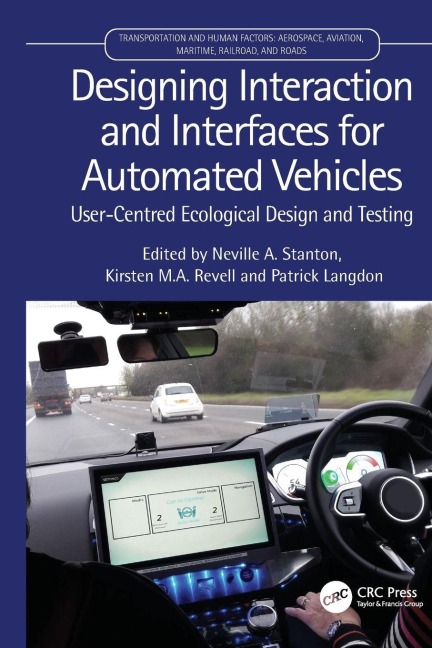
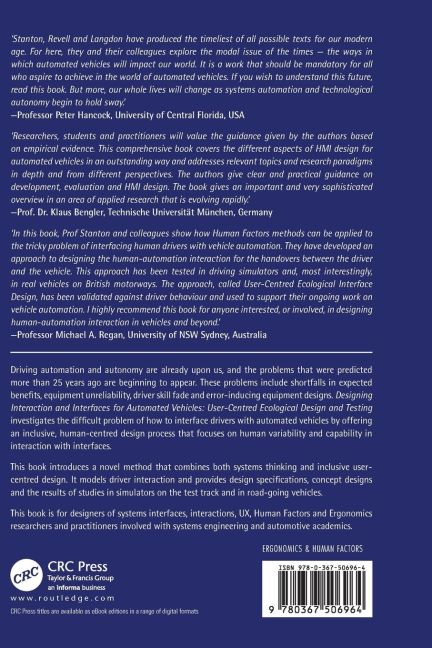
Driving Automation and Autonomy is upon us and the problems that were predicted twenty years ago are appearing. This book investigates the difficult problem of how to interface drivers with automated vehicles by offering an inclusive, human-centered design process that focuses on human variability and capability.
Neville A. Stanton PhD, DSc, is a Chartered Psychologist, Chartered Ergonomist and Chartered Engineer. He holds the Chair in Human Factors Engineering in the Faculty of Engineering and the Environment at the University of Southampton in the UK. He has degrees in Occupational Psychology, Applied Psychology and Human Factors Engineering and has worked at the Universities of Aston, Brunel, Cornell and MIT. His research interests include modelling, predicting, analysing and evaluating human performance in systems as well as designing the interfaces and interaction between humans and technology. Kirsten Revell PhD, is a Human Factors Engineering Research Fellow at the Faculty of Engineering and the Environment at the University of Southampton in the UK. She has degrees in Psychology, Industrial Design and Human Factors Engineering and has worked in Industry at Microsoft Ltd. as well as within academia at Brunel University London and the University of Southampton. Kirsten's research interests is understanding how the design of tools and interfaces within their broader systems of use impact user capability and behavior. Pat Langdon is a Reader (PRA) Computer Engineering (EECE) at the University Cambridge Engineering Department and Principal Research Associate in the Engineering Design Centre; Lead researcher in Inclusive Design. His past research has examined the psychological reality of certain Artificial Intelligence-based theories of Computer Vision and Neural-Network algorithms for robot control as well as Computational support for Engineering Design. He is currently working in the areas of modelling inclusive interaction, particularly vision, learning, movement and cognition for inclusive design and computer assistance for motion impaired interface use. Pat is author and lead researcher responsible for a number of projects including Human Machine Interfaces as applied to Automotive displays and controls using signal processing for gestural and pointing intent and Inclusive Human Machine Interfaces for the future car.
Chapter 1. UCEID - The Best of Both Worlds: Combining Ecological Interface Design with User Centred Design in a Novel Human Factors Method Applied to Automated Driving Chapter 2. Using UCEID to Include the Excluded: An Autonomous Vehicle HMI Inclusive Design Case Study Chapter 3. Designing Autonomy in Cars: A Survey and Two Focus Groups on Driving Habits of an Inclusive User Group, and Group Attitudes Towards Autonomous Cars Chapter 4.An Evaluation of Inclusive Dialogue-Based Interfaces for the Takeover of Control in Autonomous Cars Chapter 5.The Design of Takeover Requests in Autonomous Vehicles: Low-fidelity Studies Chapter 6. How Was It for You? Comparing How Different Levels of Multimodal Situation Awareness Feedback Are Experienced by Human Agents During Transfer of Control of the Driving Task in a Semi-Autonomous Vehicle Chapter 7. Human Driver Post-Takeover Driving Performance in Highly Automated Vehicles Chapter 8.Validating Operator Event Sequence Diagrams: The Case of Automated Vehicle to Human Driver Takeovers Chapter 9. Breaking the Cycle of Frustration: Applying Neisser's Perceptual Cycle Model to Drivers of Semi-Autonomous Vehicles. Chapter 10. Semi-Automated Driving Has Higher Workload and Is Less Acceptable to Drivers Than Manual Vehicles: An On-Road Comparison of Three Contemporary SAE Level 2 Vehicles Chapter 11. The Iconography of Vehicle Automation - A Focus Group Study Chapter 12. Customisation of Takeover Guidance in Semi-Autonomous Vehicles Chapter 13.The Effects of Interface Customisation on Drivers' Takeover Experience in Highly Automated Driving Chapter 14.Accommodating Drivers' Preferences Using a Customised Takeover Interface Chapter 15.Modelling Automation-Human Driver Interactions in Vehicle Takeovers Using OESDs Chapter 16.Feedback in Highly Automated Vehicles: What Do Drivers Rely on in Simulated and Real-World Environments? Chapter 17. Can Allowing Interface Customisation Increase Driver Confidence and Safety Levels in Automated Vehicle TORs? Chapter 18. The Effects of Customisable HMI on Subjective Evaluation of Takeover Experience on the Road Chapter 19.Accommodating Drivers' Preferences Using a Customised Takeover Interface on UK Motorways Chapter 20.Validating OESDs in an On-Road Study of Semi-Automated Vehicle to Human Driver Takeovers Chapter 21.Design Constraints and Guidelines for the automation-human interface