Und dann auf "Zum Home-Bildschirm [+]".

Stöbern
genialokal zum Startbildschirm hinzufügen
Installieren Sie die genialokal App auf Ihrem Startbildschirm für einen schnellen Zugriff und eine komfortable Nutzung.
Installieren Sie die genialokal App auf Ihrem Startbildschirm für einen schnellen Zugriff und eine komfortable Nutzung.

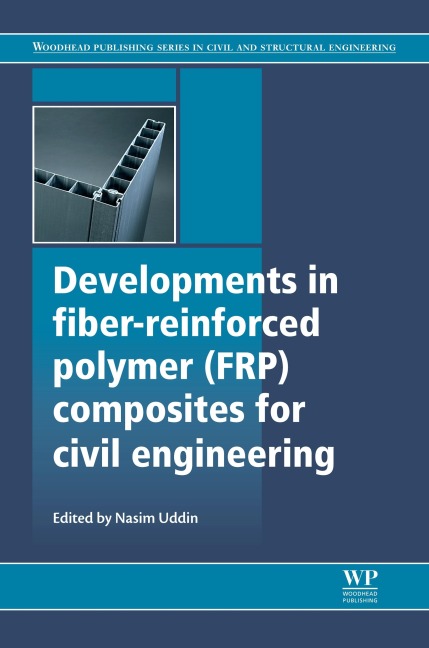
The use of fiber-reinforced polymer (FRP) composite materials has had a dramatic impact on civil engineering techniques over the past three decades. FRPs are an ideal material for structural applications where high strength-to-weight and stiffness-to-weight ratios are required. Developments in fiber-reinforced polymer (FRP) composites for civil engineering outlines the latest developments in fiber-reinforced polymer (FRP) composites and their applications in civil engineering.Part one outlines the general developments of fiber-reinforced polymer (FRP) use, reviewing recent advancements in the design and processing techniques of composite materials. Part two outlines particular types of fiber-reinforced polymers and covers their use in a wide range of civil engineering and structural applications, including their use in disaster-resistant buildings, strengthening steel structures and bridge superstructures.With its distinguished editor and international team of contributors, Developments in fiber-reinforced polymer (FRP) composites for civil engineering is an essential text for researchers and engineers in the field of civil engineering and industries such as bridge and building construction. - Outlines the latest developments in fiber-reinforced polymer composites and their applications in civil engineering - Reviews recent advancements in the design and processing techniques of composite materials - Covers the use of particular types of fiber-reinforced polymers in a wide range of civil engineering and structural applications
Contributor contact details Woodhead Publishing Series in Civil and Structural Engineering Introduction Part I: General developments Chapter 1: Types of fiber and fiber arrangement in fiber-reinforced polymer (FRP) composites Abstract: 1.1 Introduction 1.2 Fibers 1.3 Fabrics 1.4 Composites 1.5 Future trends 1.6 Sources of further information and advice Chapter 2: Biofiber reinforced polymer composites for structural applications Abstract: 2.1 Introduction 2.2 Reinforcing fibers 2.3 Drawbacks of biofibers 2.4 Modification of natural fibers 2.5 Matrices for biocomposites 2.6 Processing of biofiber-reinforced plastic composites 2.7 Performance of biocomposites 2.8 Future trends 2.9 Conclusion Chapter 3: Advanced processing techniques for composite materials for structural applications Abstract: 3.1 Introduction 3.2 Manual layup 3.3 Plate bonding 3.4 Preforming 3.5 Vacuum assisted resin transfer molding (VARTM) 3.6 Pultruded composites 3.7 Automated fiber placement 3.8 Future trends 3.9 Sources of further information Chapter 4: Vacuum assisted resin transfer molding (VARTM) for external strengthening of structures Abstract: 4.1 Introduction 4.2 The limitations of hand layup techniques 4.3 Comparing hand layup and vacuum assisted resin transfer molding (VARTM) 4.4 Analyzing load, strain, deflections, and failure modes 4.5 Flexural fiber-reinforced polymer (FRP) wrapped beams 4.6 Shear and flexural fiber-reinforced polymer (FRP) wrapped beams 4.7 Comparing hand layup and vacuum assisted resin transfer molding (VARTM): results and discussion 4.8 Case study: I-565 Highway bridge girder 4.9 Conclusion and future trends 4.10 Acknowledgment Chapter 5: Failure modes in structural applications of fiber-reinforced polymer (FRP) composites and their prevention Abstract: 5.1 Introduction 5.2 Failures in structural engineering applications of fiber-reinforced polymer (FRP) composites 5.3 Strategies for failure prevention 5.4 Non-destructive testing (NDT) and structural health monitoring (SHM) for inspection and monitoring 5.5 Future trends 5.6 Conclusion 5.7 Acknowledgment 5.8 Sources of further information Chapter 6: Assessing the durability of the interface between fiber-reinforced polymer (FRP) composites and concrete in the rehabilitation of reinforced concrete structures Abstract: 6.1 Introduction 6.2 Interface stress analysis of the fiber-reinforced polymer (FRP)-to-concrete interface 6 12 Young's modulus and shear modulus of beam i, respectively; bi is the width of beam i. 6.3 Fracture analysis of the fiber-reinforced polymer (FRP)-to-concrete interface 6.4 Durability of the fiber-reinforced polymer (FRP)-concrete interface Part II: Particular types and applications Chapter 7: Advanced fiber-reinforced polymer (FRP) composites for civil engineering applications Abstract: 7.1 Introduction 7.2 The use of fiber-reinforced polymer (FRP) materials in construction 7.3 Practical applications in buildings 7.4 Future trends 7.5 Sources of further information Chapter 8: Hybrid fiber-reinforced polymer (FRP) composites for structural applications Abstract: 8.1 Introduction 8.2 Hybrid fiber-reinforced polymer (FRP) reinforced concrete beams: internal reinforcement 8.3 Hybrid fiber-reinforced polymer (FRP) composites in bridge construction 8.4 Future trends 8.5 Sources of further information Chapter 9: Design of hybrid fiber-reinforced polymer (FRP)/autoclave aerated concrete (AAC) panels for structural applications Abstract: 9.1 Introduction 9.2 Performance issues with fiber-reinforced polymer (FRP)/autoclave aerated concrete (AAC) panels 9.3 Materials, processing, and methods of investigation 9.4 Comparing different panel designs 9.5 Analytical modeling of fiber-reinforced polymer (FRP)/autoclave aerated concrete (AAC) panels 9.6 Design graphs for fiber-reinforced polymer (FRP)/ autoclave aerated concrete (AAC) panels 9.7 Conclusion 9.8 Acknowledgment 9.