Und dann auf "Zum Home-Bildschirm [+]".

Stöbern
genialokal zum Startbildschirm hinzufügen
Installieren Sie die genialokal App auf Ihrem Startbildschirm für einen schnellen Zugriff und eine komfortable Nutzung.
Installieren Sie die genialokal App auf Ihrem Startbildschirm für einen schnellen Zugriff und eine komfortable Nutzung.
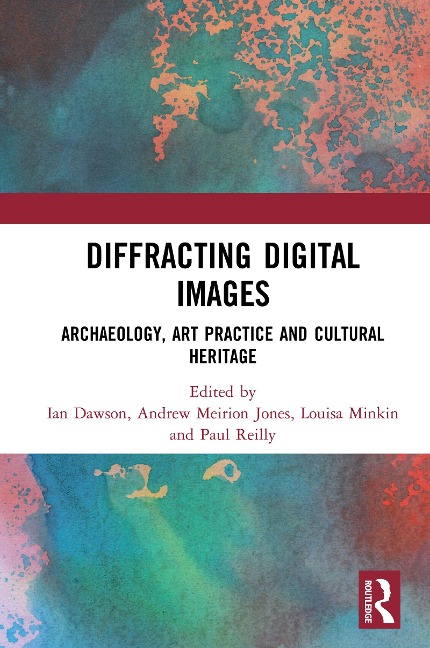
Digital imaging techniques have been rapidly adopted within archaeology and cultural heritage practice for the accurate documentation of cultural artefacts. But what is a digital image, and how does it relate to digital photography? The authors of this book take a critical look at the practice and techniques of digital imaging from the stance of digital archaeologists, cultural heritage practitioners and digital artists. Borrowing from the feminist scholar Karen Barad, the authors ask what happens when we diffract the formal techniques of archaeological digital imaging through a different set of disciplinary concerns and practices. Diffracting exposes the differences between archaeologists, heritage practitioners and artists, and foregrounds how their differing practices and approaches enrich and inform each other. How might the digital imaging techniques used by archaeologists be adopted by digital artists, and what are the potentials associated with this adoption? Under the gaze of fine artists, what happens to the fidelity of the digital images made by archaeologists, and what new questions do we ask of the digital image? How can the critical approaches and practices of fine artists inform the future practice of digital imaging in archaeology and cultural heritage? Diffracting Digital Images will be of interest to students and scholars in archaeology, cultural heritage studies, anthropology, fine art, digital humanities, and media theory.
Ian Dawson has exhibited worldwide and lectures at Winchester School of Art. His background in sculpture (Making Contemporary Sculpture, Crowood Press, 2012) has led to research focusing on the intersection between 3D additive processes and digital imaging technologies. He has recently collaborated with the Compound 13 Lab to explore 3D printing and plastic recycling in Dharavi, Mumbai, India (2020). Andrew Meirion Jones is Professor of Archaeology, Department of Archaeology and Classics, Stockholm University, Sweden. His research interests include the archaeology of Stone Age Europe, art and material culture, and digital imaging. He is currently working on the Concepts Have Teeth project with Ian Dawson and Louisa Minkin. Louisa Minkin is Reader in Visual Art Practices, University of the Arts, London; and Course Leader for MA Fine Art at Central Saint Martins. She is Principal Investigator on the AHRC networking project Concepts Have Teeth and Teeth that Bite through Time: digital imaging and Blackfoot material culture in UK museums. Paul Reilly is Senior Research Fellow of Digital Archaeology, Department of Archaeology, University of Southampton, UK. His research interests include creative digital archaeology and art/archaeology. His most recent research explores the theoretical implications of the growing intersection of physical and digital (or phygital), practices for art, archaeology, and cultural heritage.
List of Figures; List of Contributors; Foreword and Acknowledgements; Chapter 1 What is a diffractive digital image?; Chapter 2 Interstitial Images; Chapter 3 Engaging audiences with digital Blackfoot objects online and in the art gallery; Chapter 4 Structure from motion: the movement and digital modelling of an artefact from the Blackfoot collections, British Museum; Chapter 5 The Paranoiac-Critical Method of Reflectance Transformation Imaging; Chapter 6 The work of the miniature in the age of digital reproduction; Chapter 7 Temporal Ripples in Art/Archaeology Images; Chapter 8 The Inhabited Frame: Examining the Archaeological Image in the Era of Interactive Media; Chapter 9 Digitalising ephemerality: Preserving and utilising the transient trace in Athens urban landscape through digital approaches in the field of fine art; Chapter 10 Four-dimensional and multi-dimensional images: diffracting archaeological images and computational imagings; Chapter 11 Commentary; Chapter 12 Making the Image a Process - On Commitment and Care in Entangled Worlds; Glossary; Index.
Dieses eBook wird im PDF-Format geliefert und ist mit einem Adobe Kopierschutz (DRM) versehen. Sie können dieses eBook mit allen Geräten lesen, die das PDF-Format und den Adobe Kopierschutz (DRM) unterstützen.
Zum Beispiel mit den folgenden Geräten:
• tolino Reader
Laden Sie das eBook direkt über den Reader-Shop auf dem tolino herunter oder übertragen Sie das eBook auf Ihren tolino mit einer kostenlosen Software wie beispielsweise Adobe Digital Editions.
• Sony Reader & andere eBook Reader
Laden Sie das eBook direkt über den Reader-Shop herunter oder übertragen Sie das eBook mit der kostenlosen Software Sony READER FOR PC/Mac oder Adobe Digital Editions auf ein Standard-Lesegeräte mit epub- und Adobe DRM-Unterstützung.
• Tablets & Smartphones
Möchten Sie dieses eBook auf Ihrem Smartphone oder Tablet lesen, finden Sie hier unsere kostenlose Lese-App für iPhone/iPad und Android Smartphone/Tablets.
• PC & Mac
Lesen Sie das eBook direkt nach dem Herunterladen mit einer kostenlosen Lesesoftware, beispielsweise Adobe Digital Editions, Sony READER FOR PC/Mac oder direkt über Ihre eBook-Bibliothek in Ihrem Konto unter „Meine eBooks“ - „online lesen“.
Schalten Sie das eBook mit Ihrer persönlichen Adobe ID auf bis zu sechs Geräten gleichzeitig frei.
Bitte beachten Sie, dass die Kindle-Geräte das Format nicht unterstützen und dieses eBook somit nicht auf Kindle-Geräten lesbar ist.