Und dann auf "Zum Home-Bildschirm [+]".

Stöbern
genialokal zum Startbildschirm hinzufügen
Installieren Sie die genialokal App auf Ihrem Startbildschirm für einen schnellen Zugriff und eine komfortable Nutzung.
Installieren Sie die genialokal App auf Ihrem Startbildschirm für einen schnellen Zugriff und eine komfortable Nutzung.


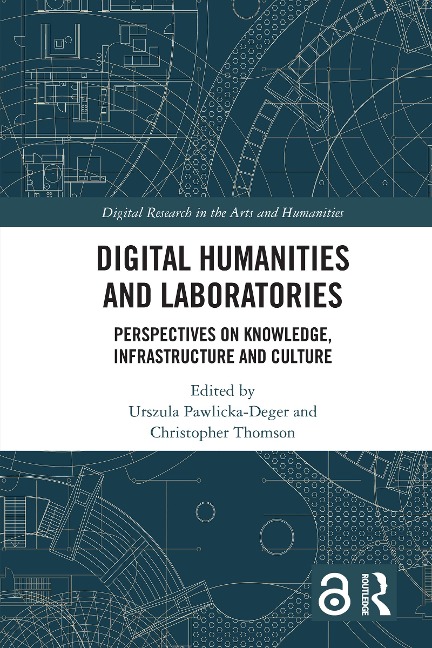
Digital Humanities and Laboratories explores laboratories dedicated to the study of digital humanities (DH) in a global context and contributes to the expanding body of knowledge about situated DH knowledge production. Including a foreword by David Berry and contributions from a diverse, international range of scholars and practitioners, this volume examines the ways laboratories of all kinds contribute to digital research and pedagogy. Acknowledging that they are emerging amid varied cultural and scientific traditions, the volume considers how they lead to the specification of digital humanities and how a locally situated knowledge production is embedded in the global infrastructure system. As a whole, the book consolidates the discussion on the role of the laboratory in DH and brings digital humanists into the interdisciplinary debate concerning the notion of a laboratory as a critical site in the generation of experimental knowledge. Positioning the discussion in relation to ongoing debates in DH, the volume argues that laboratory studies are in an excellent position to capitalize on the theories and knowledge developed in the DH field and open up new research inquiries. Digital Humanities and Laboratories clearly demonstrates that the laboratory is a key site for theoretical and critical analyses of digital humanities and will thus be of interest to scholars, students and practitioners engaged in the study of DH, culture, media, heritage and infrastructure.
Urszula Pawlicka-Deger is a Marie Curie Research Fellow at King's Digital Lab, King's College London. She is conducting an ethnography of digital humanities laboratories combined with a critical analysis of infrastructure. She was a postdoctoral researcher at Aalto University, a Fulbright scholar at Washington State University Vancouver, and a fellow at the University of Birmingham. Christopher Thomson is a Senior Lecturer in Digital Humanities at the University of Canterbury, Aotearoa/New Zealand where he researches and teaches on digital methods in humanities research, and is currently the director of the UC Arts Digital Lab. He is part of the team that produced the CEISMIC Canterbury Earthquakes Digital Archive, and has published on post-disaster archiving. He teaches and supervises students in literary studies, communications and data science.
Foreword; The Promise of Laboratories: An Introduction to Digital Humanities Laboratories in the 21st Century; Part 1: Epistemological and Philosophical Perspectives; 1. A Nurturing Lab Model for Computational Literary Studies: An Inside Perspective from the BGU Literary Lab; 2. Are We There Yet? How a Lab Transformed from Traditional History of Science to a Computational Research Lab; 3. Droit de cité: The Digital Lab as Digital Milieu; 4. How to Avoid Being a DH Lab: The Stories of the Sussex Humanities Lab; Part 2: Socio-Technical and Infrastructural Approaches; 5. More Than a Lab: Infra-structuring the Humanities in the Digital Studio; 6. The Life of a Digital Humanities Lab; 7. Initiating and Sustaining a Digital Humanities Laboratory in Nigeria; 8. Theory by Other Means? Prototypes in Digital Humanities Laboratories; Part 3: Collaborations; 9. Knowledge Transfer in Digital Humanities Labs: Laboratory of Innovation in Digital Humanities (LINHD-UNED);10. Exploring dHeKalos: A Digital Heritage Lab for Building Up New Skills and Sharing Responsibilities with Cultural Institutions; 11. The Minimum Research Outcome: A Mechanism for Generating and Managing Projects in Labs; Part 4: Socio-Cultural Approaches; 12. Interdisciplinary Technology Communities: Using Feminist Epistemologies and Pedagogy in a DH Lab to Promote Social Good through Undergraduate Student Programming; 13. At Home in the Digital Humanities?; 14. Digital Humanities Laboratories and its Discontents: Experiments and Perspectives from India; 15. Digital Humanities Labs: Spaces for Innovation to Reconnect the Humanities with Society
Dieses eBook wird im PDF-Format geliefert und ist mit einem Adobe Kopierschutz (DRM) versehen. Sie können dieses eBook mit allen Geräten lesen, die das PDF-Format und den Adobe Kopierschutz (DRM) unterstützen.
Zum Beispiel mit den folgenden Geräten:
• tolino Reader
Laden Sie das eBook direkt über den Reader-Shop auf dem tolino herunter oder übertragen Sie das eBook auf Ihren tolino mit einer kostenlosen Software wie beispielsweise Adobe Digital Editions.
• Sony Reader & andere eBook Reader
Laden Sie das eBook direkt über den Reader-Shop herunter oder übertragen Sie das eBook mit der kostenlosen Software Sony READER FOR PC/Mac oder Adobe Digital Editions auf ein Standard-Lesegeräte mit epub- und Adobe DRM-Unterstützung.
• Tablets & Smartphones
Möchten Sie dieses eBook auf Ihrem Smartphone oder Tablet lesen, finden Sie hier unsere kostenlose Lese-App für iPhone/iPad und Android Smartphone/Tablets.
• PC & Mac
Lesen Sie das eBook direkt nach dem Herunterladen mit einer kostenlosen Lesesoftware, beispielsweise Adobe Digital Editions, Sony READER FOR PC/Mac oder direkt über Ihre eBook-Bibliothek in Ihrem Konto unter „Meine eBooks“ - „online lesen“.
Schalten Sie das eBook mit Ihrer persönlichen Adobe ID auf bis zu sechs Geräten gleichzeitig frei.
Bitte beachten Sie, dass die Kindle-Geräte das Format nicht unterstützen und dieses eBook somit nicht auf Kindle-Geräten lesbar ist.