Und dann auf "Zum Home-Bildschirm [+]".

Stöbern
genialokal zum Startbildschirm hinzufügen
Installieren Sie die genialokal App auf Ihrem Startbildschirm für einen schnellen Zugriff und eine komfortable Nutzung.
Installieren Sie die genialokal App auf Ihrem Startbildschirm für einen schnellen Zugriff und eine komfortable Nutzung.
Ihr gewünschter Artikel ist in 0 Buchhandlungen vorrätig - wählen Sie hier eine Buchhandlung in Ihrer Nähe aus:

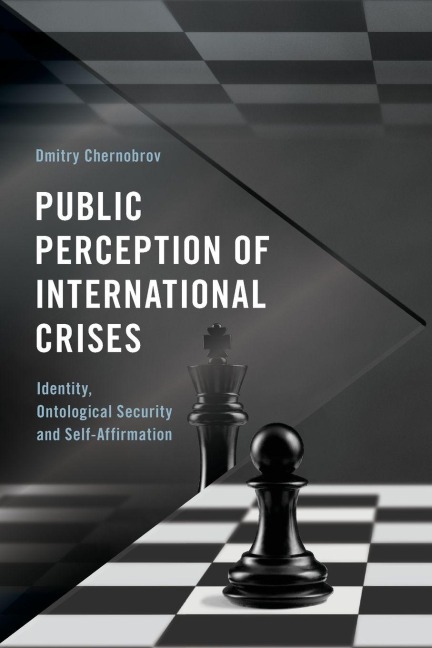
Winner of the 2019 Edgar S. Furniss Book Award from the Mershon Center for International Security How do people make sense of distant but disturbing international events? Why are some representations more appealing than others? What do they mean for the perceiver’s own sense of self? Going beyond conventional analysis of political perception and imagining at the level of accuracy, this book reveals how self-conceptions are unconsciously, but centrally present in our judgments and representations of international crises.Combining international relations and psychosocial studies, Dmitry Chernobrov shows how the imagining of international politics is shaped by the need for positive and continuous societal self-concepts. The book captures evidence of self-affirming political imagining in how the general public in the West and in Russia understood the Arab uprisings (also known as the Arab Spring) and makes an argument both about and beyond this particular case. The book will appeal to those interested in international crises, political psychology, media and audiences, perception and political imagining, ontological security, identity and emotion, and collective memory.
Dmitry Chernobrov is Lecturer in Media and International Politics at the University of Sheffield. Dmitry's research focuses on two main areas: public perception of international politics and crises; and humanitarian communication futures. Dmitry's teaching situates media into the wider political and societal contexts. He encourages students to be critical and reflexive about perception and representation of global issues and teaches using interactive formats such as debates, crisis modelling, film discussions, and student-led research projects.
List of Figures List of Acronyms Preface Introduction PART I: THE DRAWING SELF 1. Perception and Collective Identity 2. Anxiety of the Unknown and (Mis)Recognition 3. A Positive Self PART II: THE PORTRAITS OF OTHERS 4. Imagining Others as Different or Similar 5. Drawing from Memory PART III: ENCOUTERING CRISES 6. Public Perception of the Arab Uprisings 7. Wider Narratives: From the Arab Uprisings to Ukraine Epilogue: Perception as a Relation References Index