Und dann auf "Zum Home-Bildschirm [+]".

Stöbern
genialokal zum Startbildschirm hinzufügen
Installieren Sie die genialokal App auf Ihrem Startbildschirm für einen schnellen Zugriff und eine komfortable Nutzung.
Installieren Sie die genialokal App auf Ihrem Startbildschirm für einen schnellen Zugriff und eine komfortable Nutzung.
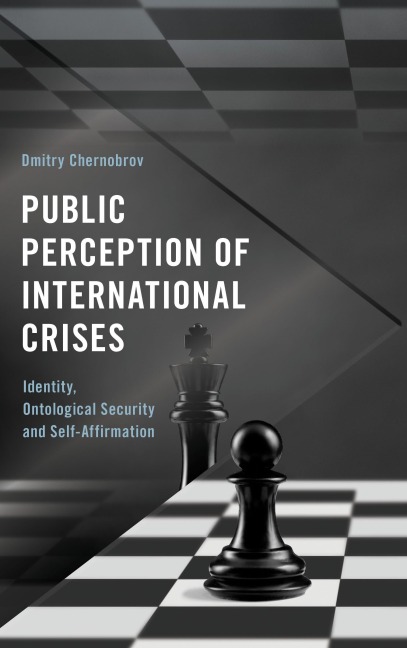
Winner of the 2019 Edgar S. Furniss Book Award from the Mershon Center for International Security
How do people make sense of distant but disturbing international events? Why are some representations more appealing than others? What do they mean for the perceiver's own sense of self? Going beyond conventional analysis of political perception and imagining at the level of accuracy, this book reveals how self-conceptions are unconsciously, but centrally present in our judgments and representations of international crises.Combining international relations and psychosocial studies, Dmitry Chernobrov shows how the imagining of international politics is shaped by the need for positive and continuous societal self-concepts. The book captures evidence of self-affirming political imagining in how the general public in the West and in Russia understood the Arab uprisings (also known as the Arab Spring) and makes an argument both about and beyond this particular case. The book will appeal to those interested in international crises, political psychology, media and audiences, perception and political imagining, ontological security, identity and emotion, and collective memory.
Dmitry Chernobrov is Lecturer in Media and International Politics at the University of Sheffield. He earned his PhD in International Relations from the University of St Andrews and an MPhil from the University of Cambridge. He has published on issues of identity and perception, ontological security, social exclusion, diasporas and traumatic memories, media representation of politics, and humanitarian crisis communication.
List of Figures
List of Acronyms
Preface
Introduction
PART I: THE DRAWING SELF
1. Perception and Collective Identity
2. Anxiety of the Unknown and (Mis)Recognition
3. A Positive Self
PART II: THE PORTRAITS OF OTHERS
4. Imagining Others as Different or Similar
5. Drawing from Memory
PART III: ENCOUTERING CRISES
6. Public Perception of the Arab Uprisings
7. Wider Narratives: From the Arab Uprisings to Ukraine
Epilogue: Perception as a Relation
References
Index
Dieses eBook wird im PDF-Format geliefert und ist mit einem Adobe Kopierschutz (DRM) versehen. Sie können dieses eBook mit allen Geräten lesen, die das PDF-Format und den Adobe Kopierschutz (DRM) unterstützen.
Zum Beispiel mit den folgenden Geräten:
• tolino Reader
Laden Sie das eBook direkt über den Reader-Shop auf dem tolino herunter oder übertragen Sie das eBook auf Ihren tolino mit einer kostenlosen Software wie beispielsweise Adobe Digital Editions.
• Sony Reader & andere eBook Reader
Laden Sie das eBook direkt über den Reader-Shop herunter oder übertragen Sie das eBook mit der kostenlosen Software Sony READER FOR PC/Mac oder Adobe Digital Editions auf ein Standard-Lesegeräte mit epub- und Adobe DRM-Unterstützung.
• Tablets & Smartphones
Möchten Sie dieses eBook auf Ihrem Smartphone oder Tablet lesen, finden Sie hier unsere kostenlose Lese-App für iPhone/iPad und Android Smartphone/Tablets.
• PC & Mac
Lesen Sie das eBook direkt nach dem Herunterladen mit einer kostenlosen Lesesoftware, beispielsweise Adobe Digital Editions, Sony READER FOR PC/Mac oder direkt über Ihre eBook-Bibliothek in Ihrem Konto unter „Meine eBooks“ - „online lesen“.
Schalten Sie das eBook mit Ihrer persönlichen Adobe ID auf bis zu sechs Geräten gleichzeitig frei.
Bitte beachten Sie, dass die Kindle-Geräte das Format nicht unterstützen und dieses eBook somit nicht auf Kindle-Geräten lesbar ist.