Und dann auf "Zum Home-Bildschirm [+]".

Stöbern
genialokal zum Startbildschirm hinzufügen
Installieren Sie die genialokal App auf Ihrem Startbildschirm für einen schnellen Zugriff und eine komfortable Nutzung.
Installieren Sie die genialokal App auf Ihrem Startbildschirm für einen schnellen Zugriff und eine komfortable Nutzung.
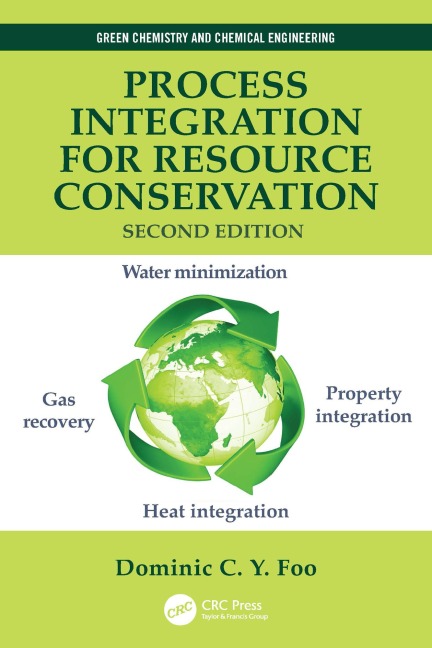
To achieve environmental sustainability in industrial plants, resource conservation activities such as material recovery have begun incorporating process integration techniques for reusing and recycling water, utility gases, solvents, and solid waste. Process Integration for Resource Conservation presents state-of-the-art, cost-effective techniques, including pinch analysis and mathematical optimization, for numerous conservation problems. The second edition of this best-seller adds new chapters on heat integration and retrofitting of resource conservation networks and features multiple optimization examples via downloadable MS Excel spreadsheets. - Emphasizes the goal of setting performance targets ahead of detailed design following the holistic philosophy of process integration - Explains various industrial examples step by step and offers demo software and other materials online - Features a wealth of industrial case studies - Adds chapters on heat integration, combined heat and power, heat-integrated water network, and retrofit of resource conservation network - Adds new optimization examples and downloadable MS Excel files on superstructural approaches and automated targeting models for direct reuse, recycle and regeneration Ideal for students preparing for real-world work as well as industrial practitioners in chemical processing, the text provides a systematic guide to the latest process integration techniques for performing material recovery in process plants. The book features a solutions manual, lecture slides, and figure slides for adopting professors to use in their courses.
Dominic C.Y. Foo, Ph.D., P.E., is a Professor of Process Design and Integration and the founding director of the Centre for Green Technologies at the University of Nottingham Malaysia. He is a Fellow of the Academy of Sciences Malaysia (ASM), Fellow of the Institution of Chemical Engineers (IChemE), Fellow of the Institution of Engineers Malaysia (IEM). Professor Foo is the Editor-in-Chief for Process Integration and Optimization for Sustainability, Subject Editor for Process Safety & Environmental Protection, and editorial board members for several other renowned journals. Professor Foo has authored more than 220 journal papers and made more than 270 conference presentations. He has been a recipient of the 2019 Innovator of the Year Award from the IChemE and the Young Engineer Award from the IEM, Outstanding Asian Researcher and Engineer 2013 from the Society of Chemical Engineers, Japan, 2016 Top Research Scientist Malaysia 2016 from ASM, and World Top 2% Science of the Stanford List since 2021.
1. Introduction. 2. Data Extraction for Resource Conservation. 3. Graphical Targeting Techniques for Direct Reuse/Recycle. 4. Algebraic Targeting Techniques for Direct Reuse/Recycle. 5. Automated Targeting Model for Direct Reuse/Recycle Networks. 6. Automated Targeting Model for Material Regeneration and Pretreatment Networks. 7. Process Changes for Resource Conservation Networks. 8. Network Design and Evolution Techniques. 9. Synthesis of Resource Conservation Networks: A Superstructural Approach. 10. Extended Application: Synthesis of Inter-Plant Resource Conservation Network. 11. Extended Application: Synthesis of Batch Resource Conservation Network. 12. Extended Application: Retrofit of Resource Conservation Network. 13. Synthesis of Heat Exchanger Network. 14. Combined Heat and Power (CHP). 15. Extended Application: Synthesis of Heat-Integrated Water Network.
Dieses eBook wird im PDF-Format geliefert und ist mit einem Adobe Kopierschutz (DRM) versehen. Sie können dieses eBook mit allen Geräten lesen, die das PDF-Format und den Adobe Kopierschutz (DRM) unterstützen.
Zum Beispiel mit den folgenden Geräten:
• tolino Reader
Laden Sie das eBook direkt über den Reader-Shop auf dem tolino herunter oder übertragen Sie das eBook auf Ihren tolino mit einer kostenlosen Software wie beispielsweise Adobe Digital Editions.
• Sony Reader & andere eBook Reader
Laden Sie das eBook direkt über den Reader-Shop herunter oder übertragen Sie das eBook mit der kostenlosen Software Sony READER FOR PC/Mac oder Adobe Digital Editions auf ein Standard-Lesegeräte mit epub- und Adobe DRM-Unterstützung.
• Tablets & Smartphones
Möchten Sie dieses eBook auf Ihrem Smartphone oder Tablet lesen, finden Sie hier unsere kostenlose Lese-App für iPhone/iPad und Android Smartphone/Tablets.
• PC & Mac
Lesen Sie das eBook direkt nach dem Herunterladen mit einer kostenlosen Lesesoftware, beispielsweise Adobe Digital Editions, Sony READER FOR PC/Mac oder direkt über Ihre eBook-Bibliothek in Ihrem Konto unter „Meine eBooks“ - „online lesen“.
Schalten Sie das eBook mit Ihrer persönlichen Adobe ID auf bis zu sechs Geräten gleichzeitig frei.
Bitte beachten Sie, dass die Kindle-Geräte das Format nicht unterstützen und dieses eBook somit nicht auf Kindle-Geräten lesbar ist.