Und dann auf "Zum Home-Bildschirm [+]".

Stöbern
genialokal zum Startbildschirm hinzufügen
Installieren Sie die genialokal App auf Ihrem Startbildschirm für einen schnellen Zugriff und eine komfortable Nutzung.
Installieren Sie die genialokal App auf Ihrem Startbildschirm für einen schnellen Zugriff und eine komfortable Nutzung.



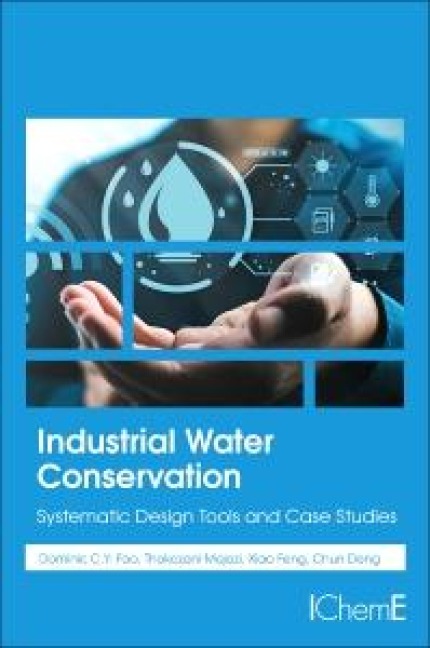
Industrial Water Conservation: Systematic Design Tools and Case Studies offers fundamental knowledge of various established process integration tools for water conservation, including water pinch analysis and mathematical programming techniques. The book provides a demonstration of water conservation tools on various industrial case studies, enabling readers to learn how these methods can be implemented in actual industrial settings. Part A provides various systematic methods on water recovery system design based on process integration techniques, whereas Part B provides various industrial case studies covering the success stories of the implementation of the methods covered in Part A. This is an indispensable resource for practitioners in various industrial sectors - chemicals and petrochemicals, pulp and paper, food and beverage, textile, etc., consultants in water-related industries, as well as (post)-graduate students in chemical engineering.
Dominic Foo is a Professor of Process Design and Integration at the University of Nottingham Malaysia and is the Founding Director for the Centre of Excellence for Green Technologies. He is a Fellow of the Institution of Chemical Engineers (IChemE), Fellow of the Academy of Sciences Malaysia (ASM), Fellow of the Institution of Engineers Malaysia (IEM), Chartered Engineer (CEng) with the Engineering Council UK, Professional Engineer (PEng) with the Board of Engineer Malaysia (BEM), ASEAN Chartered Professional Engineers (ACPE), as well as the President for the Asia Pacific Confederation of Chemical Engineering (APCChE). He is top 1% world-renowned scientist according to Stanford List, working in process integration for resource conservation and CO2 reduction. Professor Foo is an active author, with eight books, more than 190 journal papers and made more than 240 conference presentations, with more than 30 keynote/plenary speeches. Professor Foo is the Editor-in-Chief for Process Integration and Optimization for Sustainability (Springer Nature), Subject Editor for Process Safety & Environmental Protection (Elsevier), and editorial board members for several other renowned journals. He is the winners of the Innovator of the Year Award 2009 of IChemE, Young Engineer Award 2010 of IEM, Outstanding Young Malaysian Award 2012 of Junior Chamber International (JCI), Outstanding Asian Researcher and Engineer 2013 (Society of Chemical Engineers, Japan), and Top Research Scientist Malaysia 2016 (ASM).
Part A - Fundamentals of water recovery system design 1. Water pinch analysis for concentration-base (e.g. COD, suspended solid) and property-base (e.g. pH, acidity) water recovery (Deng) 2. Pinch-based optimisation methods for water recovery (Foo) 3. Mathematical programming for concentration-based (e.g. COD, suspended solid) and property-base (e.g. pH, acidity) water recovery (Feng) 4. Water recovery for batch processes (Majozi) Part B - Industrial case studies 5. Case study 1 - catalyst plant (Feng) 6. Case study 2 - viscose fiber plant (Feng) 7. Case study 3 - printing and dyeing plant (Feng) 8. Case study 4 - synthetic rubber production (Foo) 9. Case study 5 - gas-to-liquid plant (Foo) 10. Case study 6 -wastewater interception and recovery system of a refinery plant (Deng) 11. Case study 7 -large-scale water network of a refinery plant (Deng) 12. Case study 8 - electric power plant (Majozi) 13. Case study 9 - pharmaceutical plant (Majozi) 14. Case study 10 - dairy facility (Majozi)