Und dann auf "Zum Home-Bildschirm [+]".

Stöbern
genialokal zum Startbildschirm hinzufügen
Installieren Sie die genialokal App auf Ihrem Startbildschirm für einen schnellen Zugriff und eine komfortable Nutzung.
Installieren Sie die genialokal App auf Ihrem Startbildschirm für einen schnellen Zugriff und eine komfortable Nutzung.
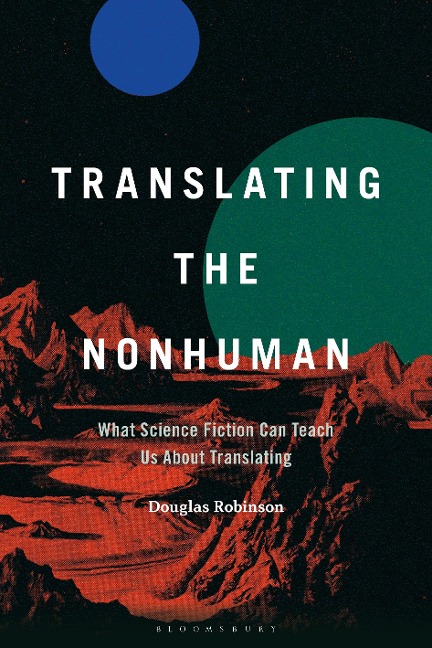
Extends the field of translation studies and theory by examining three radical science-fiction treatments of translation.
The so-called "fictional turn" in translation studies has staked out territory previously unclaimed by translation scholars - territory in which translators are portrayed as full human beings in their social environments - but so far no one has looked to science fiction for truly radical explorations of translation. Translating the Nonhuman fills that gap, exploring speculative attempts to cross the yawning chasm between human and nonhuman languages and cultures.
The book consists of three essays, each bringing a different theoretical orientation to bear on a different science-fiction work. The first studies Samuel R. Delany's 1966 novel, Babel-17, using Peircean semiotics; the second studies Suzette Haden Elgin's 1984 novel, Native Tongue, using Austinian performativity and Eve Sedwick's periperformative corrective; and the third studies Ted Chiang's 1998 novella, "Story of Your Life," and its 2016 screen adaptation, Arrival, using sustainability theory. Themes include the 1950s clash between Whorfian untranslatability and the possibility of unbounded (machine) translatability; the performative ability of a language to change reality and the reliance of that ability on the periperformativity of "witnesses"; and alienation from the familiar in space and time and its transformative effect on the biological and cultural sustainability of human life on earth.
Through these close readings and varied theoretical approaches, Translating the Nonhuman provides a tentative mapping of science fiction's usefulness for the study of human-(non)human translation, with translators and interpreters acting as explorers of new ways to communicate.
Douglas Robinson is Professor of Translation Studies at the Chinese University of Hong Kong-Shenzhen, China, and is one of the world's leading translation scholars, and author or editor of 30 monographs, including The Strange Loops of Translation (Bloomsbury, 2022), Transgender, Translation, Translingual Address (Bloomsbury, 2019), and Critical Translation Studies (2017).
Introduction
1. Scarlet Threads
2. Translator Studies
3. The Structure of the Book
4. Acknowledgments
5. Permissions
First Essay. Psychosemiosis: Samuel R. Delany's Babel-17
1. Joseph Fitzpatrick's Reading
2. Peirce on the "Logic of Vagueness"
3. Mead on Mind as Social Intensity
4. The Semiotics of Silence
Second Essay. (Peri)performativity: Suzette Haden Elgin's Native Tongue
1. The Performative
2. Eve Sedgwick's Periperformativity
3. Translating the Nonhumanoid
4. By Way of Conclusion
Third Essay. Sustainability: Ted Chiang's "Story of Your Life" and Arrival
1. "Story of Your Life"
2. Alienation
3. Time-Travel
4. Sustaining Translation
5. Translating Sustainability
References
Index
Dieses eBook wird im PDF-Format geliefert und ist mit einem Adobe Kopierschutz (DRM) versehen. Sie können dieses eBook mit allen Geräten lesen, die das PDF-Format und den Adobe Kopierschutz (DRM) unterstützen.
Zum Beispiel mit den folgenden Geräten:
• tolino Reader
Laden Sie das eBook direkt über den Reader-Shop auf dem tolino herunter oder übertragen Sie das eBook auf Ihren tolino mit einer kostenlosen Software wie beispielsweise Adobe Digital Editions.
• Sony Reader & andere eBook Reader
Laden Sie das eBook direkt über den Reader-Shop herunter oder übertragen Sie das eBook mit der kostenlosen Software Sony READER FOR PC/Mac oder Adobe Digital Editions auf ein Standard-Lesegeräte mit epub- und Adobe DRM-Unterstützung.
• Tablets & Smartphones
Möchten Sie dieses eBook auf Ihrem Smartphone oder Tablet lesen, finden Sie hier unsere kostenlose Lese-App für iPhone/iPad und Android Smartphone/Tablets.
• PC & Mac
Lesen Sie das eBook direkt nach dem Herunterladen mit einer kostenlosen Lesesoftware, beispielsweise Adobe Digital Editions, Sony READER FOR PC/Mac oder direkt über Ihre eBook-Bibliothek in Ihrem Konto unter „Meine eBooks“ - „online lesen“.
Schalten Sie das eBook mit Ihrer persönlichen Adobe ID auf bis zu sechs Geräten gleichzeitig frei.
Bitte beachten Sie, dass die Kindle-Geräte das Format nicht unterstützen und dieses eBook somit nicht auf Kindle-Geräten lesbar ist.