Und dann auf "Zum Home-Bildschirm [+]".

Stöbern
genialokal zum Startbildschirm hinzufügen
Installieren Sie die genialokal App auf Ihrem Startbildschirm für einen schnellen Zugriff und eine komfortable Nutzung.
Installieren Sie die genialokal App auf Ihrem Startbildschirm für einen schnellen Zugriff und eine komfortable Nutzung.
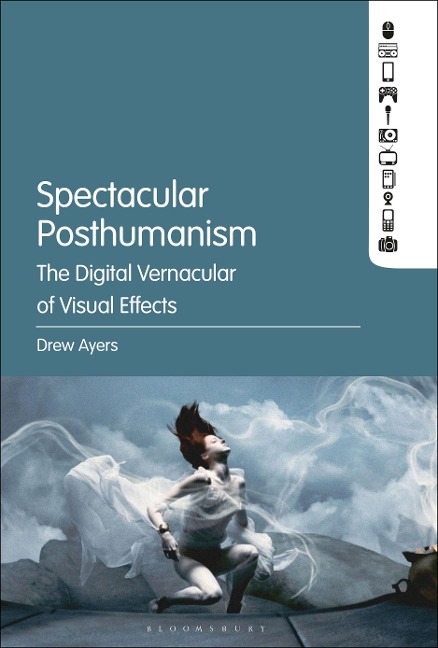
Spectacular Posthumanism examines the ways in which VFX imagery fantasizes about digital disembodiment while simultaneously reasserting the importance of the lived body. Analyzing a wide range of case studies-including the films of David Cronenberg and Stanley Kubrick, image technologies such as performance capture and crowd simulation, Game of Thrones, Terminator: Genisys, Planet Earth, and 300-Ayers builds on Miriam Hansen's concept of "vernacular modernism" to argue that the "vernacular posthumanism" of these media objects has a phenomenological impact on viewers. As classical Hollywood cinema initiated viewers into the experience of modernism, so too does the VFX image initiate viewers into digital, posthuman modes of thinking and being. Ayers's innovative close-reading of popular, mass-market media objects reveals the complex ways that these popular media struggle to make sense of humanity's place within the contemporary world.
Spectacular Posthumanism argues that special and visual effects images produce a digital, posthuman vernacular, one which generates competing fantasies about the utopian and dystopian potential of a nonhuman future. As humanity grapples with such heady issues as catastrophic climate change, threats of anonymous cyber warfare, an increasing reliance on autonomous computing systems, genetic manipulation of both humans and nonhumans, and the promise of technologically enhanced bodies, the anxieties related to these issues register in popular culture. Through the process of compositing humans and nonhumans into a seemingly seamless whole, digital images visualize a utopian fantasy in which flesh and information might easily coexist and cohabitate with each other. These images, however, also exhibit the dystopic anxieties that develop around this fantasy. Relevant to our contemporary moment, Spectacular Posthumanism both diagnoses and offers a critique of this fantasy, arguing that this posthuman imagination overlooks the importance of embodiment and lived experience.
Drew Ayers is Assistant Professor of Theatre and Film at Eastern Washington University, USA. His research focuses on visual culture, digital technology, visual effects, cinema, and nonhuman theory, and he has previously been published in animation, Configurations, Film Criticism, and several edited anthologies. Ayers also serves as a board member and programmer for the Spokane International Film Festival.
Introduction: Vernacular Posthumanism and VFX
Part I: Hybrid Bodies
1. David Cronenberg's New Flesh
2. Performance Capture's Spectacle of Self
Part II: Digital Bodies and Authenticity
3. Digital Nudity, Reanimation and De-Aging
4. Digital Space, Digital Agents and Digital Swarms
Part III: Machinic and Digital Spectacle
5. Kubrick's Machine Vision
6. Planet Earth's Spectacular HDTV
Bibliography
Index
Dieses eBook wird im PDF-Format geliefert und ist mit einem Adobe Kopierschutz (DRM) versehen. Sie können dieses eBook mit allen Geräten lesen, die das PDF-Format und den Adobe Kopierschutz (DRM) unterstützen.
Zum Beispiel mit den folgenden Geräten:
• tolino Reader
Laden Sie das eBook direkt über den Reader-Shop auf dem tolino herunter oder übertragen Sie das eBook auf Ihren tolino mit einer kostenlosen Software wie beispielsweise Adobe Digital Editions.
• Sony Reader & andere eBook Reader
Laden Sie das eBook direkt über den Reader-Shop herunter oder übertragen Sie das eBook mit der kostenlosen Software Sony READER FOR PC/Mac oder Adobe Digital Editions auf ein Standard-Lesegeräte mit epub- und Adobe DRM-Unterstützung.
• Tablets & Smartphones
Möchten Sie dieses eBook auf Ihrem Smartphone oder Tablet lesen, finden Sie hier unsere kostenlose Lese-App für iPhone/iPad und Android Smartphone/Tablets.
• PC & Mac
Lesen Sie das eBook direkt nach dem Herunterladen mit einer kostenlosen Lesesoftware, beispielsweise Adobe Digital Editions, Sony READER FOR PC/Mac oder direkt über Ihre eBook-Bibliothek in Ihrem Konto unter „Meine eBooks“ - „online lesen“.
Schalten Sie das eBook mit Ihrer persönlichen Adobe ID auf bis zu sechs Geräten gleichzeitig frei.
Bitte beachten Sie, dass die Kindle-Geräte das Format nicht unterstützen und dieses eBook somit nicht auf Kindle-Geräten lesbar ist.