Und dann auf "Zum Home-Bildschirm [+]".

Stöbern
genialokal zum Startbildschirm hinzufügen
Installieren Sie die genialokal App auf Ihrem Startbildschirm für einen schnellen Zugriff und eine komfortable Nutzung.
Installieren Sie die genialokal App auf Ihrem Startbildschirm für einen schnellen Zugriff und eine komfortable Nutzung.
Ihr gewünschter Artikel ist in 0 Buchhandlungen vorrätig - wählen Sie hier eine Buchhandlung in Ihrer Nähe aus:


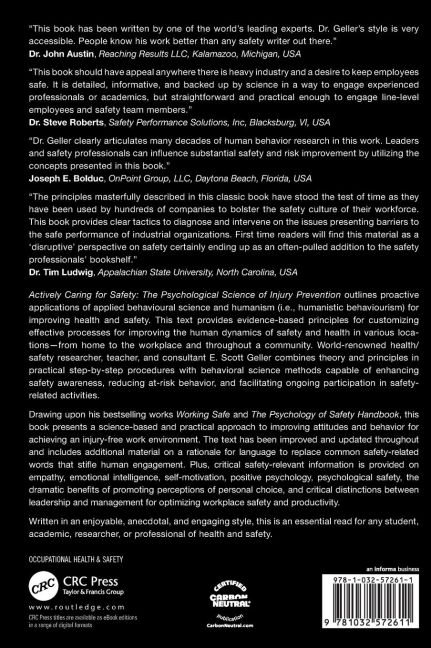
Written in an enjoyable, anecdotal and engaging style, this book provides evidence-based principles for improving the human dynamics of safety and health in various locations-from home to the workplace, and throughout a community.
E. Scott Geller is an Alumni Distinguished Professor and has started his 54th year as a teacher and researcher in the Department of Psychology at Virginia Tech, and Director of the Center for Applied Behavior Systems. Dr. Geller is also a co-founder and Senior Partner of Safety Performance Solutions, Inc. He has authored, coauthored, or edited 52 books, 88 book chapters, 40 training manuals, 275 magazine articles, and over 300 research articles addressing the development and evaluation of behavior-focused interventions to improve human welfare and life satisfaction. Dr. Geller has received lifetime achievement awards from the International Organizational Behavior Management Network and the American Psychological Foundation. The College of Wooster awarded Professor Geller the Honorary Degree: Doctor of Humane Letters.
Part One. Orientation and Alignment. 1. Choosing the Right Approach. 2. Starting with Theory. 3. Paradigm Shifts for a Total Safety Culture. Part Two. Human Barriers to Safety. 4. The Complexity of People. 5. Sensation, Perception, and Perceived Risk. 6. Stress vs. Distress. Part Three. Behavior-Based Psychology. 7. Basic Principles. 8. Identifying Critical Behaviors. 9. Behavioral Safety Analysis. Part Four. Behavior-Based Intervention. 10. Intervening with Activators. 11. Intervening with Consequences. 12. Intervening as an Actively Caring Coach. 13. Intervening with Supportive Conversation. Part Five. Actively Caring for People (AC4P). 14. Understanding Actively Caring. 15. The Person-Based Approach to Actively Caring. 16. Increasing Occurrences of AC4P Behavior. Part Six: Putting it all Together. 17. Promoting High-Performance Teamwork. 18. Evaluating for Continuous Improvement.