Und dann auf "Zum Home-Bildschirm [+]".

Stöbern
genialokal zum Startbildschirm hinzufügen
Installieren Sie die genialokal App auf Ihrem Startbildschirm für einen schnellen Zugriff und eine komfortable Nutzung.
Installieren Sie die genialokal App auf Ihrem Startbildschirm für einen schnellen Zugriff und eine komfortable Nutzung.
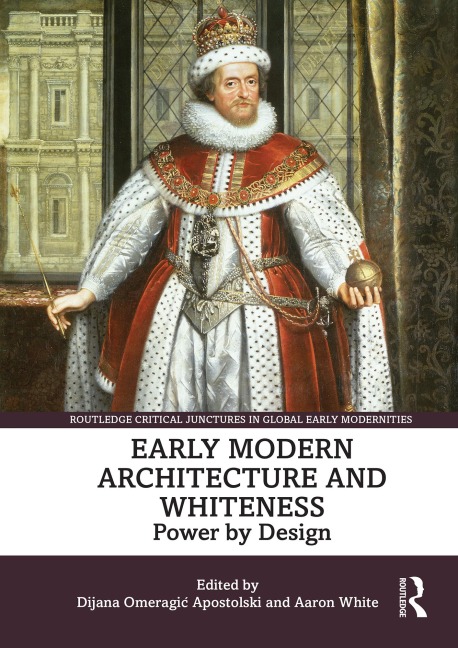
Framing whiteness as a sensorial quality connate with ethical, aesthetic, epistemological, and ontological hierarchies, this edited volume examines how the category of whiteness shaped architectural theories and practices across the early modern period. What was architecture's role in race-making, constructions of whiteness, and processes of othering more generally? How was whiteness architecturally questioned, reinforced, conceptualized, practiced, and materialized? And how did whiteness intersect with categories such as class, nation, gender, beauty, hygiene, and health? In examining these questions, this volume explores the ways in which premodern critical race studies allow us to reimagine the boundaries and possibilities of architectural research, design, and practice. The book will be of interest to scholars working in architectural history, art history, early modern studies, and the history of race.
Dijana O. Apostolski is an architectural historian studying premodern histories of architectural design in relation to histories of the body, materials, and matter. She is a lecturer at the University of Tennessee, Knoxville. Aaron White is an architectural historian studying premodern architecture in its relation to empire. He is an assistant professor at Mississippi State University.
Part 1 Constructing the Racialized Body 1. St. Francis/San Francesco: White, Incorrupt, Divine 2. The Man of Swarthy Complexion: From Bernini's Biographies to the (De)construction of Color 3. "The Dead Body of a Moor": Michelangelo, Anatomy, and Racecraft in Sixteenth-Century Rome 4. "To Blanch an Aethiop": Inigo Jones, Queen Anna, and the Staging of Whiteness Part 2 Constructing the Racialized Body-Politic 5. Whitewashing Legibility: Property Surveys and the Logic of Colonial Whiteness in Eighteenth-Century Senegal 6. Muiscas and Moriscos from within the Spanish Grid: Privileged Mixed-Blood Settlers in the Foundational Records of Villa de Leyva (Colombia, 1572-1582) and Campillo de Arenas (Spain, 1508-1539) 7. The Appropriation of Mexican Indigenous Material Culture: Architecture, Urban Design, and Antiquarianism in Eighteenth-Century Mexico, Spain, and Italy 8. The Whiteness of Antiquity and Salvation: Tullio Lombardo, Gianmaria Falconetto, and the Saint Anthony Chapel in Padua
Dieses eBook wird im PDF-Format geliefert und ist mit einem Adobe Kopierschutz (DRM) versehen. Sie können dieses eBook mit allen Geräten lesen, die das PDF-Format und den Adobe Kopierschutz (DRM) unterstützen.
Zum Beispiel mit den folgenden Geräten:
• tolino Reader
Laden Sie das eBook direkt über den Reader-Shop auf dem tolino herunter oder übertragen Sie das eBook auf Ihren tolino mit einer kostenlosen Software wie beispielsweise Adobe Digital Editions.
• Sony Reader & andere eBook Reader
Laden Sie das eBook direkt über den Reader-Shop herunter oder übertragen Sie das eBook mit der kostenlosen Software Sony READER FOR PC/Mac oder Adobe Digital Editions auf ein Standard-Lesegeräte mit epub- und Adobe DRM-Unterstützung.
• Tablets & Smartphones
Möchten Sie dieses eBook auf Ihrem Smartphone oder Tablet lesen, finden Sie hier unsere kostenlose Lese-App für iPhone/iPad und Android Smartphone/Tablets.
• PC & Mac
Lesen Sie das eBook direkt nach dem Herunterladen mit einer kostenlosen Lesesoftware, beispielsweise Adobe Digital Editions, Sony READER FOR PC/Mac oder direkt über Ihre eBook-Bibliothek in Ihrem Konto unter „Meine eBooks“ - „online lesen“.
Schalten Sie das eBook mit Ihrer persönlichen Adobe ID auf bis zu sechs Geräten gleichzeitig frei.
Bitte beachten Sie, dass die Kindle-Geräte das Format nicht unterstützen und dieses eBook somit nicht auf Kindle-Geräten lesbar ist.