Und dann auf "Zum Home-Bildschirm [+]".

Stöbern
genialokal zum Startbildschirm hinzufügen
Installieren Sie die genialokal App auf Ihrem Startbildschirm für einen schnellen Zugriff und eine komfortable Nutzung.
Installieren Sie die genialokal App auf Ihrem Startbildschirm für einen schnellen Zugriff und eine komfortable Nutzung.

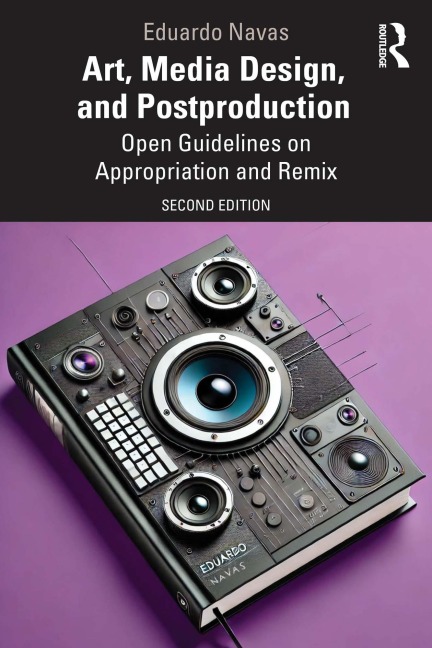
A concise guide to the creative application of appropriation and remix that offers a set of open-ended guidelines for art and design studio-based projects, this book explores creativity with emerging technology, including artificial intelligence. This fully revised and expanded second edition engages with the ongoing recycling and repurposing of content and form, and the new directions the emerging form of metacreativity is taking art and design as artists continue to expand their creative methodologies. Exploration of metacreativity is new to this edition, with a focus on remix principles, the implementation of data analysis, and the delegation of parts of the creative process to automated algorithms and artificial intelligence. Each chapter includes an introduction, goals for guidelines of a studio-based project, with an explanation of relevant history, as well as examples and case studies. Each set of guidelines is open-ended, enabling the reader to repurpose the instructional material according to their own methodologies and choice of medium. Navas also provides historical and theoretical context to encourage critical reflection. The second edition remains the first book of guidelines to take into account the historical, theoretical, and practical context of remix as an interdisciplinary act. This is an essential read for those interested in remix studies and appropriation in art, design, and media.
Eduardo Navas is Associate Research Professor of Art and Digital Arts & Media Design, Associate Director of Access and Equity in the School of Visual Arts, and Research Faculty in the College of Arts and Architecture's Arts & Design Research Incubator (ADRI) at Pennsylvania State University, USA. He researches and teaches principles of cultural analytics, digital humanities, and emerging technologies. Navas is author and co-editor of several titles, including Keywords in Remix Studies (2017), The Routledge Handbook of Remix Studies and Digital Humanities (2021), The Rise of Metacreativity: AI Aesthetics After Remix (2023), and The Routledge Companion to Remix Studies, 2nd edition (2025).
Acknowledgments List of Figures Introduction General Remix Principles and Key Terms Part 1: Media Production Chapter 1: Randomized Signification - Elements for Exchange Chapter 2: Analogized Codification - Mashups of Image and Text Chapter 3: Sampling Creativity - Material Sampling and Cultural Citation Chapter 4: Vectorial Pixels - Visual Aesthetics of Binary Code Chapter 5: Bifurcated Meaning - Infliction of Statements Essay: Modernism and Media Production Part 2: Metaproduction Chapter 6: Domesticated Noise - Manipulation of Sound Chapter 7: Visual Aurality - Image and Sound as Data Chapter 8: Versioning Time-Based Media - Reedits of Video and Sound Chapter 9: Time-Based Media in Physical Space - Loops in Video and Sound Installations Chapter 10: The Assemblage Gaze - Of Media and Humans Essay: Postmodernism and Metaproduction Part 3: Postproduction Chapter 11: Media Mashups - Appropriation and Remix of Image, Sound, and Text Chapter 12: Regenerative Motion - Correlated Time Based Media Chapter 13: Reflexive Mashups - Aesthetics of Data Driven Objects Chapter 14: Distributed Collaboration - Collective Work Across Networks Chapter 15: Aesthetics of Negation - The Negative Selective Process Essay: The Prefix and Post Production Part 4: Metacreativity Chapter 16: Visual Analytics: Image Mining and Artificial Intelligence Chapter 17: Textual Analytics: Text-Mining and Artificial Intelligence Chapter 18: Sound Analytics: Sound-Mining and Automation Chapter 19: Creative Prompts: Artificial Intelligence for Image and Text Production Chapter 20: Automated Bifurcations: Artificial Intelligence and Media Production Essay: Metacreativity and AI Aesthetics Index