Und dann auf "Zum Home-Bildschirm [+]".

Stöbern
genialokal zum Startbildschirm hinzufügen
Installieren Sie die genialokal App auf Ihrem Startbildschirm für einen schnellen Zugriff und eine komfortable Nutzung.
Installieren Sie die genialokal App auf Ihrem Startbildschirm für einen schnellen Zugriff und eine komfortable Nutzung.
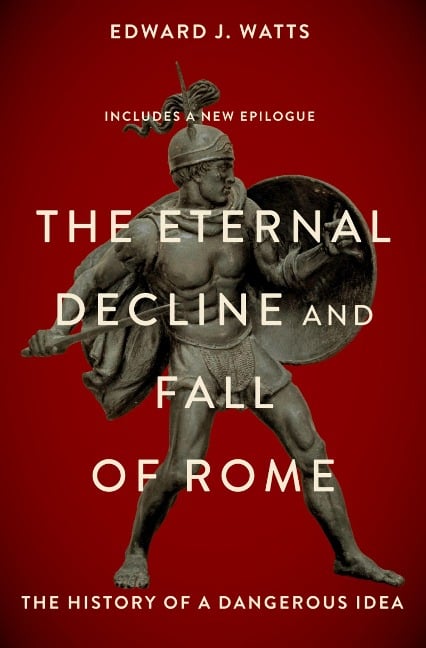
As this book intriguingly explores, for those who would make Rome great again and their victims, ideas of Roman decline and renewal have had a long and violent history. The decline of Rome has been a constant source of discussion for more than 2200 years. Everyone from American journalists in the twenty-first century AD to Roman politicians at the turn of the third century BC have used it as a tool to illustrate the negative consequences of changes in their world. Because Roman history is so long, it provides a buffet of ready-made stories of decline that can help develop the context around any snapshot. And Rome did, in fact, decline and, eventually, fall. An empire that once controlled all or part of more than 40 modern European, Asian, and African countries no longer exists. Roman prophets of decline were, ultimately, proven correct-a fact that makes their modern invocations all the more powerful. If it happened then, it could happen now. The Eternal Decline and Fall of Rome tells the stories of the people who built their political and literary careers around promises of Roman renewal as well as those of the victims they blamed for causing Rome's decline. Each chapter offers the historical context necessary to understand a moment or a series of moments in which Romans, aspiring Romans, and non--Romans used ideas of Roman decline and restoration to seize power and remake the world around them. The story begins during the Roman Republic just after 200 BC. It proceeds through the empire of Augustus and his successors, traces the Roman loss of much of western Europe in the fifth century AD, and then follows Roman history as it runs through the Eastern Roman Empire (Byzantium) until its fall in 1453. The final two chapters look at ideas of Roman decline and renewal from the fifteenth century until today. If Rome illustrates the profound danger of the rhetoric of decline, it also demonstrates the rehabilitative potential of a rhetoric that focuses on collaborative restoration, a lesson of great relevance to our world today.
Edward J. Watts is Alkiviadis Vassiliadis Endowed Chair and Professor of History at the University of California, San Diego. His previous books include Mortal Republic: How Rome Fell into Tyranny, The Final Pagan Generation, and Hypatia: The Life and Legend of an Ancient Philosopher.
Chapter 1 A Snapshot and a Story Chapter 2 The Decline and Fall of the Roman Republic, c. 200 BC-14 AD Chapter 3 Manufacturing the Golden Age of Trajan, 14 -117 AD Chapter 4 Renewal without Decline: The Antonines and Severans, 117-235 AD Chapter 5 Decline and False Renewal: The Third Century Crisis, 235-284 AD Chapter 6 Decline, Renewal, and the Invention of Christian Progress, 284-337 AD Chapter 7 Roman Renewal versus Christian Progress, 337-363 AD Chapter 8 When Renewal Fails to Arrive, 363-384 AD Chapter 9 The Loss of the Roman West and the Christian Future, 384-c. 470 AD Chapter 10 Justinian, Roman Progress, and the Death of the Western Roman Empire, c. 470-565 AD Chapter 11 Rome, the Arabs, and Iconoclasm, 565-c. 750 AD Chapter 12 Old Rome, New Rome, and Future Rome, c. 750-814 AD Chapter 13 The Retrenchment of One Roman Empire, the Resurgence of Another, 814-1085 AD Chapter 14 The Captures of Constantinople, 1085-1282 AD Chapter 15 The Fall of Roman Constantinople and the End of Roman Renewal, 1282-1461 AD Chapter 16 Roman Renewal After the Fall, c.1450-c. 1560 AD Chapter 17 The Dangerous Idea
Dieses eBook wird im PDF-Format geliefert und ist mit einem Adobe Kopierschutz (DRM) versehen. Sie können dieses eBook mit allen Geräten lesen, die das PDF-Format und den Adobe Kopierschutz (DRM) unterstützen.
Zum Beispiel mit den folgenden Geräten:
• tolino Reader
Laden Sie das eBook direkt über den Reader-Shop auf dem tolino herunter oder übertragen Sie das eBook auf Ihren tolino mit einer kostenlosen Software wie beispielsweise Adobe Digital Editions.
• Sony Reader & andere eBook Reader
Laden Sie das eBook direkt über den Reader-Shop herunter oder übertragen Sie das eBook mit der kostenlosen Software Sony READER FOR PC/Mac oder Adobe Digital Editions auf ein Standard-Lesegeräte mit epub- und Adobe DRM-Unterstützung.
• Tablets & Smartphones
Möchten Sie dieses eBook auf Ihrem Smartphone oder Tablet lesen, finden Sie hier unsere kostenlose Lese-App für iPhone/iPad und Android Smartphone/Tablets.
• PC & Mac
Lesen Sie das eBook direkt nach dem Herunterladen mit einer kostenlosen Lesesoftware, beispielsweise Adobe Digital Editions, Sony READER FOR PC/Mac oder direkt über Ihre eBook-Bibliothek in Ihrem Konto unter „Meine eBooks“ - „online lesen“.
Schalten Sie das eBook mit Ihrer persönlichen Adobe ID auf bis zu sechs Geräten gleichzeitig frei.
Bitte beachten Sie, dass die Kindle-Geräte das Format nicht unterstützen und dieses eBook somit nicht auf Kindle-Geräten lesbar ist.