Und dann auf "Zum Home-Bildschirm [+]".

Stöbern
genialokal zum Startbildschirm hinzufügen
Installieren Sie die genialokal App auf Ihrem Startbildschirm für einen schnellen Zugriff und eine komfortable Nutzung.
Installieren Sie die genialokal App auf Ihrem Startbildschirm für einen schnellen Zugriff und eine komfortable Nutzung.


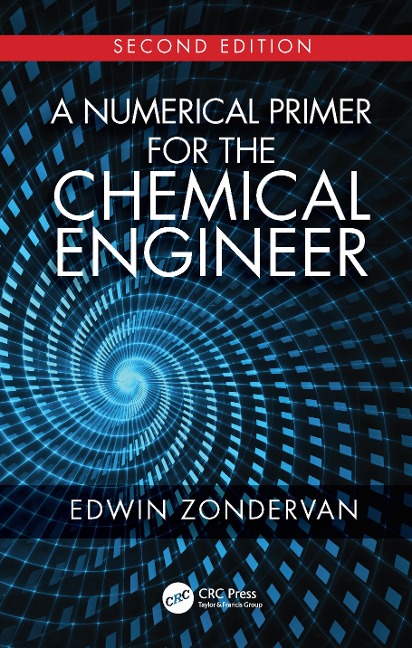
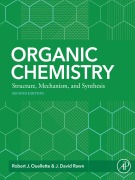
Designed as an introduction to numerical methods for students, this book combines mathematical correctness with numerical performance, and concentrates on numerical methods and problem solving. It applies actual numerical solution strategies to formulated process models to help identify and solve chemical engineering problems. Second edition comes with additional chapter on numerical integration and section on boundary value problems in the relevant chapter. Additional material on general modelling principles, mass/energy balances and separate section on DAE's is also included. Case study section has been extended with additional examples.
Edwin Zondervan was born and raised in Leeuwarden, the Netherlands. After finishing his bachelor with a specialization in process automation in Leeuwarden he continued in Groningen with a M.Sc. in chemical engineering. Then he moved To Enschede and pursued a Ph.D. on modeling, optimization and control of dead-end membrane filtration of surface water. He defended his doctorate at Groningen in 2007. He worked from 2007 to 2015 at Eindhoven University of Technology. He has been working as associate researcher at the laboratories of Technical University of Catalonia, Carnegie Mellon University, Denmark Technical University and Imperial College . Besides research Edwin Zondervan has been very active in the educational gremials where he trained many generations of students in process design, process control and numerical methods. For the latter one Edwin published a textbook that was released in 2014: "A numerical primer for the chemical engineer". Recently Edwin Zondervan joined the Institute for environmental science and Technology of Bremen University, where he obtained a professorship in "Process Systems Engineering". The newly established Laboratory of Process Systems Engineering (PSE) at Bremen University (which was established within Bremen's Excellence Initiative) will conduct research in the field of sustainable and flexible system design of energy networks. The main objective of the laboratory of PSE is to develop network modeling techniques and dynamic optimization tools and to apply them to the design and operation of complex energy/process systems. The PSE group distinguishes two working areas: i) Novel energy technologies and devices and ii) Energy Efficient production. Where the challenges lie in 1) decisionmaking under uncertainty, 2) sustainable design and 3) managing complexity. In addition the PSE group will be active in the development of an Energy Systems Institute at Bremen University and setup a specialized course program in this field.
1. The role of models in chemical engineering. 2 Errors in computer simulations. 3 Linear equations. 4 Elimination methods. 5 Iterative methods. 6 Nonlinear equations. 7 Ordinary differential equations. 8. Numerical integration. 9. Partial differential equations. 10. Data regression and curve fitting. 11. Optimization. 12. Basics of MATLAB. 13. Numerical methods in Excel. 14. Case studies.
Dieses eBook wird im PDF-Format geliefert und ist mit einem Adobe Kopierschutz (DRM) versehen. Sie können dieses eBook mit allen Geräten lesen, die das PDF-Format und den Adobe Kopierschutz (DRM) unterstützen.
Zum Beispiel mit den folgenden Geräten:
• tolino Reader
Laden Sie das eBook direkt über den Reader-Shop auf dem tolino herunter oder übertragen Sie das eBook auf Ihren tolino mit einer kostenlosen Software wie beispielsweise Adobe Digital Editions.
• Sony Reader & andere eBook Reader
Laden Sie das eBook direkt über den Reader-Shop herunter oder übertragen Sie das eBook mit der kostenlosen Software Sony READER FOR PC/Mac oder Adobe Digital Editions auf ein Standard-Lesegeräte mit epub- und Adobe DRM-Unterstützung.
• Tablets & Smartphones
Möchten Sie dieses eBook auf Ihrem Smartphone oder Tablet lesen, finden Sie hier unsere kostenlose Lese-App für iPhone/iPad und Android Smartphone/Tablets.
• PC & Mac
Lesen Sie das eBook direkt nach dem Herunterladen mit einer kostenlosen Lesesoftware, beispielsweise Adobe Digital Editions, Sony READER FOR PC/Mac oder direkt über Ihre eBook-Bibliothek in Ihrem Konto unter „Meine eBooks“ - „online lesen“.
Schalten Sie das eBook mit Ihrer persönlichen Adobe ID auf bis zu sechs Geräten gleichzeitig frei.
Bitte beachten Sie, dass die Kindle-Geräte das Format nicht unterstützen und dieses eBook somit nicht auf Kindle-Geräten lesbar ist.