Und dann auf "Zum Home-Bildschirm [+]".

Stöbern
genialokal zum Startbildschirm hinzufügen
Installieren Sie die genialokal App auf Ihrem Startbildschirm für einen schnellen Zugriff und eine komfortable Nutzung.
Installieren Sie die genialokal App auf Ihrem Startbildschirm für einen schnellen Zugriff und eine komfortable Nutzung.
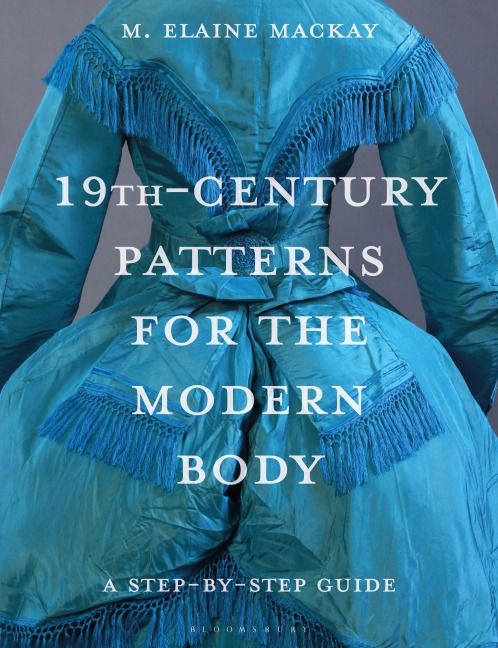
Whether you're adapting a Regency, American Civil War, Victorian or early Belle Époque pattern, costume designer and historian M. Elaine MacKay guides you through creating a historically accurate garment perfectly fitted for the modern wearer.
Illustrated with clear diagrams of bodice, skirt, and sleeve blocks, this step-by-step guide demonstrates how to alter modern pattern blocks to achieve authentic period designs for various modern body shapes. With techniques that can be easily transferred to any garment, each chapter details the techniques distinctive to each decade - from dramatic changes in the use of panels and bias, through the crinolines and bustles of the 1850s and 1870s, to the gored skirts and swept hems of the elegant 1890s - and features:
- photographs of a historical garment from the decade
- an in-depth garment analysis to help you understand how the cut of the period garment differs from a modern one
- instructions to alter the modern pattern blocks provided in Chapter 1 to achieve the period silhouette.
You'll also find examples of finished mock-up garments created using the book's techniques, historical context on the society in which each dress might have been worn, and an accompanying online resource providing basic pattern blocks to download and adapt.
Using tried and tested methods developed over M. Elaine MacKay's 35-year career drafting and fitting historical patterns for theatre, film, and museums, this guide is essential for anyone interested in creating period silhouettes for historical dress, fantasy costumes, cosplay, or modern fashion design.
M. Elaine MacKay worked as a theatre tailor and cutter before shifting her focus to designing historical dress. She has published articles about women's dress in Victorian Ontario, Basque 16th century whaling dress, and the 1673 wedding suit of King James II of England and has taught Aesthetics of Historical Dress at Dalhousie University in Halifax, Nova Scotia, Canada.
List of Figures
Preface
Acknowledgements
1 Foundation
Modern Basic Block
Modern One-piece Sleeve Block
One-piece Historical Sleeve Block
Modern Two-piece Sleeve Block
Historical Two-piece Sleeve Block
Straight Skirt Block
Standard Skirt Block
2 First Steps
Reading an Image
Terminology
3 Development of Period Patterns: 1800 - 1815
Period Dress in Historical Context
Primary Step-by-Step Drafting Instructions
Alternate Regency Gown Drafting Instructions
4 Development of Period Patterns: 1820 - 1835
Period Dress in Historical Context
Primary Step-by-Step Drafting Instructions
Alternate Day Dress Draft Adaptations
5 Development of Period Patterns: 1840-1949
Period Dress in Historical Context
Primary Step-by-Step Drafting Instructions
Alternate Day Dress Draft Adaptations
6 Development of Period Patterns for the Early Crinoline Period: 1850-1859
Period Dress in Historical Context
Primary Step-by-Step Drafting Instructions
Alternate Day Dress Draft Adaptations
7 Development of Period Patterns: 1860-1869
Period Dress in Historical Context
Primary Step-by-Step Drafting Instructions
Detailed Instructions for an Elliptical Hoop-skirt
8 Development of Period Patterns: 1870-1879
Period Dress in Historical Context
Primary Step-by-Step Drafting Instructions
Alternate Day Dress Draft Adaptations
9 Development of Period Patterns: 1880-1889
Period Dress in Historical Context
Primary Step-by-Step Drafting Instructions
Alternate Day Dress Draft Adaptations
10 Development of Period Patterns: 1890-1900
Period Dress in Historical Context
Primary Step-by-Step Drafting Instructions
Alternate Period Sleeve Draft Adaptations
Conclusion and Reflection
Measurement Sheet
Bibliography
Index
Dieses eBook wird im PDF-Format geliefert und ist mit einem Adobe Kopierschutz (DRM) versehen. Sie können dieses eBook mit allen Geräten lesen, die das PDF-Format und den Adobe Kopierschutz (DRM) unterstützen.
Zum Beispiel mit den folgenden Geräten:
• tolino Reader
Laden Sie das eBook direkt über den Reader-Shop auf dem tolino herunter oder übertragen Sie das eBook auf Ihren tolino mit einer kostenlosen Software wie beispielsweise Adobe Digital Editions.
• Sony Reader & andere eBook Reader
Laden Sie das eBook direkt über den Reader-Shop herunter oder übertragen Sie das eBook mit der kostenlosen Software Sony READER FOR PC/Mac oder Adobe Digital Editions auf ein Standard-Lesegeräte mit epub- und Adobe DRM-Unterstützung.
• Tablets & Smartphones
Möchten Sie dieses eBook auf Ihrem Smartphone oder Tablet lesen, finden Sie hier unsere kostenlose Lese-App für iPhone/iPad und Android Smartphone/Tablets.
• PC & Mac
Lesen Sie das eBook direkt nach dem Herunterladen mit einer kostenlosen Lesesoftware, beispielsweise Adobe Digital Editions, Sony READER FOR PC/Mac oder direkt über Ihre eBook-Bibliothek in Ihrem Konto unter „Meine eBooks“ - „online lesen“.
Schalten Sie das eBook mit Ihrer persönlichen Adobe ID auf bis zu sechs Geräten gleichzeitig frei.
Bitte beachten Sie, dass die Kindle-Geräte das Format nicht unterstützen und dieses eBook somit nicht auf Kindle-Geräten lesbar ist.