Und dann auf "Zum Home-Bildschirm [+]".

Stöbern
genialokal zum Startbildschirm hinzufügen
Installieren Sie die genialokal App auf Ihrem Startbildschirm für einen schnellen Zugriff und eine komfortable Nutzung.
Installieren Sie die genialokal App auf Ihrem Startbildschirm für einen schnellen Zugriff und eine komfortable Nutzung.
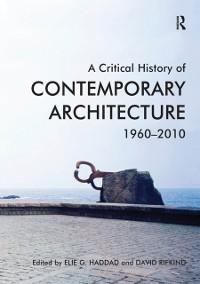
1960, following as it did the last CIAM meeting, signalled a turning point for the Modern Movement. From then on, architecture was influenced by seminal texts by Aldo Rossi and Robert Venturi, and gave rise to the first revisionary movement following Modernism. Bringing together leading experts in the field, this book provides a comprehensive, critical overview of the developments in architecture from 1960 to 2010. It consists of two parts: the first section providing a presentation of major movements in architecture after 1960, and the second, a geographic survey that covers a wide range of territories around the world. This book not only reflects the different perspectives of its various authors, but also charts a middle course between the 'aesthetic' histories that examine architecture solely in terms of its formal aspects, and the more 'ideological' histories that subject it to a critique that often skirts the discussion of its formal aspects.
Dr Elie G. Haddad is the Dean of the School of Architecture and Design at the Lebanese American University, Lebanon and Dr David Rifkind is a Lecturer in Architecture at the Florida International University, USA.
Contents: Introduction: modernism and beyond: the plurality of contemporary architectures, Elie G. Haddad and David Rifkind. Part I Major Developments After Modernism: Modern (or contemporary) architecture circa 1959, Peter L. Laurence; Post-modernism: critique and reaction, David Rifkind; High-tech: modernism redux, Sarah Deyong; Deconstruction: the project of radical self-criticism, Elie G. Haddad; Greening architecture: the impact of sustainability, Phillip Tabb; Postcolonial theories in architecture, Esra Akcan. Part II Architectural Developments Around the World: Architecture in North America since 1960, Brendan Moran; Architectural developments in Latin America: 1960-2010, Zeuler R.M. de A. Lima; The place of commonplace: the ordinary as alternative architectural lens in Western Europe, Tom Avermaete; Dutch modern architecture: from an architecture of consensus to the culture of congestion, Frances Hsu; Metaphorical peripheries: architecture in Spain and Portugal, Xavier Costa; Architecture in Switzerland: a natural history, Laurent Stalder; Architecture in Eastern Europe and the former Soviet Union since 1960, Kimberley Elman Zarecor; Finland: architecture and cultural identity, Taisto H. MÃ-kelÃ-; Architecture in Africa: situated modern and the production of locality, Iain Low; Global conflict and global glitter: architecture of West Asia (1960-2010), Esra Akcan; Old sites, new frontiers: modern and contemporary architecture in Iran, Pamela Karimi; Beyond tropical regionalism: the architecture of Southeast Asia, Kelly Shannon; Internationalism and architecture in India after Nehru, Amit Srivastava and Peter Scriver; Architecture in China in the reform era: 1978-2010, Tao Zhu; Architecture in post-World War II Japan, Ken Tadashi Oshima; Edge of centre: architecture in Australia and New Zealand after 1965, Philip Goad. Index.
Dieses eBook wird im PDF-Format geliefert und ist mit einem Adobe Kopierschutz (DRM) versehen. Sie können dieses eBook mit allen Geräten lesen, die das PDF-Format und den Adobe Kopierschutz (DRM) unterstützen.
Zum Beispiel mit den folgenden Geräten:
• tolino Reader
Laden Sie das eBook direkt über den Reader-Shop auf dem tolino herunter oder übertragen Sie das eBook auf Ihren tolino mit einer kostenlosen Software wie beispielsweise Adobe Digital Editions.
• Sony Reader & andere eBook Reader
Laden Sie das eBook direkt über den Reader-Shop herunter oder übertragen Sie das eBook mit der kostenlosen Software Sony READER FOR PC/Mac oder Adobe Digital Editions auf ein Standard-Lesegeräte mit epub- und Adobe DRM-Unterstützung.
• Tablets & Smartphones
Möchten Sie dieses eBook auf Ihrem Smartphone oder Tablet lesen, finden Sie hier unsere kostenlose Lese-App für iPhone/iPad und Android Smartphone/Tablets.
• PC & Mac
Lesen Sie das eBook direkt nach dem Herunterladen mit einer kostenlosen Lesesoftware, beispielsweise Adobe Digital Editions, Sony READER FOR PC/Mac oder direkt über Ihre eBook-Bibliothek in Ihrem Konto unter „Meine eBooks“ - „online lesen“.
Schalten Sie das eBook mit Ihrer persönlichen Adobe ID auf bis zu sechs Geräten gleichzeitig frei.
Bitte beachten Sie, dass die Kindle-Geräte das Format nicht unterstützen und dieses eBook somit nicht auf Kindle-Geräten lesbar ist.