Und dann auf "Zum Home-Bildschirm [+]".

Stöbern
genialokal zum Startbildschirm hinzufügen
Installieren Sie die genialokal App auf Ihrem Startbildschirm für einen schnellen Zugriff und eine komfortable Nutzung.
Installieren Sie die genialokal App auf Ihrem Startbildschirm für einen schnellen Zugriff und eine komfortable Nutzung.
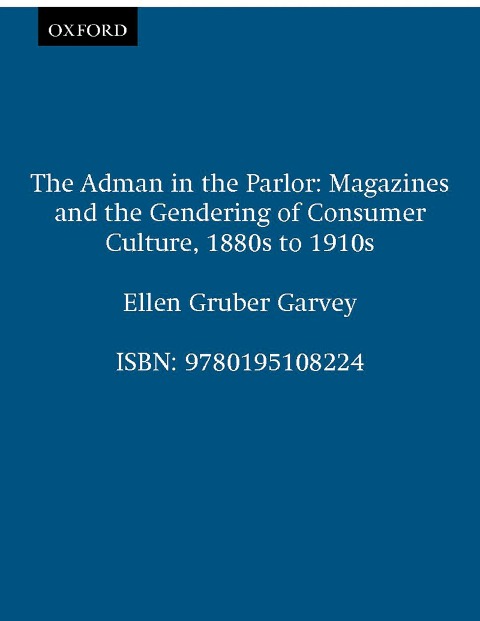
How did advertising come to seem natural and ordinary to magazine readers by the end of the nineteenth century? The Adman in the Parlor explores readers' interactions with advertising during a period when not only consumption but advertising itself became established as a pleasure. Garvey argues that readers' participation in advertising, rather than top-down dictation by advertisers, made advertizing a central part of American culture. Garvey's analysis interweaves such texts and artifacts as advertising trade journals, magazines addressed to elite, middle class, and poorer readerships, scrapbooks, medical articles, paper dolls, chromolithographed trade cards, and contest rules. She tracks new forms of fictional realism that contained brand name references, courtship stories, and other fictional forms. As magazines became dependant on advertising rather than sales for their revenues, women's magazines led the way in making consumers of readers through the interplay of fiction, editorials, and advertising. General magazines, too, saw little conflict between these different interests. Instead, advertising and fiction came to act on one another in complex, unexpected ways. Magazine stories illustrated the multiple desires and social meanings embodied in the purchase of a product. Garvey takes the bicycle as a case study, and tracks how magazines mediated among competing medical, commercial, and feminist discourses to produce an alluring and unthreatening model of women bicycling in their stories. Advertising formed the national vocabulary. At once invisible, familiar, and intrusive, advertising both shaped fiction of the period and was shaped by it. The Adman in the Parlor unearths the lively conversations among writers and advertisers about the new prevalence of advertising for mass-produced, nationally distributed products.
Ellen Gruber Garvey's involvement with periodicals began in her four years at Liberation News Service. She has taught American Studies and is now Assistant Professor of English at Jersey City State College.
Dieses eBook wird im PDF-Format geliefert und ist mit einem Adobe Kopierschutz (DRM) versehen. Sie können dieses eBook mit allen Geräten lesen, die das PDF-Format und den Adobe Kopierschutz (DRM) unterstützen.
Zum Beispiel mit den folgenden Geräten:
• tolino Reader
Laden Sie das eBook direkt über den Reader-Shop auf dem tolino herunter oder übertragen Sie das eBook auf Ihren tolino mit einer kostenlosen Software wie beispielsweise Adobe Digital Editions.
• Sony Reader & andere eBook Reader
Laden Sie das eBook direkt über den Reader-Shop herunter oder übertragen Sie das eBook mit der kostenlosen Software Sony READER FOR PC/Mac oder Adobe Digital Editions auf ein Standard-Lesegeräte mit epub- und Adobe DRM-Unterstützung.
• Tablets & Smartphones
Möchten Sie dieses eBook auf Ihrem Smartphone oder Tablet lesen, finden Sie hier unsere kostenlose Lese-App für iPhone/iPad und Android Smartphone/Tablets.
• PC & Mac
Lesen Sie das eBook direkt nach dem Herunterladen mit einer kostenlosen Lesesoftware, beispielsweise Adobe Digital Editions, Sony READER FOR PC/Mac oder direkt über Ihre eBook-Bibliothek in Ihrem Konto unter „Meine eBooks“ - „online lesen“.
Schalten Sie das eBook mit Ihrer persönlichen Adobe ID auf bis zu sechs Geräten gleichzeitig frei.
Bitte beachten Sie, dass die Kindle-Geräte das Format nicht unterstützen und dieses eBook somit nicht auf Kindle-Geräten lesbar ist.