Und dann auf "Zum Home-Bildschirm [+]".

Stöbern
genialokal zum Startbildschirm hinzufügen
Installieren Sie die genialokal App auf Ihrem Startbildschirm für einen schnellen Zugriff und eine komfortable Nutzung.
Installieren Sie die genialokal App auf Ihrem Startbildschirm für einen schnellen Zugriff und eine komfortable Nutzung.
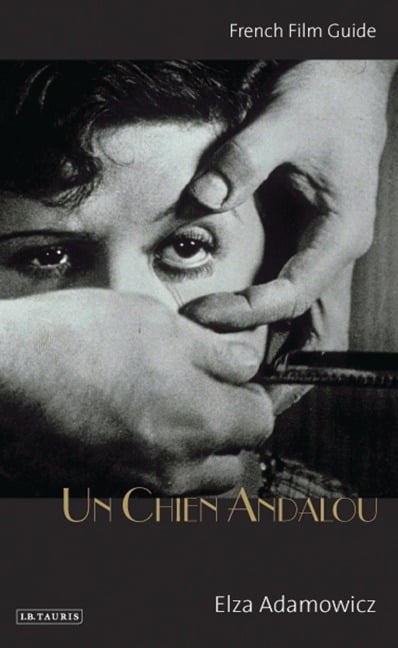
In 1929 Dali and Bunuel produced a seventeen-minute film "Un chien andalou". On its first screening, Federico Garcia Lorca called it 'a tiny little shit of a film'. Produced from a script said to be based on two dream images - a woman's eye slit by a razor, ants emerging from a hole in a man's hand - the film shocked audiences. It continues to fascinate, provoke, attract and alienate its viewers. Its eye-slitting sequence and use of dream-like images have influenced filmmakers from Alfred Hitchcock to David Lynch. Elza Adamowicz's fascinating book on "Un chien andalou" takes new approaches to the film, exploring how it can be seen both within and beyond the confines of Surrealism and reviewing its openness to so many readings and interpretations. She reassesses Dali and Bunuel's account of the film as a model surrealist work and its reception by the surrealist group, examines the unresolved tensions within the film itself and includes us as viewers - are we detectives or dreamers? She sets the film into the wider contexts of other texts and of its authors' own experiences, providing a wide and deep guide to this most enigmatic of works.
The author of this title is professor of French Literature and Visual Culture, Queen Mary, University of London. Her books include "Surrealist Collage in Text and Image" (1998) and "Surrealism: Crossings/Frontiers" (2006).
Contents
Illustrations
Synopsis
Introduction: It's dangerous to look inside
I Producing Un chien andalou: myths of origin
From scenario to screen: a close collaboration
Première and reception of Un chien andalou
A surrealist film?
II Romantic melodrama or magic theatre?
Classic film narrative subverted
A cinema of attractions
Psychoanalytical readings
Symbols or material images?
III Contexts and intertexts: between Fantômas and the fairground
Spanish contexts
Surrealist iconography
A parody of 1920s films
Early cinema and fairground intertexts
1920s social context: destabilizing gender roles
Conclusion
Credits
Bibliography
Dieses eBook wird im PDF-Format geliefert und ist mit einem Adobe Kopierschutz (DRM) versehen. Sie können dieses eBook mit allen Geräten lesen, die das PDF-Format und den Adobe Kopierschutz (DRM) unterstützen.
Zum Beispiel mit den folgenden Geräten:
• tolino Reader
Laden Sie das eBook direkt über den Reader-Shop auf dem tolino herunter oder übertragen Sie das eBook auf Ihren tolino mit einer kostenlosen Software wie beispielsweise Adobe Digital Editions.
• Sony Reader & andere eBook Reader
Laden Sie das eBook direkt über den Reader-Shop herunter oder übertragen Sie das eBook mit der kostenlosen Software Sony READER FOR PC/Mac oder Adobe Digital Editions auf ein Standard-Lesegeräte mit epub- und Adobe DRM-Unterstützung.
• Tablets & Smartphones
Möchten Sie dieses eBook auf Ihrem Smartphone oder Tablet lesen, finden Sie hier unsere kostenlose Lese-App für iPhone/iPad und Android Smartphone/Tablets.
• PC & Mac
Lesen Sie das eBook direkt nach dem Herunterladen mit einer kostenlosen Lesesoftware, beispielsweise Adobe Digital Editions, Sony READER FOR PC/Mac oder direkt über Ihre eBook-Bibliothek in Ihrem Konto unter „Meine eBooks“ - „online lesen“.
Schalten Sie das eBook mit Ihrer persönlichen Adobe ID auf bis zu sechs Geräten gleichzeitig frei.
Bitte beachten Sie, dass die Kindle-Geräte das Format nicht unterstützen und dieses eBook somit nicht auf Kindle-Geräten lesbar ist.