Und dann auf "Zum Home-Bildschirm [+]".

Stöbern
genialokal zum Startbildschirm hinzufügen
Installieren Sie die genialokal App auf Ihrem Startbildschirm für einen schnellen Zugriff und eine komfortable Nutzung.
Installieren Sie die genialokal App auf Ihrem Startbildschirm für einen schnellen Zugriff und eine komfortable Nutzung.

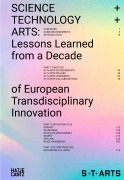
After the imposition of Gregorian chant upon most of Europe by the authority of the Carolingian kings and emperors in the eighth and ninth centuries, a large number of repertories arose in connection with the new chant and its liturgy. Of these repertories, the tropes, together with the sequences, represent the main creative activity of European musicians in the ninth, tenth, and eleventh centuries. Because they were not an absolutely official part of the liturgy, as was Gregorian chant, they reflect local traditions, particularly in terms of melody, and more so than the new pieces that were composed at the time. In addition, the earlier layers of tropes represent, in many cases, a survival of the pre local pre Gregorian melodic traditions. This volume provides an introduction to the study of tropes in the form of an extensive anthology of major studies and a comprehensive bibliography and constitutes a classic reference resource for the study of one of the most important musico-liturgical genres of the central middle ages.
Alejandro Enrique Planchart is Emeritus Professor of Music at the University of California at Santa Barbara, USA.
Contents: Introduction; Part I Tropes in General: The troping hypothesis, Richard L. Crocker; Some observations on the interrelationships between trop repertories, David Hiley; Aux origines des tropes d'interpolation: le trope méloforme d'introït, Michel Huglo; Les 'libelli' de tropes et les premiers tropaires-prosaires, Michel Huglo; Tropes and the concept of genre, Ritva Jacobsson and Leo Treitler; Beyond a chant, 'Tui Sunt Caeli' and its tropes, John G. Johnstone; The liturgical function of the tropes, Ritva Jonsson; On the nature of transmission and change in trope repertories, Alejandro Enrique Planchart; Zum VerstÃ-ndnis des 'klassischen' Tropus, Bruno StÃ-blein. Part II Aquitaine and the West: Northern French elements in an early Aquitainian troper, Paul Evans; A new voice in the monastery: tropes and versus from 11th- and 12th-century Aquitaine, James Grier; Further notes on the grouping of the Aquitanian tropers, David G. Hughes. Part III St Gall and the East: Tropentypen in Sankt Gallen, Gunilla Björkvall and Andreas Haug; Some observations on the repertory of tropes at St Emmeram, Regensberg, David Hiley; From tuotilo to the 1st manuscripts: the shaping of a trope repertory at Saint Gall, Susan Rankin. Part IV The Ordinary: The earliest Agnus Dei melody and its tropes, Charles M. Atkinson; The Kyrie trope, David A. Bjork; Pax et sapienta: a thematic study on tropes from different traditions, Gunilla Iverson; Introducing the Gloria In Excelsis, Thomas Forrest Kelly. Part V Tropes in the Office: Melismatic tropes in the responsories for Matins, Hans-Jörgen Holman; New music from old: the structuring of responsory prosas, Thomas Forrest Kelly; Index.
Dieses eBook wird im PDF-Format geliefert und ist mit einem Adobe Kopierschutz (DRM) versehen. Sie können dieses eBook mit allen Geräten lesen, die das PDF-Format und den Adobe Kopierschutz (DRM) unterstützen.
Zum Beispiel mit den folgenden Geräten:
• tolino Reader
Laden Sie das eBook direkt über den Reader-Shop auf dem tolino herunter oder übertragen Sie das eBook auf Ihren tolino mit einer kostenlosen Software wie beispielsweise Adobe Digital Editions.
• Sony Reader & andere eBook Reader
Laden Sie das eBook direkt über den Reader-Shop herunter oder übertragen Sie das eBook mit der kostenlosen Software Sony READER FOR PC/Mac oder Adobe Digital Editions auf ein Standard-Lesegeräte mit epub- und Adobe DRM-Unterstützung.
• Tablets & Smartphones
Möchten Sie dieses eBook auf Ihrem Smartphone oder Tablet lesen, finden Sie hier unsere kostenlose Lese-App für iPhone/iPad und Android Smartphone/Tablets.
• PC & Mac
Lesen Sie das eBook direkt nach dem Herunterladen mit einer kostenlosen Lesesoftware, beispielsweise Adobe Digital Editions, Sony READER FOR PC/Mac oder direkt über Ihre eBook-Bibliothek in Ihrem Konto unter „Meine eBooks“ - „online lesen“.
Schalten Sie das eBook mit Ihrer persönlichen Adobe ID auf bis zu sechs Geräten gleichzeitig frei.
Bitte beachten Sie, dass die Kindle-Geräte das Format nicht unterstützen und dieses eBook somit nicht auf Kindle-Geräten lesbar ist.