Und dann auf "Zum Home-Bildschirm [+]".

Stöbern
genialokal zum Startbildschirm hinzufügen
Installieren Sie die genialokal App auf Ihrem Startbildschirm für einen schnellen Zugriff und eine komfortable Nutzung.
Installieren Sie die genialokal App auf Ihrem Startbildschirm für einen schnellen Zugriff und eine komfortable Nutzung.

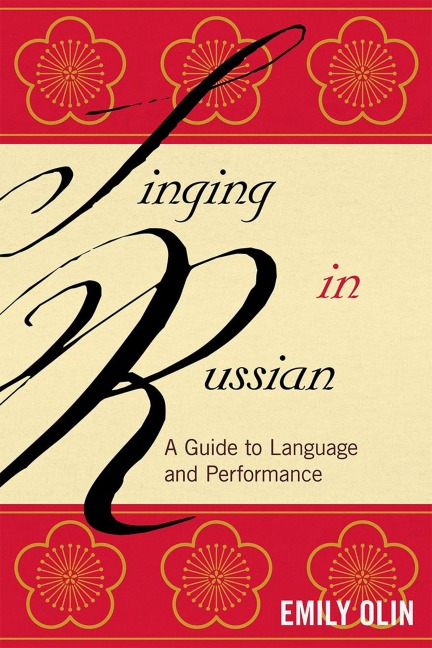
With its unique blend of eastern and western traditions of music and poetry, the world of Russian vocal music is rich in spirituality, intimacy, and passion for singers and their audience. Russian song traditions offer an ideal opportunity for self-expression and the forging of a deep connection with one's listeners. It also presents formidable challenges to singers at every level, ranging from the complexities native to sung and spoken Russian to the intricacies of diction and interpretation that lie behind the nuanced relationship between Russian music and poetry.
Founded on the underlying principle that sung language differs dramatically from spoken language, Singing in Russian offers a comprehensive and accessible approach to understanding, mastering, and performing Russian vocal music. After covering the basics of the Cyrillic alphabet and Russian grammar and diction, author Emily Olin encourages readers to take the innovative step of using the music itself to guide the singer's pronunciation and interpretation. English sound comparisons, linguistic and musical examples, and multifaceted exercises complement textual explanations, reinforcing the techniques Olin has employed for over three decades. The addition of repertoire lists and practical recommendations further equip singers to confidently go from start to stage. Furthermore, the online audio examples contain exercises that demonstrate and reinforce the correct sound and interpretation of everything from the alphabet to the presentation of vowels, consonants, words, and phrases. They can be found at https://soundcloud.com/user-869634200/sets/singing-in-russian-a-guide-to-language-and-performance.
Singing in Russian is an invaluable resource for students, performers, teachers, directors, conductors, and coaches seeking to increase their access to Russian opera and art song, master the challenges they present to performance, and expand their personal, professional, and institutional repertoire on stage.
Emily Olin is lecturer at the Yale School of Music, having taught the course "Russian for Singers" there since 1996. In addition to teaching, Ms. Olin has had a concert career and she serves on the jury of the International Doluhanova Art Song Competition in Russia. She also maintains a private studio in New York where she coaches professional singers in the development of their vocal classical repertoire.
Preface
Acknowledgments
List of Abbreviations
List of Recordings
Part One: From Start To Stage
Chapter 1: Russian Alphabet
History of the Alphabet
The Alphabet
Chapter 2: Russian Vowels
Hard Vowels-Stressed
Hard Vowels-Unstressed: Vowel Reduction
Soft Vowels-Stressed
Soft Vowels-Unstressed: Vowel Reduction
? (ee-kratkoye)
Vowel Clusters
Stress in Russian Words
Music Analysis Example
Summary
Chapter 3: Russian Consonants
Hard Consonants
Soft Consonants
Hissing Consonants ?, ?, ?, ?, and ?
Russian Consonant ?
Hard and Soft Signs
Voiced and Voiceless Consonants
Consonant Clusters
Double Consonants
Consonants from the Same Pair
Different Consonants
Exceptions
Pronunciation of Unstressed Syllables
Music Analysis Example
Summary
Chapter 4: A Little Bit of Grammar
The Parts of a Word
Basic Parts of Speech
Short Words
Interrogative Words
Word Order in Russian Sentences
Russian Punctuation
Summary
Chapter 5: Pillars of Creative Performance
Demands of the Genre
Articulation and Pronunciation
Phrase
Interpretation
Text
"Invisible Inspiration"
Music Analysis Example
In Summation
Chapter 6: Difficulties and Delights of Singing in Russian: Essays by Non-Russian Singers
Russian for American Singers: a First-Hand Experience, by Peter Clark
Singing in Russian, by Phyllis Farmer
"I Feel Personal Connection to the Russian Repertoire", by Mary Phillips
The Challenges and Joys of Singing in Russian, by Patrick Carfizzi
"Russian Music-Part of My Heart", by Sasha Lazard
Chapter 7:Russian Style in Performance: Essays by Russian Musicians
Russian Romance: Pronunciation, Style and Interpretation, by Valery Aliev
Some Advice for Singing Russian Music by Ruben P. Lisitsian
Russian Music Is Still Undiscovered, by Vera Tariverdieva
Part Two: Music of the Russian Soul
Chapter 8: Russian Composers and World Music
Historical Comparison
A Brief History
Selected Russian Classical Composers
Chapter 9: Russian Opera
The Development of Russian Opera
Selected Operas
Chapter 10: Recommended Russian Operatic Repertoire - Arias
Soprano
Mezzo-soprano
Tenor
Baritone
Bass
Chapter 11: Recommended Russian Art Song Repertoire - Romances
Russian Folk Songs, Traditionally Performed by Classical Singers
"Old Russian Romances"
From 19th Century to Beginning of the Soviet Period
Works of the Soviet and Post-Soviet Composers
Chapter 12: Literary Inspiration
Operas
Romances
Cross Currents
Selected Russian Poets and Writers
Selected Non-Russian Poets and Writers
Appendix 1: Working with the dictionary
Appendix 2: Compilation of Sung Exercises
Bibliography
Index
About the Author