Und dann auf "Zum Home-Bildschirm [+]".

Stöbern
genialokal zum Startbildschirm hinzufügen
Installieren Sie die genialokal App auf Ihrem Startbildschirm für einen schnellen Zugriff und eine komfortable Nutzung.
Installieren Sie die genialokal App auf Ihrem Startbildschirm für einen schnellen Zugriff und eine komfortable Nutzung.
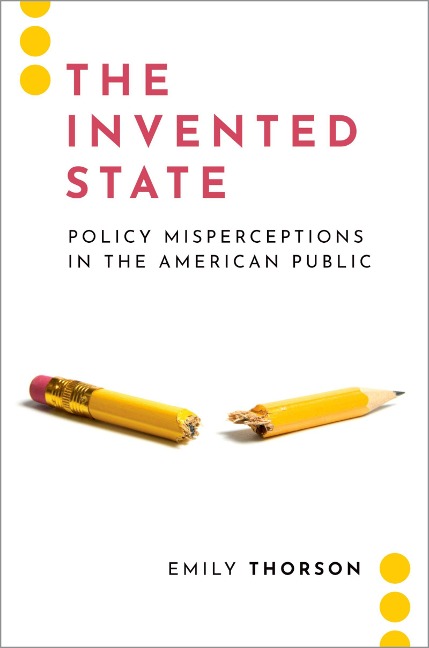
In The Invented State, Emily Thorson argues that a problematic and understudied aspect of political misinformation reflects widespread public misperception about what the government does. Because much of public policy is invisible to the public, there is fertile ground for false beliefs to flourish, leading to the creation of what Thorson terms the "invented state": systematic misperceptions about public policy. However, people get the facts wrong not because they are lazy, stupid, or blinded by partisan loyalty. Rather, misperceptions are created when three conditions are met: when citizens have incomplete information about an issue, when their own biases color their understanding of it, and when they feel that the issue is important. In other words, the invented state is created not just by exposure to explicit misinformation, but also by individuals' cognitive errors. Correcting these policy misperceptions is highly effective at reducing false beliefs. In addition, providing people with corrective information has downstream effects on attitudes. When they learn how policies - including Social Security, refugee policy, and the Temporary Assistance for Needy Families program - really work, their approval of these policies increases, and they also shift their policy priorities. Contrary to pundits' assumptions of a public who is largely indifferent to policy, there is a deep public desire to learn basic facts about how the government works. Thorson meets that desire with analysis on how the news media can identify and effectively correct substantive policy misperceptions. The Invented State not only sheds a new light on how Americans think about policy, but can also help to inform evidence-based interventions to improve democratic competence.
Emily Thorson is an Assistant Professor of Political Science at Syracuse University. Her research focuses on how people learn about the political world. She is particularly interested in understanding what people get wrong about politics and policy, and how correcting these misperceptions changes their attitudes and behavior. She received a dual Ph.D in communications and political science at the Annenberg School and at the Department of Political Science at the University of Pennsylvania.
Chapter 1. Introduction: Misperceptions That Matter Chapter 2. The Contours of the Invented State Chapter 3: The Policy Gap in the Information Environment Chapter 4: The Construction of Beliefs About Policy Chapter 5: How People Respond to Policy Information Chapter 6: Policy Misperceptions and Competence Chapter 7: Dismantling the Invented State Chapter 8: Conclusion: What Comes Next? References Index
Dieses eBook wird im PDF-Format geliefert und ist mit einem Adobe Kopierschutz (DRM) versehen. Sie können dieses eBook mit allen Geräten lesen, die das PDF-Format und den Adobe Kopierschutz (DRM) unterstützen.
Zum Beispiel mit den folgenden Geräten:
• tolino Reader
Laden Sie das eBook direkt über den Reader-Shop auf dem tolino herunter oder übertragen Sie das eBook auf Ihren tolino mit einer kostenlosen Software wie beispielsweise Adobe Digital Editions.
• Sony Reader & andere eBook Reader
Laden Sie das eBook direkt über den Reader-Shop herunter oder übertragen Sie das eBook mit der kostenlosen Software Sony READER FOR PC/Mac oder Adobe Digital Editions auf ein Standard-Lesegeräte mit epub- und Adobe DRM-Unterstützung.
• Tablets & Smartphones
Möchten Sie dieses eBook auf Ihrem Smartphone oder Tablet lesen, finden Sie hier unsere kostenlose Lese-App für iPhone/iPad und Android Smartphone/Tablets.
• PC & Mac
Lesen Sie das eBook direkt nach dem Herunterladen mit einer kostenlosen Lesesoftware, beispielsweise Adobe Digital Editions, Sony READER FOR PC/Mac oder direkt über Ihre eBook-Bibliothek in Ihrem Konto unter „Meine eBooks“ - „online lesen“.
Schalten Sie das eBook mit Ihrer persönlichen Adobe ID auf bis zu sechs Geräten gleichzeitig frei.
Bitte beachten Sie, dass die Kindle-Geräte das Format nicht unterstützen und dieses eBook somit nicht auf Kindle-Geräten lesbar ist.