Und dann auf "Zum Home-Bildschirm [+]".

Stöbern
genialokal zum Startbildschirm hinzufügen
Installieren Sie die genialokal App auf Ihrem Startbildschirm für einen schnellen Zugriff und eine komfortable Nutzung.
Installieren Sie die genialokal App auf Ihrem Startbildschirm für einen schnellen Zugriff und eine komfortable Nutzung.
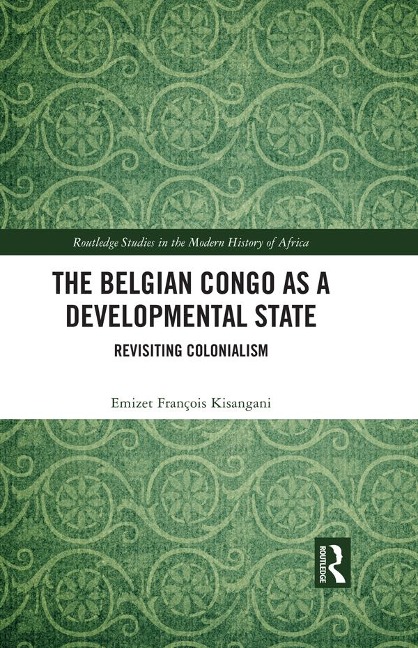
This book challenges assumptions that poor post-colonial economic performance is always a direct product of colonialism by reconsidering the Belgian Congo (1908-1959) as a developmental state. The book demonstrates that despite the colonial system's economic exploitation and extraction, brutality, excessive taxation, and inequities, the Belgian Congo achieved successes in developing the economy in a short period of time. The Belgian Congo was able to achieve this by investing its higher rates of fiscal revenue in political stability, physical infrastructure, education, and healthcare. By reconsidering the Belgian colonial state as a developmental state, this book encourages scholars to adopt a more nuanced analysis of African history. Considering state capacity and state autonomy as key features of a developmental state, the book demonstrates that colonial state managers in the Belgian Congo were able to supply these public goods that sustained economic growth for decades. Whilst by no means glorifying colonialism or the atrocities that were conducted during the Belgian occupation, the book nonetheless outlines how different forms of capitalism were deployed to further economic development in the country. In contrast, predatory state managers of the Congo Free State (1885-1908) and post-colonial kleptocrats (1960-2018) have squandered Congo's natural resources with disastrous economic and social consequences. Contrasting the Belgian Congo with colonies of settlement and other colonies of extraction, this book encourages researchers and students to reconsider the dominant narratives within colonial history, development, and African Studies.
Emizet François Kisangani is Professor in the Department of Political Science and the Graduate Program in Security Studies, Kansas State University, USA.
1. An overview of the argument, 2. The Leopoldian State and economy of plunder, 3. Political order and rule of law in the Belgian Congo, 4. Belgian Congo and basic infrastructure for economic development, 5. Property rights and economic development, 6. Revenue imperative, state building, and economic development, 7. From Mobutu to Mobutu and hubris syndrome, 8. From an anarchic to a criminal state, 9. The Belgian Congo state in comparative perspective, Conclusion
Dieses eBook wird im PDF-Format geliefert und ist mit einem Adobe Kopierschutz (DRM) versehen. Sie können dieses eBook mit allen Geräten lesen, die das PDF-Format und den Adobe Kopierschutz (DRM) unterstützen.
Zum Beispiel mit den folgenden Geräten:
• tolino Reader
Laden Sie das eBook direkt über den Reader-Shop auf dem tolino herunter oder übertragen Sie das eBook auf Ihren tolino mit einer kostenlosen Software wie beispielsweise Adobe Digital Editions.
• Sony Reader & andere eBook Reader
Laden Sie das eBook direkt über den Reader-Shop herunter oder übertragen Sie das eBook mit der kostenlosen Software Sony READER FOR PC/Mac oder Adobe Digital Editions auf ein Standard-Lesegeräte mit epub- und Adobe DRM-Unterstützung.
• Tablets & Smartphones
Möchten Sie dieses eBook auf Ihrem Smartphone oder Tablet lesen, finden Sie hier unsere kostenlose Lese-App für iPhone/iPad und Android Smartphone/Tablets.
• PC & Mac
Lesen Sie das eBook direkt nach dem Herunterladen mit einer kostenlosen Lesesoftware, beispielsweise Adobe Digital Editions, Sony READER FOR PC/Mac oder direkt über Ihre eBook-Bibliothek in Ihrem Konto unter „Meine eBooks“ - „online lesen“.
Schalten Sie das eBook mit Ihrer persönlichen Adobe ID auf bis zu sechs Geräten gleichzeitig frei.
Bitte beachten Sie, dass die Kindle-Geräte das Format nicht unterstützen und dieses eBook somit nicht auf Kindle-Geräten lesbar ist.