Und dann auf "Zum Home-Bildschirm [+]".

Stöbern
genialokal zum Startbildschirm hinzufügen
Installieren Sie die genialokal App auf Ihrem Startbildschirm für einen schnellen Zugriff und eine komfortable Nutzung.
Installieren Sie die genialokal App auf Ihrem Startbildschirm für einen schnellen Zugriff und eine komfortable Nutzung.

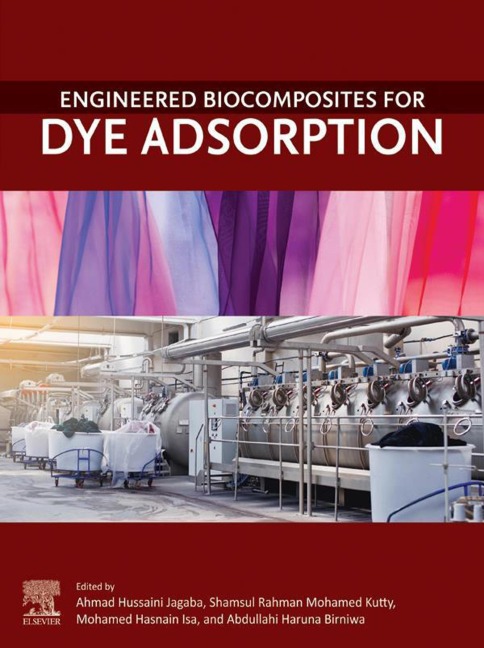
Engineered Biocomposites for Dye Adsorption compiles and discusses applications, mechanisms, and performance evaluation of various biocomposites during dye adsorption. The book analyzes the techno-economic and life-cycle assessment of biocomposites for dye adsorption. It highlights different adsorbent materials for dye degradation and resource recovery ranging from but not limited to activated carbon, biochar, hydrochar, pyrochar, waste fruits, waste industrial sludge, geological materials, graphene, carbon nanotubes, MXene, polymers, metals, nanomaterials, and metal-organic frameworks.The book shows how combining materials such as biocomposites significantly yields better dye adsorption than a single material and addresses conventional issues with adsorption such as adsorbent cost, effectiveness, regeneration, and sustainability and provides insights into the preparation and use of new adsorbent materials for dye removal from aqueous solutions. The information contained in this book will increase readers' fundamental knowledge, guide future researchers, and can be incorporated into future works on experimental studies on dye adsorption. As such it serves as an indispensable resource and reference work for engineers, wastewater specialists, biotechnologists, chemists, microbiologists, researchers, and students studying industrial effluents, biomass, bioproducts, and adsorption processes. - Offers a collection of the state-of-the-art dye removal methods using conventional and advanced/new adsorbents - Provides a detailed understanding of the methods of preparation and properties of new adsorbents and biocomposites - Includes applications of biocomposite adsorbents in dye removal, their effectiveness and limitations, and process optimization
1. Industrial dye effluent sources, generation, characteristics, and value-added products2. Impacts of dye contaminated effluents on the environment3. Fundamental and mechanisms of adsorption processes for dye removal4. Theoretical and mechanisms of adsorption processes for dye removal by composite adsorbents5. Activated carbon and its derivative biocomposites for dye adsorption6. Biochar, hydrochar and their derivative biocomposites for dye adsorption7. Waste Industrial Sludge and its Derivative Biocomposites for Dye Adsorption, A Comprehensive Review8. Agricultural wastes and their derivative biocomposites for dye adsorption9. Geological materials and their derivative biocomposites for dye adsorption10. Recent Advances in the Preparation and Modification of Eco-friendly Zeolite-based Biocomposites for Dye Adsorption11. Graphene and its derivative biocomposites for dye adsorption12. Carbon nanotubes and their derivative biocomposites for dye adsorption13. Zero-valent iron and its derivative biocomposites for dye adsorption14. Polymers and their derivative biocomposites for dye adsorption15. Advances and Prospects of Polymeric Nano-Biocomposites for Dye Adsorption16. Biopolymer-Based Hydrogels and their Composites for Enhanced Adsorptive Removal of Dyes: Recent Perspectives17. Metals and their derivative biocomposites for dye adsorption18. Metal nanoparticles and their derivative biocomposites for dye adsorption19. Nanomaterials and their derivative biocomposites for dye adsorption20. Recent Advances in Application of Metal Organic Frameworks for Adsorption of Dye from Wastewater21. Advances in COFs and COF-Based Biocomposites in Dye Adsorption Processes and Applications22. Techno-economic and life-cycle assessment of biocomposites for dye adsorption23. Cleaner and circular bioeconomy approaches for the application of biocomposites in simultaneous dye adsorption and resource recovery24. Innovations in Sustainable Wastewater Treatment: Integrating Engineered Biocomposites for Enhanced Dye Adsorption25. Adsorption of Dyes onto 2D Materials and Bio-composites; Environmental Applications and Challenges26. Performance of Unactivated and Activated Coffee Husk Biochar under Room Temperature Using HNO3 and NaHCO3 for Indigo Carmine dye Adsorption from Water