Und dann auf "Zum Home-Bildschirm [+]".

Stöbern
genialokal zum Startbildschirm hinzufügen
Installieren Sie die genialokal App auf Ihrem Startbildschirm für einen schnellen Zugriff und eine komfortable Nutzung.
Installieren Sie die genialokal App auf Ihrem Startbildschirm für einen schnellen Zugriff und eine komfortable Nutzung.

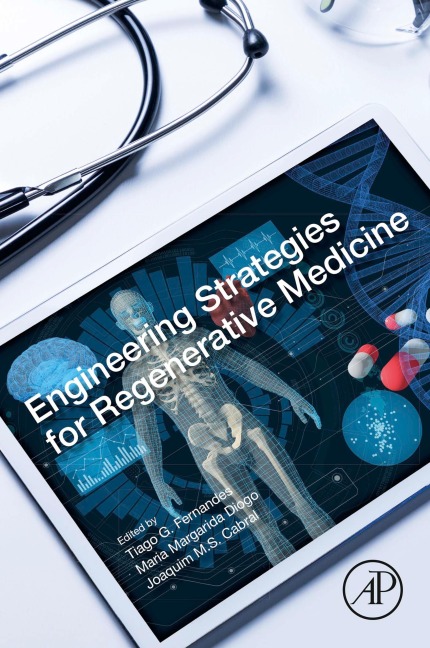
Engineering Strategies for Regenerative Medicine considers how engineering strategies can be applied to accelerate advances in regenerative medicine. The book provides relevant and up-to-date content on key topics, including the interdisciplinary integration of different aspects of stem cell biology and technology, diverse technologies, and their applications. By providing massive amounts of data on each individual, recent scientific advances are rapidly accelerating medicine. Cellular, molecular and genetic parameters from biological samples combined with clinical information can now provide valuable data to scientists, clinicians and ultimately patients, leading to the development of precision medicine. Equally noteworthy are the contributions of stem cell biology, bioengineering and tissue engineering that unravel the mechanisms of disease, regeneration and development.
- Considers how engineering strategies can accelerate novel advances in regenerative medicine
- Takes an interdisciplinary approach, integrating different aspects of research, technology and application
- Provides up-to-date coverage on this rapidly developing area of medicine
- Presents insights from an experienced and cross-disciplinary group of researchers and practitioners with close links to industry
Introduction1. Pluripotent Stem Cell Biology and Engineering 2. Process Development and Manufacturing Approaches for Mesenchymal stem cell therapies3. Bio-inspired Materials and Tissue Engineering Approaches applied to the Regeneration of Musculoskeletal Tissues4. Bioengineering Strategies for Gene Delivery5. Advanced Microtechnologies for High-Throughput Screening6. Inductive Factors for generation of pluripotent stem cell-derived cardiomyocytes 7. Pluripotent cells for the assessment of chemically-induced teratogenesis and developmental toxicology8. Conclusions and Closing Remarks