Und dann auf "Zum Home-Bildschirm [+]".

Stöbern
genialokal zum Startbildschirm hinzufügen
Installieren Sie die genialokal App auf Ihrem Startbildschirm für einen schnellen Zugriff und eine komfortable Nutzung.
Installieren Sie die genialokal App auf Ihrem Startbildschirm für einen schnellen Zugriff und eine komfortable Nutzung.
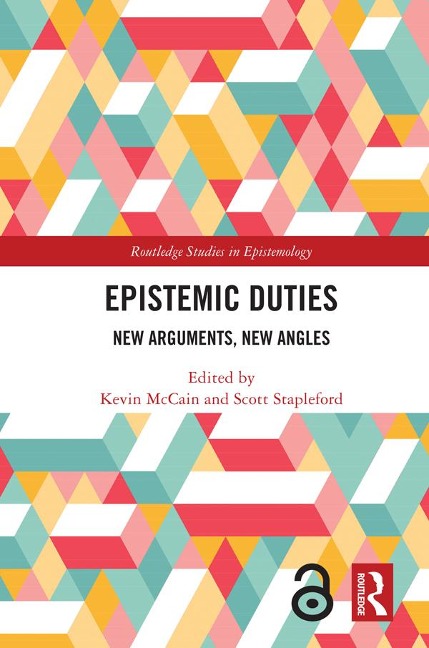
There are arguably moral, legal, and prudential constraints on behavior. But are there epistemic constraints on belief? Are there any requirements arising from intellectual considerations alone? This volume includes original essays written by top epistemologists that address this and closely related questions from a variety of new, sometimes unexpected, angles. It features a wide variety of positions, ranging from arguments for and against the existence of purely epistemic requirements, reductions of epistemic requirements to moral or prudential requirements, the biological foundations of epistemic requirements, extensions of the scope of epistemic requirements to include such things as open-mindedness, eradication of implicit bias and interpersonal duties to object, to new applications such as epistemic requirements pertaining to storytelling, testimony, and fundamentalist beliefs. Anyone interested in the nature of responsibility, belief, or epistemic normativity will find a range of useful arguments and fresh ideas in this cutting-edge anthology. Chapter 14 of this book is freely available as a downloadable Open Access PDF at http://www.taylorfrancis.com under a Creative Commons Attribution-Non Commercial-No Derivatives (CC-BY-NC-ND) 4.0 license.
Kevin McCain is Associate Professor of Philosophy at the University of Alabama at Birmingham. His published works include: Evidentialism and Epistemic Justification (Routledge, 2014), The Nature of Scientific Knowledge: An Explanatory Approach (2016), and with Kostas Kampourakis Uncertainty: How It Makes Science Advance (2019). Scott Stapleford is Professor of Philosophy at St. Thomas University, Fredericton. He is the author of Kant's Transcendental Arguments: Disciplining Pure Reason (2008), coauthor (with Tyron Goldschmidt) of Berkeley's Principles: Expanded and Explained (Routledge, 2016) and Hume's Enquiry: Expanded and Explained (Routledge, forthcoming), and coauthor (with Lorne Falkenstein and Molly Kao) of Logic Works: A Rigorous Introduction to Formal Logic (Routledge, forthcoming).
Introductory Note Kevin McCain and Scott Stapleford Part I: The Nature of Epistemic Duty 1 Epistemic Duty, Justified Belief, and Voluntary Control Matthias Steup 2 Believing Badly: Doxastic Duties are not Epistemic Duties Miriam Schleifer McCormick 3 Evading the Doxastic Puzzle by Deflating Epistemic Normativity Luis Oliveira 4 Epistemic Tension and Epistemic Duty: A Rossian Account Mark T. Nelson 5 Intellectual Responsibility and the Scope of the Will Robert Audi 6 We Are Like American Robins Ema Sullivan-Bissett Part II: Epistemic Duties of Individuals 7 Bound by the Evidence Scott Stapleford and Kevin McCain 8 Epistemic Duty and Implicit Bias Lindsay Rettler and Bradley Rettler 9 Robust Justification Jonathan Matheson 10 Ought to Believe vs. Ought to Reflect Anthony Robert Booth 11 Wisdom, Open-Mindedness, and Epistemic Duty Sharon Ryan 12 On What We Should Believe (And When (and Why) We Should Believe What We Know We Should Not Believe) Clayton Littlejohn 13 The Normative Ground of the Evidential Ought Anne Meylan Part III: Social Epistemic Duties 14 Responsibility for Fundamentalist Belief Rik Peels 15 Trust, Testimony, and Reasons for Belief Rebecca Wallbank and Andrew Reisner 16 When the Personal Becomes Political: How Do We Fulfil Our Epistemic Duties Relative to the Use of Autobiographical Stories in Public Debates? Lisa Bortolotti and Sophie Stammers 17 Dialectical Responsibility and Regress Skepticism Scott Aikin 18 Epistemic Duties Regarding Others Jennifer Lackey
Dieses eBook wird im PDF-Format geliefert und ist mit einem Adobe Kopierschutz (DRM) versehen. Sie können dieses eBook mit allen Geräten lesen, die das PDF-Format und den Adobe Kopierschutz (DRM) unterstützen.
Zum Beispiel mit den folgenden Geräten:
• tolino Reader
Laden Sie das eBook direkt über den Reader-Shop auf dem tolino herunter oder übertragen Sie das eBook auf Ihren tolino mit einer kostenlosen Software wie beispielsweise Adobe Digital Editions.
• Sony Reader & andere eBook Reader
Laden Sie das eBook direkt über den Reader-Shop herunter oder übertragen Sie das eBook mit der kostenlosen Software Sony READER FOR PC/Mac oder Adobe Digital Editions auf ein Standard-Lesegeräte mit epub- und Adobe DRM-Unterstützung.
• Tablets & Smartphones
Möchten Sie dieses eBook auf Ihrem Smartphone oder Tablet lesen, finden Sie hier unsere kostenlose Lese-App für iPhone/iPad und Android Smartphone/Tablets.
• PC & Mac
Lesen Sie das eBook direkt nach dem Herunterladen mit einer kostenlosen Lesesoftware, beispielsweise Adobe Digital Editions, Sony READER FOR PC/Mac oder direkt über Ihre eBook-Bibliothek in Ihrem Konto unter „Meine eBooks“ - „online lesen“.
Schalten Sie das eBook mit Ihrer persönlichen Adobe ID auf bis zu sechs Geräten gleichzeitig frei.
Bitte beachten Sie, dass die Kindle-Geräte das Format nicht unterstützen und dieses eBook somit nicht auf Kindle-Geräten lesbar ist.