Und dann auf "Zum Home-Bildschirm [+]".

Stöbern
genialokal zum Startbildschirm hinzufügen
Installieren Sie die genialokal App auf Ihrem Startbildschirm für einen schnellen Zugriff und eine komfortable Nutzung.
Installieren Sie die genialokal App auf Ihrem Startbildschirm für einen schnellen Zugriff und eine komfortable Nutzung.
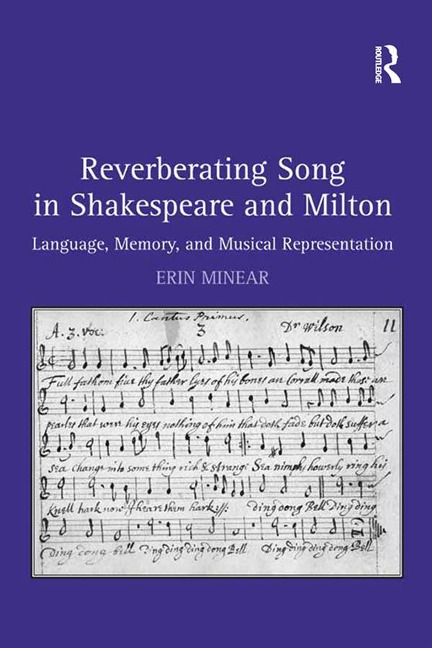
In this study, Erin Minear explores the fascination of Shakespeare and Milton with the ability of music-heard, imagined, or remembered-to infiltrate language. Such infected language reproduces not so much the formal or sonic properties of music as its effects. Shakespeare's and Milton's understanding of these effects was determined, she argues, by history and culture as well as individual sensibility. They portray music as uncanny and divine, expressive and opaque, promoting associative rather than logical thought processes and unearthing unexpected memories. The title reflects the multiple and overlapping meanings of reverberation in the study: the lingering and infectious nature of musical sound; the questionable status of audible, earthly music as an echo of celestial harmonies; and one writer's allusions to another. Minear argues that many of the qualities that seem to us characteristically 'Shakespearean' stem from Shakespeare's engagement with how music works-and that Milton was deeply influenced by this aspect of Shakespearean poetics. Analyzing Milton's account of Shakespeare's 'warbled notes,' she demonstrates that he saw Shakespeare as a peculiarly musical poet, deeply and obscurely moving his audience with language that has ceased to mean, but nonetheless lingers hauntingly in the mind. Obsessed with the relationship between words and music for reasons of his own, including his father's profession as a composer, Milton would adopt, adapt, and finally reject Shakespeare's form of musical poetics in his own quest to 'join the angel choir.' Offering a new way of looking at the work of two major authors, this study engages and challenges scholars of Shakespeare, Milton, and early modern culture.
Erin Minear
Acknowledgments; Introduction; Chapter 1 Creeping Music: Sounds, Surfaces, and Spheres in The Merchant of Venice; Chapter 2 "We Have Nonesuch": The Haunting Melody; Chapter 3 "Re-speaking Earthly Thunder": Hamlet's Sonic Phantoms; Chapter 4 Playing Music: Twelfth Night and The Tempest; Chapter 5 Warbling Fancies: Milton, Shakespeare, and the Musical Imagination; Chapter 6 "Serpit Agens": The Song of the Blest Siren; Chapter 7 "Minims of Nature": Describing Music in Paradise Lost; Conclusion: Spirits of Another Sort; or, Hymning and Humming;
Dieses eBook wird im PDF-Format geliefert und ist mit einem Adobe Kopierschutz (DRM) versehen. Sie können dieses eBook mit allen Geräten lesen, die das PDF-Format und den Adobe Kopierschutz (DRM) unterstützen.
Zum Beispiel mit den folgenden Geräten:
• tolino Reader
Laden Sie das eBook direkt über den Reader-Shop auf dem tolino herunter oder übertragen Sie das eBook auf Ihren tolino mit einer kostenlosen Software wie beispielsweise Adobe Digital Editions.
• Sony Reader & andere eBook Reader
Laden Sie das eBook direkt über den Reader-Shop herunter oder übertragen Sie das eBook mit der kostenlosen Software Sony READER FOR PC/Mac oder Adobe Digital Editions auf ein Standard-Lesegeräte mit epub- und Adobe DRM-Unterstützung.
• Tablets & Smartphones
Möchten Sie dieses eBook auf Ihrem Smartphone oder Tablet lesen, finden Sie hier unsere kostenlose Lese-App für iPhone/iPad und Android Smartphone/Tablets.
• PC & Mac
Lesen Sie das eBook direkt nach dem Herunterladen mit einer kostenlosen Lesesoftware, beispielsweise Adobe Digital Editions, Sony READER FOR PC/Mac oder direkt über Ihre eBook-Bibliothek in Ihrem Konto unter „Meine eBooks“ - „online lesen“.
Schalten Sie das eBook mit Ihrer persönlichen Adobe ID auf bis zu sechs Geräten gleichzeitig frei.
Bitte beachten Sie, dass die Kindle-Geräte das Format nicht unterstützen und dieses eBook somit nicht auf Kindle-Geräten lesbar ist.