Und dann auf "Zum Home-Bildschirm [+]".

Stöbern
genialokal zum Startbildschirm hinzufügen
Installieren Sie die genialokal App auf Ihrem Startbildschirm für einen schnellen Zugriff und eine komfortable Nutzung.
Installieren Sie die genialokal App auf Ihrem Startbildschirm für einen schnellen Zugriff und eine komfortable Nutzung.
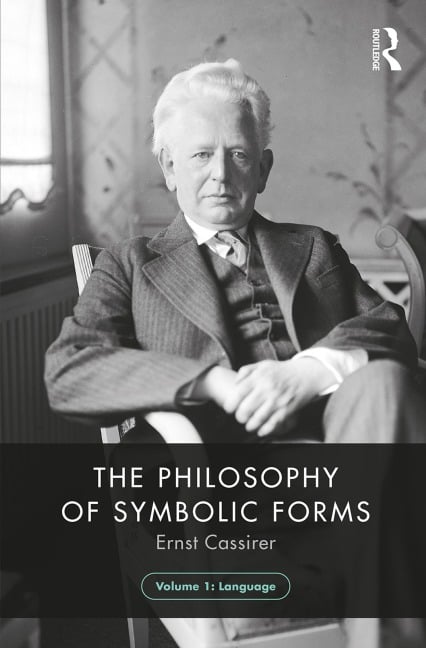
"The Philosophy of Symbolic Forms is a milestone in twentieth century philosophy. Promoting a philosophical vision informed by Kant, it incorporates the philosophical advances achieved in the nineteenth century by German Idealism and Neo-Kantianism, whilst acknowledging the contributions made by his contemporary phenomenologists. It also encompasses empirical and historical research on culture and the most contemporary work on myth, linguistics and psychopathology. As such, it ranks in philosophical importance along with other major works of the twentieth century, such as Edmund Husserl's Logical Investigations, Martin Heidegger's Being and Time, and Ludwig Wittgenstein's Tractatus Logico-Philosophicus. In the first volume, Cassirer explores the symbolic form of language. Already recognized by thinkers in the tradition of German Idealism, such as Wilhelm von Humboldt, language is the primary medium by which we interact with others and form a common world. As Cassirer emphasizes in the famous Davos Debate with Heidegger, 'there is one objective human world, in which a bridge is built from individual to individual. That I find in the primal phenomenon of language.' The famous trias Cassirer discerns in the functioning of language - the functions of expression (Ausdruck), presentation (Darstellung), and signification (Bedeutung) - has become paradigmatic for accounts of language, philosophical, linguistic, and anthropological alike." Sebastian Luft, Professor of Philosophy, Marquette University, USA. This new translation makes Cassirer's seminal work available to a new generation of scholars. Each volume includes a translator's introduction by Steve G. Lofts, a foreword by Peter E. Gordon, a glossary of key terms, and an index.
Ernst Cassirer was born in Germany 1874 in the city of Breslau (now Wroclaw, Poland). He taught at Hamburg University from 1919 to 1933, and then at All Souls College, Oxford, before emigrating to Sweden and then to the United States. Through its creative interpretation of Kant's philosophy combined with a deep knowledge of the role of language and culture, Cassirer's work is regarded as indispensable to understanding the relationship between the two major traditions in twentieth-century philosophy, the "analytic" and the "continental". Cassirer's philosophy is unique, as it sought a common ground between the scientific and humanistic worldviews which frequently divided these two traditions, exemplified in his famous debate with Martin Heidegger at Davos in 1929. His work resulted in the monumental Philosophy of Symbolic Forms as well as several books on the philosophy of humanism and the Enlightenment. He taught at the universities of Yale and Columbia in the early 1940s and died in New York in 1945. Steve G. Lofts is Professor of Philosophy at King's University College, Canada. He is the translator of Cassirer's The Logic of the Cultural Sciences and The Warburg Years (1919-1933): Essays on Language, Art, Myth, and Technology.
Foreword Peter E. Gordon Translator's Preface Steve G. Lofts Translator's Introduction: The Question Concerning the Human - Life, Form, and Freedom: On the Way to an Open Cosmopolitanism Steve G. Lofts Translator's Acknowledgements Steve G. Lofts Preface Introduction and the Framing of the Problem Volume 1: Toward a Phenomenology of the Linguistic Form 1. The Problem of Language in the History of Philosophy 2. Language in the Phase of Sensible Expression 3. Language in the Phase of Intuitive Expression 4. Language as the Expression of Conceptual Thinking: The Form of Linguistic Concept and Class Formation 5. Language and the Expression of the Pure Forms of Relation: The Sphere of Judgment and the Concepts of Relation [Relation]. Glossary of German Terms Index
Dieses eBook wird im PDF-Format geliefert und ist mit einem Adobe Kopierschutz (DRM) versehen. Sie können dieses eBook mit allen Geräten lesen, die das PDF-Format und den Adobe Kopierschutz (DRM) unterstützen.
Zum Beispiel mit den folgenden Geräten:
• tolino Reader
Laden Sie das eBook direkt über den Reader-Shop auf dem tolino herunter oder übertragen Sie das eBook auf Ihren tolino mit einer kostenlosen Software wie beispielsweise Adobe Digital Editions.
• Sony Reader & andere eBook Reader
Laden Sie das eBook direkt über den Reader-Shop herunter oder übertragen Sie das eBook mit der kostenlosen Software Sony READER FOR PC/Mac oder Adobe Digital Editions auf ein Standard-Lesegeräte mit epub- und Adobe DRM-Unterstützung.
• Tablets & Smartphones
Möchten Sie dieses eBook auf Ihrem Smartphone oder Tablet lesen, finden Sie hier unsere kostenlose Lese-App für iPhone/iPad und Android Smartphone/Tablets.
• PC & Mac
Lesen Sie das eBook direkt nach dem Herunterladen mit einer kostenlosen Lesesoftware, beispielsweise Adobe Digital Editions, Sony READER FOR PC/Mac oder direkt über Ihre eBook-Bibliothek in Ihrem Konto unter „Meine eBooks“ - „online lesen“.
Schalten Sie das eBook mit Ihrer persönlichen Adobe ID auf bis zu sechs Geräten gleichzeitig frei.
Bitte beachten Sie, dass die Kindle-Geräte das Format nicht unterstützen und dieses eBook somit nicht auf Kindle-Geräten lesbar ist.