Und dann auf "Zum Home-Bildschirm [+]".

Stöbern
genialokal zum Startbildschirm hinzufügen
Installieren Sie die genialokal App auf Ihrem Startbildschirm für einen schnellen Zugriff und eine komfortable Nutzung.
Installieren Sie die genialokal App auf Ihrem Startbildschirm für einen schnellen Zugriff und eine komfortable Nutzung.
Ihr gewünschter Artikel ist in 0 Buchhandlungen vorrätig - wählen Sie hier eine Buchhandlung in Ihrer Nähe aus:

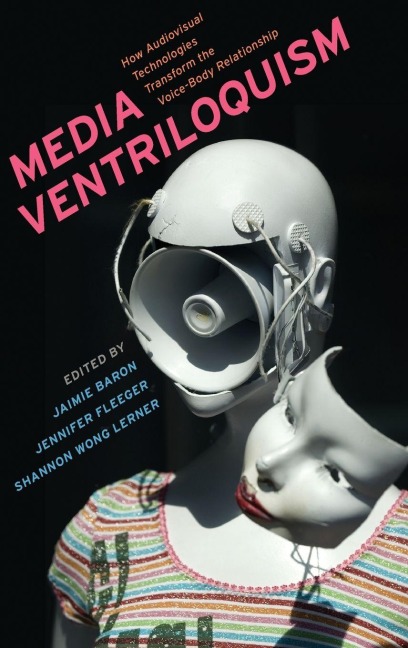
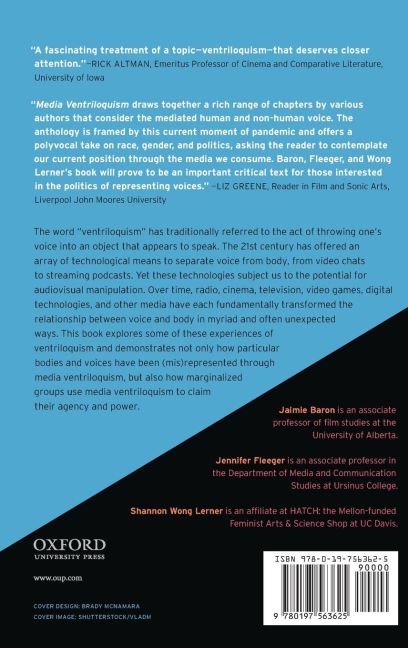
The word "ventriloquism" has traditionally referred to the act of throwing one's voice into an object that appears to speak. Media Ventriloquism repurposes the term to reflect our complex vocal relationship with media technologies. The 21st century has offered an array of technological means to separate voice from body, practices which have been used for good and ill. We currently zoom about the internet, in conversations full of audio glitches, using tools that make it possible to live life at a distance. Yet at the same time, these technologies subject us to the potential for audiovisual manipulation. But this voice/body split is not new. Radio, cinema, television, video games, digital technologies, and other media have each fundamentally transformed the relationship between voice and body in myriad and often unexpected ways. This book explores some of these experiences of ventriloquism and considers the political and ethical implications of separating bodies from voices. The essays in the collection, which represent a variety of academic disciplines, demonstrate not only how particular bodies and voices have been (mis)represented through media ventriloquism, but also how marginalized groups - racialized, gendered, and queered, among them - have used media ventriloquism to claim their agency and power.
Jaimie Baron is an associate professor of film studies at the University of Alberta. She is the author of two books, The Archive Effect: Found Footage and the Audiovisual Experience of History (2014) and Reuse, Misuse, Abuse: The Ethics of Audiovisual Appropriation in the Digital Era (2020), and numerous journal articles and book chapters. She is the director of the Festival of (In)appropriation, a festival of short experimental found footage films and videos, and co-editor of the Docalogue website and book series.
Jennifer Fleeger is an associate professor in the Department of Media and Communication Studies at Ursinus College where she coordinates the program in Film Studies. She has written about the voice in two books for Oxford University Press, Sounding American: Hollywood, Opera, and Jazz and Mismatched Women: The Siren's Song through the Machine.
Shannon Wong Lerner is an affiliate at HATCH: the Mellon-funded Feminist Arts & Science Shop at UC Davis. She has written about breath, gender/sexuation, queerness, and voice in the chapter, "All of My Work is Performance: Irigarayan Methods of Breath for Dance and Voice" in Breathing with Luce Irigaray (2013). She has written and debuted a queer Asian Pacific Islander I play I Feel Bad That You Felt Bad/You Felt Bad That I Feel Bad, and an intersectional feminist operetta, No One Hurts You More Than S/Mother. She is the creator of Queer Home Meditation, an online community of LGBTQIA+ practitioners, host of the podcast The Intersection: Diverse Folx Converse, and co-hosts eFEMeral: Voice Matters. She regularly contributes her writing to open-source platforms such as Medium.
- Introduction: Theorizing Media Ventriloquism
- Jaimie Baron, Jennifer Fleeger, and Shannon Wong Lerner
- Section I: Speaking in Another Voice
- Introduction: Reactivating the Vocal Uncanny
- Jaimie Baron
- Chapter 1: Echoes down the years: technologies of mediumship and immortality
- Alicia Puglionesi
- Chapter 2: Broadcasting the Diva of Dubbing: Marni Nixon, Local Television, and the Puppetry of Parenting
- Jennifer Fleeger
- Chapter 3: Queer from the Horse's Mouth: Francis the Talking Mule and Mr. Ed as Midcentury Man Whisperers
- Maria Pramaggiore
- Section II: Singing in Another Voice
- Introduction: Singing the Body Technovocalic
- Jaimie Baron
- Chapter 4: "Mike Fright": Racial Ventriloquism in the Hollywood Talkies
- Ryan Jay Friedman
- Chapter 5: The Black Queer/Trans Femme Representation of Beyoncé's Media Ventriloquisms and the National Voice
- Shannon Wong Lerner
- Chapter 6: Identity Politics and Vocal "Whitewashing" in Celebrity Lip Syncs
- Jennifer O'Meara
- Section III: Animating the Voice
- Introduction: Breathing in Mediated Spaces
- Shannon Wong Lerner
- Chapter 7: The Mills Brothers, Animators of the Unseen Stage
- Jacob Smith
- Chapter 8: Performing Fragility: Re-sounding the Gendered Hero in the Voice of Lara Croft
- Milena Droumeva
- Chapter 9: Double-Ventriloquism and Aegyo in Overwatch
- William Dunkel and Aaron Trammell
- Section IV: Politicizing the Voice
- Introduction: Of Technovocalic Presidents and Precedents
- Shannon Wong Lerner
- Chapter 10: Ventriloquizing Obama, or, the Ethics of Archival Ventriloquism
- Jaimie Baron
- Chapter 11: "You're the puppet": Presidential Ventriloquism, Vocal Technologies, and the Politics of Voice
- Sarah Kessler
- Epilogue
- Introduction: Media Ventriloquism in the Distant Present
- Jennifer Fleeger
- Epilogue: The Ventriloquism of Media: Communication as Delegation and Tele-action
- François Cooren, Lise Higham, and Boris H. J. M. Brummans