Und dann auf "Zum Home-Bildschirm [+]".

Stöbern
genialokal zum Startbildschirm hinzufügen
Installieren Sie die genialokal App auf Ihrem Startbildschirm für einen schnellen Zugriff und eine komfortable Nutzung.
Installieren Sie die genialokal App auf Ihrem Startbildschirm für einen schnellen Zugriff und eine komfortable Nutzung.
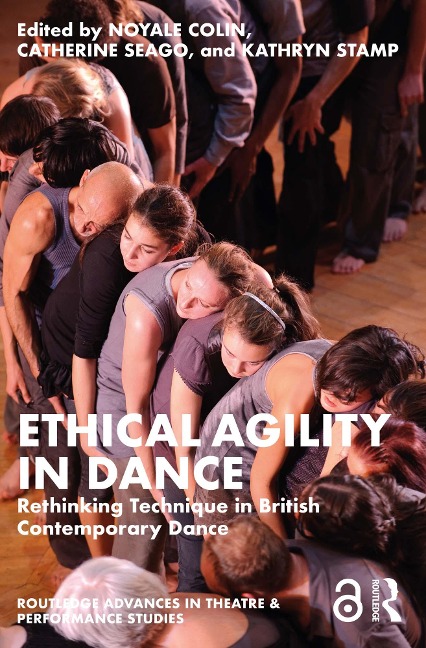
This edited collection examines the potential of dance training for developing socially engaged individuals capable of forging ethical human relations for an ever-changing world and in turn frames dance as a fundamental part of human experience. This volume draws together a range of critical voices to reflect the inclusive potential of dance. The contributions offer perspectives on contemporary dance training in Britain from dance educators, scholars, practitioners and artists. Through examining the politics, values and ethics of learning dance today, this book argues for the need of a re-assessment of the evolving practices in dance training and techniques. Key questions address how the concept of 'technique' and associated systems of training in dance could be redefined to enable the collaboration of skills and application of ideas necessary to twenty-first-century dance. The editors present these ideas in different modes of writing. This collection of essays, conversations and manifestos offers a way to explore, debate and grasp the shifting values of contemporary dance. Examining these values in the applied field of dance reveals a complex and contrasting range of ideas, encompassing broad themes including the relationships between individuality and collectivity, rigour and creativity, and virtuosity and inclusivity. This volume points to ethical techniques as providing a way of navigating these contrasting values in dance. It serves as an invaluable resource for academics as well as practitioners and students.
Noyale Colin is a Senior Lecturer in Dance at the University of Winchester, UK. Catherine Seago is a Senior Lecturer in Dance at the University of Winchester, UK. Kathryn Stamp is an Assistant Professor in Dance Studies at the Centre for Dance Research (C-DaRE), Coventry University, UK.
Introduction: Noyale Colin & Cathy Seago; Section 1 - Ethics and Values; Chapter 1: Movement as a Social Project- Fiona Bannon; Chapter 2: Emergence -how do we assess / access becoming?- Adesola Akinleye; Chapter 3: Values, technique and creativity- Noyale Colin; Chapter 4: Democratizing dance: inclusion at the core of dance education and its impact- Betina Panagiotora; Chapter 5: African based dance technique in Higher education-Funmi Adewole; Section 2 - Practices; Chapter 6: Precision and Particularity- Jamie Dryburgh; Chapter 7: Embodying Unpredictability- Cathy Seago; Chapter 8: Digital Tools in Formal and Informal Dance Education Environments - Rosemary E. Cisneros, Marie-Louise Crawley, Karen Wood- Chapter 9: Improvisation and Spirituality in Dance- Eline Kieft; Section 3 - Conversations- Inclusive Practice Conversations; Chapter 10: Training for intergenerational dancing- Debbie Lee Anthony and Diane Amans; Chapter 11: Neurodiverse Collaborations: Changing perceptions of abilities in neuro-diverse populations- Caroline Hotchkiss; Chapter 12: Translating technique: Approaches to inclusive dance training in the UK- Imogen Aujila; Dance and Education Conversations; Chapter 13: Choreographic pedagogies: Training students' experiences- Shantel Ehrenberg; Chapter 14: Choreography as technique- Sarah Alexander; Chapter 15: School Dance Teacher Roundtable- Noyale Colin & Cathy Seago; Independent Artist Conversations; Chapter 16: Training and citizenship- Stefanie Schober; Chapter 17: Training and solidarity- Charlotte Spencer; Chapter 18: Dance training and the potential of embodied practices- Henrietta Hale; Section 4 --Manifestos; Chapter 19: The End of Technique- Baptiste Bourgougnon and Lise Uytterhoeven; Chapter 20: Staying Alive: the dance technique class as a means for survival- Erica Stanton; Chapter 21: Dance training and the potential of strategies of self-organisation- Joe Moran
Dieses eBook wird im PDF-Format geliefert und ist mit einem Adobe Kopierschutz (DRM) versehen. Sie können dieses eBook mit allen Geräten lesen, die das PDF-Format und den Adobe Kopierschutz (DRM) unterstützen.
Zum Beispiel mit den folgenden Geräten:
• tolino Reader
Laden Sie das eBook direkt über den Reader-Shop auf dem tolino herunter oder übertragen Sie das eBook auf Ihren tolino mit einer kostenlosen Software wie beispielsweise Adobe Digital Editions.
• Sony Reader & andere eBook Reader
Laden Sie das eBook direkt über den Reader-Shop herunter oder übertragen Sie das eBook mit der kostenlosen Software Sony READER FOR PC/Mac oder Adobe Digital Editions auf ein Standard-Lesegeräte mit epub- und Adobe DRM-Unterstützung.
• Tablets & Smartphones
Möchten Sie dieses eBook auf Ihrem Smartphone oder Tablet lesen, finden Sie hier unsere kostenlose Lese-App für iPhone/iPad und Android Smartphone/Tablets.
• PC & Mac
Lesen Sie das eBook direkt nach dem Herunterladen mit einer kostenlosen Lesesoftware, beispielsweise Adobe Digital Editions, Sony READER FOR PC/Mac oder direkt über Ihre eBook-Bibliothek in Ihrem Konto unter „Meine eBooks“ - „online lesen“.
Schalten Sie das eBook mit Ihrer persönlichen Adobe ID auf bis zu sechs Geräten gleichzeitig frei.
Bitte beachten Sie, dass die Kindle-Geräte das Format nicht unterstützen und dieses eBook somit nicht auf Kindle-Geräten lesbar ist.