Und dann auf "Zum Home-Bildschirm [+]".

Stöbern
genialokal zum Startbildschirm hinzufügen
Installieren Sie die genialokal App auf Ihrem Startbildschirm für einen schnellen Zugriff und eine komfortable Nutzung.
Installieren Sie die genialokal App auf Ihrem Startbildschirm für einen schnellen Zugriff und eine komfortable Nutzung.
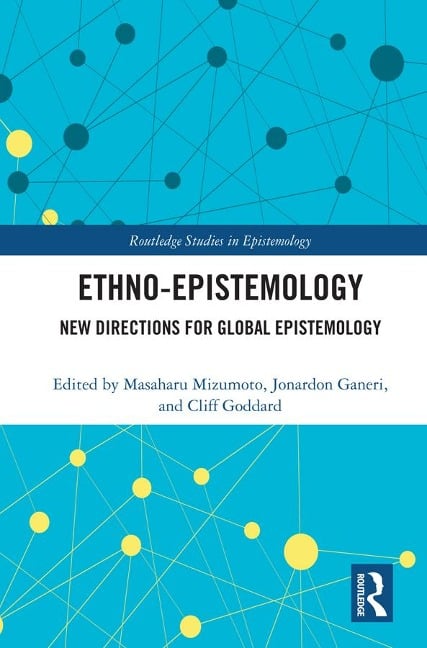
This volume features new perspectives on the implications of cross-linguistic and cultural diversity for epistemology. It brings together philosophers, linguists, and scholars working on knowledge traditions to advance work in epistemology that moves beyond the Anglophone sphere. The first group of chapters provide evidence of cross-linguistic or cultural diversity relevant to epistemology and discuss its possible implications. These essays defend epistemic pluralism based on Sanskrit data as a commitment to pluralism about epistemic stances, analyze the use of two Japanese knowledge verbs in relation to knowledge how, explore the Confucian notion of justification, and surveys cultural differences about the testimonial knowledge. The second group of chapters defends "core monism"-which claims that despite the cross-linguistic diversity of knowledge verbs, there is certain core epistemological meaning shared by all languages-from both a Natural Semantic Metalanguage (NSM) and skeptical perspective. The third cluster of essays considers the implications of cultural diversity for epistemology based on anthropological studies. These chapters explore real disparities in folk epistemology across cultures. Finally, the last two chapters discuss methods or perspectives to unify epistemology despite and based on the diversity of folk intuitions and epistemological concepts. Ethno-Epistemology is an essential resource for philosophers working in epistemology and comparative philosophy, as well as linguists and cultural anthropologists interested in the cultural-linguistic diversity of knowledge traditions.
Jonardon Ganeri is the Bimal K. Matilal Distinguished Professor of Philosophy at the University of Toronto. His previous publications include Philosophy in Classical India (Routledge), The Concealed Art of the Soul, The Self, Attention Not Self, and Classical Indian philosophy (A History of Philosophy without any Gaps, Vol. 5). Cliff Goddard is Professor of Linguistics at Griffith University. His research interests include semantics, ethnopragmatics, language description, and accessible communication. His recent books include Words and Meanings (with Anna Wierzbicka; 2014) and the edited collection Minimal English for a Global World (2018). He is a Fellow of the Australian Academy of Humanities. Masaharu Mizumoto is associate professor of Japan Advanced Institute of Science and Technology. His area of interest includes experimental epistemology, philosophy of language, Wittgenstein, etc. He is the first editor of Epistemology for the Rest of the World (2018).
Introduction 1. Epistemic Pluralism: From Systems to Stances Jonardon Ganeri 2. Knowing how and two Japanese knowledge verbs in Japanese Masaharu Mizumoto, Shun Tsugita, and Yu Izumi 3. "The Rectification of Names" as a Theory of Epistemic Justification Yingjin Xu 4. Testimony, Credit, and Blame Shane Ryan, Chienkuo Mi, and Masaharu Mizumoto 5. Linguistic Strategies against Epistemic Injustice Elin McCready 6. Overcoming the linguistic challenges for ethno-epistemology: NSM perspectives Cliff Goddard 7. Skeptical arguments, conceptual metaphors, and cross-cultural challenges Julianne Chung 8. Delusions in Two Worlds Dominic Murphy 9. Challenges for an Anthropology of Knowledge Søren Harnow Klausen 10. How to Buy Knowedge in Ende Satoshi Nakagawa 11. Conceptual Construction in Epistemology Thomas Grundmann 12. Experimental Philosophy and Analytic Philosophy in the Reflection of Comparative Philosophy Anand Jayprakash Vaidya & Purushottama Bilimoria
Dieses eBook wird im PDF-Format geliefert und ist mit einem Adobe Kopierschutz (DRM) versehen. Sie können dieses eBook mit allen Geräten lesen, die das PDF-Format und den Adobe Kopierschutz (DRM) unterstützen.
Zum Beispiel mit den folgenden Geräten:
• tolino Reader
Laden Sie das eBook direkt über den Reader-Shop auf dem tolino herunter oder übertragen Sie das eBook auf Ihren tolino mit einer kostenlosen Software wie beispielsweise Adobe Digital Editions.
• Sony Reader & andere eBook Reader
Laden Sie das eBook direkt über den Reader-Shop herunter oder übertragen Sie das eBook mit der kostenlosen Software Sony READER FOR PC/Mac oder Adobe Digital Editions auf ein Standard-Lesegeräte mit epub- und Adobe DRM-Unterstützung.
• Tablets & Smartphones
Möchten Sie dieses eBook auf Ihrem Smartphone oder Tablet lesen, finden Sie hier unsere kostenlose Lese-App für iPhone/iPad und Android Smartphone/Tablets.
• PC & Mac
Lesen Sie das eBook direkt nach dem Herunterladen mit einer kostenlosen Lesesoftware, beispielsweise Adobe Digital Editions, Sony READER FOR PC/Mac oder direkt über Ihre eBook-Bibliothek in Ihrem Konto unter „Meine eBooks“ - „online lesen“.
Schalten Sie das eBook mit Ihrer persönlichen Adobe ID auf bis zu sechs Geräten gleichzeitig frei.
Bitte beachten Sie, dass die Kindle-Geräte das Format nicht unterstützen und dieses eBook somit nicht auf Kindle-Geräten lesbar ist.