Und dann auf "Zum Home-Bildschirm [+]".

Stöbern
genialokal zum Startbildschirm hinzufügen
Installieren Sie die genialokal App auf Ihrem Startbildschirm für einen schnellen Zugriff und eine komfortable Nutzung.
Installieren Sie die genialokal App auf Ihrem Startbildschirm für einen schnellen Zugriff und eine komfortable Nutzung.
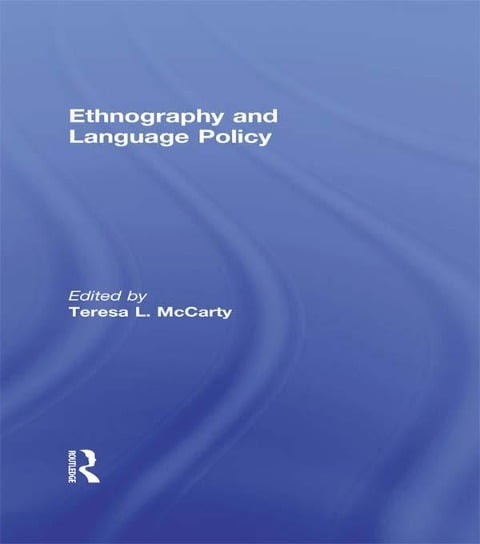
Illuminating, through ethnographic inquiry, how individual agents "make" language policy in everyday social practice, this volume advances the growing field of language planning and policy using a critical sociocultural approach. From this perspective, language policy is conceptualized not only as official acts and documents, but as language-regulating modes of human interaction, negotiation, and production mediated by relations of power. Using this conceptual framework, the volume addresses the impacts of globalization, diaspora, and transmigration on language practices and policies; language endangerment, revitalization, and maintenance; medium-of-instruction policies; literacy and biliteracy; language and ethnic/national identity; and the ethical tensions in conducting critical ethnographic language policy research. These issues are contextualized in case studies and reflective commentaries by leading scholars in the field. Ethnography and Language Policy extends previous work in the field, tapping into leading-edge interdisciplinary scholarship, and charting new directions. Recognizing that language policy is not merely or even primarily about language per se, but rather about power relations that structure social-linguistic hierarchies, the authors seek to expand policy discourses in ways that foster social justice for all.
Teresa L. McCarty is the Alice Wiley Snell Professor of Education Policy Studies, Professor of Applied Linguistics, and Co-Director of the Center for Indian Education at Arizona State University.
Foreword, Courtney Cazden Preface Acknowledgements ENTRY INTO CONVERSATION Introducing Ethnography and Language Policy, Teresa L. McCarty ETHNOGRAPHY AND LANGUAGE POLICY CASES AND CONTEXTS, PART I 1. Critical Ethnography and Indigenous Language Survival - Some New Directions in Language Policy Research and Praxis, Teresa L. McCarty 2. "How Are You Hopi if You Can't Speak It?" - An Ethnographic Study of Language as Cultural Practice among Contemporary Hopi Youth, Sheilah E. Nicholas 3. Diaspora Communities, Language Maintenance, and Policy Dilemmas, A. Suresh Canagarajah 4. Reconstructing Ethnography and Language Policy in Colonial Namibian Schooling: Historical Perspectives on St. Mary's High School at Odibo, Rodney Hopson INTERLUDE - COMMENTARIES ON PART I Language Ideologies, Ethnography, and Ethnology: Directions in Anthropological Approaches to Language Policy, Perry Gilmore Language, Globalization, and the State: Issues for the New Policy Studies, James Collins ETHNOGRAPHY AND LANGUAGE POLICY CASES AND CONTEXTS, PART II 5. International Migration and Quichua Language Shift in the Ecuadorian Andes, Kendall A. King and Marleen Haboud 6. Exploring Biliteracy in Mäori-Medium Education: An Ethnographic Perspective, Richard Hill and Stephen May 7. U.S. Latinos and the Learning of English: The Metonymy of Language Policy, Mary Carol Combs, Norma González, and Luis C. Moll 8. Critical Perspectives on Language-in-education Policy: The Corsican Example, Alexandra Jaffe 9. Languages, Texts, and Literacy Practices: An Ethnographic Lens on Bilingual Vocational Education in Wales, Marilyn Martin-Jones 10. Researching-Texting Tensions in Qualitative Research: Ethics in and around Textual Fidelity, Selectivity, and Translations, Vaidehi Ramanathan SYNTHESIS AND DISCUSSION The Ethnography of Language Policy, Nancy H. Hornberger and David Cassels Johnson About the Contributors Author Index Subject Index
Dieses eBook wird im PDF-Format geliefert und ist mit einem Adobe Kopierschutz (DRM) versehen. Sie können dieses eBook mit allen Geräten lesen, die das PDF-Format und den Adobe Kopierschutz (DRM) unterstützen.
Zum Beispiel mit den folgenden Geräten:
• tolino Reader
Laden Sie das eBook direkt über den Reader-Shop auf dem tolino herunter oder übertragen Sie das eBook auf Ihren tolino mit einer kostenlosen Software wie beispielsweise Adobe Digital Editions.
• Sony Reader & andere eBook Reader
Laden Sie das eBook direkt über den Reader-Shop herunter oder übertragen Sie das eBook mit der kostenlosen Software Sony READER FOR PC/Mac oder Adobe Digital Editions auf ein Standard-Lesegeräte mit epub- und Adobe DRM-Unterstützung.
• Tablets & Smartphones
Möchten Sie dieses eBook auf Ihrem Smartphone oder Tablet lesen, finden Sie hier unsere kostenlose Lese-App für iPhone/iPad und Android Smartphone/Tablets.
• PC & Mac
Lesen Sie das eBook direkt nach dem Herunterladen mit einer kostenlosen Lesesoftware, beispielsweise Adobe Digital Editions, Sony READER FOR PC/Mac oder direkt über Ihre eBook-Bibliothek in Ihrem Konto unter „Meine eBooks“ - „online lesen“.
Schalten Sie das eBook mit Ihrer persönlichen Adobe ID auf bis zu sechs Geräten gleichzeitig frei.
Bitte beachten Sie, dass die Kindle-Geräte das Format nicht unterstützen und dieses eBook somit nicht auf Kindle-Geräten lesbar ist.