Und dann auf "Zum Home-Bildschirm [+]".

Stöbern
genialokal zum Startbildschirm hinzufügen
Installieren Sie die genialokal App auf Ihrem Startbildschirm für einen schnellen Zugriff und eine komfortable Nutzung.
Installieren Sie die genialokal App auf Ihrem Startbildschirm für einen schnellen Zugriff und eine komfortable Nutzung.
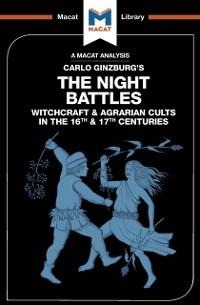
In The Night Battles, Carlo Ginzburg does more than introduce his readers to a novel group of supposed witches - the Benandanti, from the northern Italian province of Friulia. He also invents and deploys new and creative ways of tackling his source material that allow him to move beyond their limitations. Witchcraft documents are notoriously tricky sources - produced by elites with fixed views, they are products of questioning designed to prove or disprove guilt, rather than understand the subtleties of belief, and are very often the products of torture. Ginzburg placed great stress on variations in the evidence of the Benandanti over time to reveal changing patterns of belief, and also focused on the concept of 'reading against the text' - essentially looking as much at what is absent from the record as at what is present in it, and attempting to understand what the absences mean. His work not only pioneered the creation of a new school of historical study - 'microhistory' - it is also a great example of the creative thinking skills of connecting things together in an original way, producing novel explanations for existing evidence, and redefining an issue so as to see it in a new light.
Etienne Stockland is researching a PhD in Environmental History at Columbia University. Luke Freeman is a PhD candidate in History at the University of Minnesota , Twin Cities. In addition to his work as an Historian he holds masters degrees in Diviinity and Sacred Theology from the Yale University Divinity School.
Ways in to the Text Who was Carlo Ginzburg? What does The Night Battles Say? Why does The Night Battles Matter? Section 1: Influences Module 1: The Author and the Historical Context Module 2: Academic Context Module 3: The Problem Module 4: The Author's Contribution Section 2: Ideas Module 5: Main Ideas Module 6: Secondary Ideas Module 7: Achievement Module 8: Place in the Author's Work Section 3: Impact Module 9: The First Responses Module 10: The Evolving Debate Module 11: Impact and Influence Today Module 12: Where Next? Glossary of Terms People Mentioned in the Text Works Cited
Dieses eBook wird im PDF-Format geliefert und ist mit einem Adobe Kopierschutz (DRM) versehen. Sie können dieses eBook mit allen Geräten lesen, die das PDF-Format und den Adobe Kopierschutz (DRM) unterstützen.
Zum Beispiel mit den folgenden Geräten:
• tolino Reader
Laden Sie das eBook direkt über den Reader-Shop auf dem tolino herunter oder übertragen Sie das eBook auf Ihren tolino mit einer kostenlosen Software wie beispielsweise Adobe Digital Editions.
• Sony Reader & andere eBook Reader
Laden Sie das eBook direkt über den Reader-Shop herunter oder übertragen Sie das eBook mit der kostenlosen Software Sony READER FOR PC/Mac oder Adobe Digital Editions auf ein Standard-Lesegeräte mit epub- und Adobe DRM-Unterstützung.
• Tablets & Smartphones
Möchten Sie dieses eBook auf Ihrem Smartphone oder Tablet lesen, finden Sie hier unsere kostenlose Lese-App für iPhone/iPad und Android Smartphone/Tablets.
• PC & Mac
Lesen Sie das eBook direkt nach dem Herunterladen mit einer kostenlosen Lesesoftware, beispielsweise Adobe Digital Editions, Sony READER FOR PC/Mac oder direkt über Ihre eBook-Bibliothek in Ihrem Konto unter „Meine eBooks“ - „online lesen“.
Schalten Sie das eBook mit Ihrer persönlichen Adobe ID auf bis zu sechs Geräten gleichzeitig frei.
Bitte beachten Sie, dass die Kindle-Geräte das Format nicht unterstützen und dieses eBook somit nicht auf Kindle-Geräten lesbar ist.