Und dann auf "Zum Home-Bildschirm [+]".

Stöbern
genialokal zum Startbildschirm hinzufügen
Installieren Sie die genialokal App auf Ihrem Startbildschirm für einen schnellen Zugriff und eine komfortable Nutzung.
Installieren Sie die genialokal App auf Ihrem Startbildschirm für einen schnellen Zugriff und eine komfortable Nutzung.
Ihr gewünschter Artikel ist in 0 Buchhandlungen vorrätig - wählen Sie hier eine Buchhandlung in Ihrer Nähe aus:

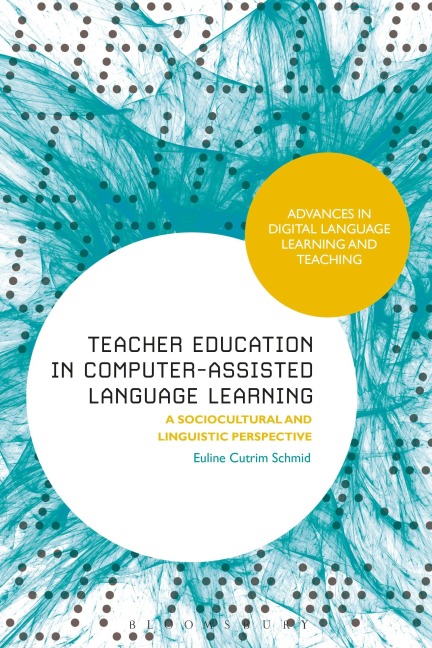
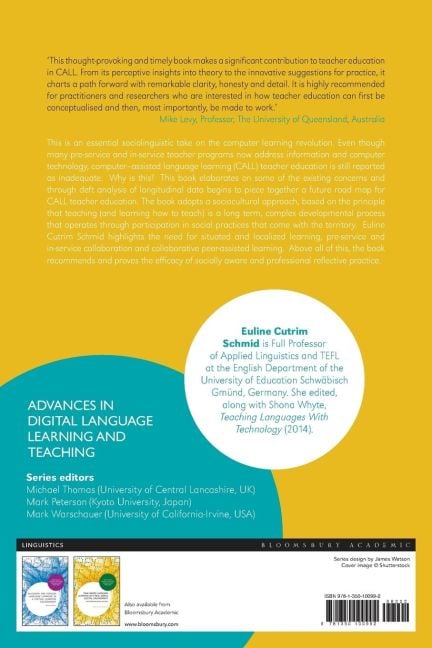
Even though many pre-service and in-service teacher programs now address information and computer technology, computer- assisted language learning (CALL) teacher education is still reported as inadequate. Why is this? This book elaborates on some of the existing concerns and through deft analysis of longitudinal data begins to piece together a future road map for CALL teacher education.
The book adopts a sociocultural approach, based on the principle that teaching (and learning how to teach) is a long term, complex developmental process that operates through participation in social practices that come with the territory. Euline Cutrim Schmid highlights the need for situated and localized learning, pre-service and in-service collaboration and collaborative peer-assisted learning. Above all of this, the book recommends and proves the efficacy of socially aware and professional reflective practice. This is an essential sociolinguistic take on the computer learning revolution.
Euline Cutrim Schmid is Full Professor of TEFL and Applied Linguistics at the University of Education Schwaebisch Gmuend, Germany.
Foreword, written by Regine Hampel (Open University, UK) Preface Part I: Theoretical Framework and Research Design 1. Research on CALL Teacher Education 2. Collaborative Action Research in CALL Teacher Education 3. Research on Language Teacher Cognition Part II: Evaluation of the Professional Development Program 4. Individual Consultancy and Expert Mediation 5. Pre-service/In-service Collaboration 6. Video-stimulated Reflection 7. Peer-assisted Collaborative Learning Part III: Summary, Implications and Final Recommendations 8. Impact and Relevance of the Research Glossary Index