Und dann auf "Zum Home-Bildschirm [+]".

Stöbern
genialokal zum Startbildschirm hinzufügen
Installieren Sie die genialokal App auf Ihrem Startbildschirm für einen schnellen Zugriff und eine komfortable Nutzung.
Installieren Sie die genialokal App auf Ihrem Startbildschirm für einen schnellen Zugriff und eine komfortable Nutzung.
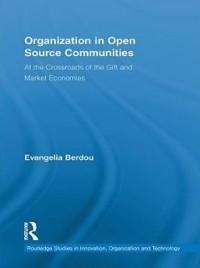
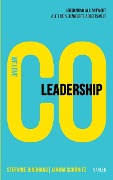
This book contributes new insights into the organization of free/open source (F/OS) software communities by examining the links between learning, division of labour and commercialization, demonstrating the need for a synthesis of work on both community organization and cooperation to understand F/OS community dynamics. These aspects are examined in the light of detailed case studies of the GNOME and KDE projects. This book offers an innovative theoretical framework, a critical assessment of various methodologies for examining the organisation of F/OS communities, and a typology of commercial involvement in F/OS. The analysis reveals the diversity and evolution of F/OS communities and their connections with other socio-economic networks and institutional practices. The insights afforded by the book have implications for future research and the design and implementation of open source efforts.
Evangelia Berdou is Research Fellow at the Institute of Development Studies at the University of Sussex. She completed her Ph.D in the Department of Media and Communications at the London School of Economics and Political Science in 2007. Her thesis was awarded LSE's Robert McKenzie prize. Her Ph.D research was sponsored by the Greek State Scholarships Foundation (IKY) and focused on dynamics of commercialization and peripheral participation (integration of new developers and participation of non-programmers) in mature, community-led Free/Open Source software communities. From 2004-2007 she worked as a research assistant in the DBE (Digital Business Ecosystem) and OPAALS (Open Philosophies for Associative Autopoietic Digital Ecosystems) European funded projects.
1. Introduction 2. Technologies of Communities and Peer Production: Disentagling Power Relations in Fl/Oss Development 3. Fl/Oss as an Object of Research: Methodological and Disciplinary Issues 4. Commercial Involvement and Fl/Oss 5. The Community, the Firm and the Two Economies 6. Learning and the Division of Labour in Fl/Oss 7. The Story So Far: Technologies of Communities and Peer Production 8. Conclusions
Dieses eBook wird im PDF-Format geliefert und ist mit einem Adobe Kopierschutz (DRM) versehen. Sie können dieses eBook mit allen Geräten lesen, die das PDF-Format und den Adobe Kopierschutz (DRM) unterstützen.
Zum Beispiel mit den folgenden Geräten:
• tolino Reader
Laden Sie das eBook direkt über den Reader-Shop auf dem tolino herunter oder übertragen Sie das eBook auf Ihren tolino mit einer kostenlosen Software wie beispielsweise Adobe Digital Editions.
• Sony Reader & andere eBook Reader
Laden Sie das eBook direkt über den Reader-Shop herunter oder übertragen Sie das eBook mit der kostenlosen Software Sony READER FOR PC/Mac oder Adobe Digital Editions auf ein Standard-Lesegeräte mit epub- und Adobe DRM-Unterstützung.
• Tablets & Smartphones
Möchten Sie dieses eBook auf Ihrem Smartphone oder Tablet lesen, finden Sie hier unsere kostenlose Lese-App für iPhone/iPad und Android Smartphone/Tablets.
• PC & Mac
Lesen Sie das eBook direkt nach dem Herunterladen mit einer kostenlosen Lesesoftware, beispielsweise Adobe Digital Editions, Sony READER FOR PC/Mac oder direkt über Ihre eBook-Bibliothek in Ihrem Konto unter „Meine eBooks“ - „online lesen“.
Schalten Sie das eBook mit Ihrer persönlichen Adobe ID auf bis zu sechs Geräten gleichzeitig frei.
Bitte beachten Sie, dass die Kindle-Geräte das Format nicht unterstützen und dieses eBook somit nicht auf Kindle-Geräten lesbar ist.