Und dann auf "Zum Home-Bildschirm [+]".

Stöbern
genialokal zum Startbildschirm hinzufügen
Installieren Sie die genialokal App auf Ihrem Startbildschirm für einen schnellen Zugriff und eine komfortable Nutzung.
Installieren Sie die genialokal App auf Ihrem Startbildschirm für einen schnellen Zugriff und eine komfortable Nutzung.
Ihr gewünschter Artikel ist in 0 Buchhandlungen vorrätig - wählen Sie hier eine Buchhandlung in Ihrer Nähe aus:

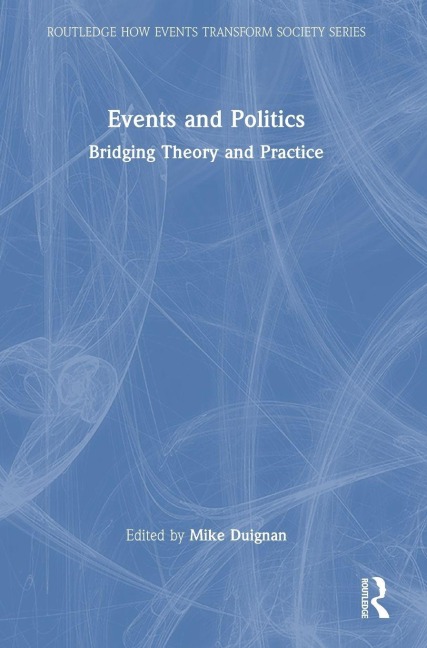
Events and Politics offer students a cutting-edge, intellectually stimulating, and accessible exploration of the deeply intertwined relationship between major events and political power.
Mike Duignan is a Professeur at the Sorbonne, University of Paris 1 (Pantheon-Sorbonne) and Editor-in-Chief of Event Management Journal. Formerly, he was an Associate Professor and Department Chair of the Department of Events at the School of Hospitality and Tourism Management at the University of Surrey, where he was also the Director of the Observatory for Human Rights and Major Events. For the past 15 years, Mike has been researching, analysing, commentating, writing, publishing, and teaching on the economics and social impacts of staging major events.
Introduction; Section I Soft power and propaganda 1 The 1936 Berlin Olympics: Propaganda, spectacle, and the politics of sport; 2 How (should?) the Olympics (intentionally) transform society?; 3 All the Olympics are a stage, and all the athletes merely players: The Olympics as theatre; Section II Sportswashing and rights 4 The Olympic industry: A threat to human rights, a threat to democracy; 5 The World Cup put the spotlight on Qatar, but also brought attention to its human rights record and politics; 6 The Paralympic Games: An event having impact on the world stage but one not without its critics; 7 Sportswashing: Managing state relations and reputations through associations with sport; Section III Diplomacy and peace 8 Playbook for peace? How world events disconnected Putin and set a precedent for isolating autocratic regimes; 9 Russia's misfired sport diplomacy? Or our misunderstanding of the 2014 (Winter Olympics) and 2018 (FIFA World Cup) sports mega-events?; 10 ConIFA events: Organizing international football tournaments for unrecognized nations on divided lands; 11 Ancient ideals, modern problems: Pierre de Coubertin and the Olympic Games; 12 Wimbledon 2022 and the politics of exclusion: Sport, sanctions, and governance in a geopolitical crisis; 13 The politics of film festivals: The case of Dinard's Festival of British Cinema; 14 Global games: A radical proposal for a sustainable future; Section IV Activism and events as platforms for protest 15 The politics of Sydney's gay and lesbian Mardi Gras; 16 Athlete activism and the Olympic movement: Resistance, defiance, and restraint; 17 FIFA World Cup: A mirage of unity; 18 Boycotting the Olympic Games: Effective policy tool or futile gesture?; 19 The Olympics are democratically illegitimate: A call for democracy in sport; 20 Black Lives Matter protests changed the US landscape and who is represented in public spaces; Section V Power, corruption, and elitism 21 The 2022 FIFA World Cup and its potential anti-corruption legacy; 22 Ancient athletic contests and Greek culture; 23 China and sport mega-events: An ongoing project; 24 Fan parks at football mega-events: Prioritizing security and improving the fan experience; 25 Fundamental challenging considerations in hosting sporting mega-events; 26 Ensuring safety and security at sporting events: Lessons from the 2022 Champions League Final in Paris; Section VI Nationalism and historical perspectives 27 Curating a contemporary dance festival in Africa: Sociopolitical insights and provocations from South Africa; 28 How 'The Dragon of Shandon' celebrates people, place, and culture on Halloween; 29 The new Olympics: How Tokyo helped reshape the games; 30 The Australian Open: An event that has grown alongside a nation; 31 Goodbye Commonwealth Games; Conclusions and recommendations