Und dann auf "Zum Home-Bildschirm [+]".

Stöbern
genialokal zum Startbildschirm hinzufügen
Installieren Sie die genialokal App auf Ihrem Startbildschirm für einen schnellen Zugriff und eine komfortable Nutzung.
Installieren Sie die genialokal App auf Ihrem Startbildschirm für einen schnellen Zugriff und eine komfortable Nutzung.
Ihr gewünschter Artikel ist in 0 Buchhandlungen vorrätig - wählen Sie hier eine Buchhandlung in Ihrer Nähe aus:

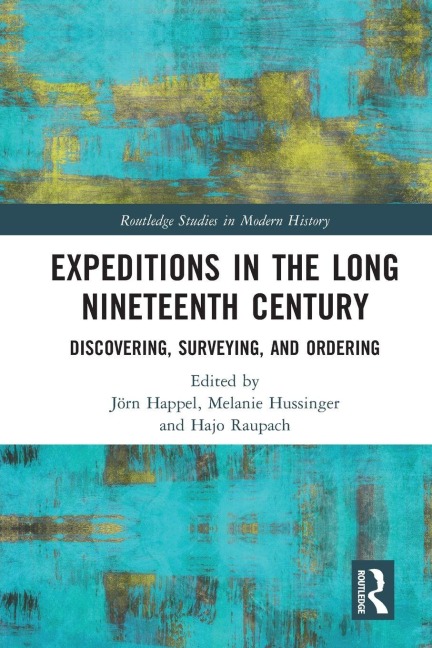
This book examines the processes of scientific, cultural, political, technical and violent appropriation during the 19th century.
Jörn Happel is professor of Eastern European and East-Central European History at Helmut Schmidt University in Hamburg (Germany) since 2020. He received his PhD from the University of Basel in 2009 with a thesis on the anti-Russian colonial uprising in Central Asia in 1916. In 2016, he received his Habilitation in Basel with a study on German-Soviet relations in the 20th century. He is currently researching the history of the Aral Sea in the 19th century. Melanie Hussinger M.A. is a research assistant at the Chair of Eastern European and East-Central European History at Helmut Schmidt University in Hamburg. Her research focuses Stalinism and political repressions in the European context, memory cultures and politics, and practices of remembrance and commemoration in post-socialist states. She is author of "Russlands Letzte Adressen. Gesellschaftliches Erinnern an die Opfer des Stalinismus" (Russia's Last Addresses. Civil commemoration of Stalin's victims, 2022). Hajo Raupach M. A. works as a research assistant at the Chair for Eastern European and East-Central European History at the Helmut-Schmidt-University Hamburg (Germany). He is writing his PhD thesis on economic experiments in the late Soviet Union. Other research interests include the cultural history of apocalypse and socialist architecture. Together with Louis M. Berger and Alexander Schnickmann he published the edited volume "Leben am Ende der Zeiten. Wissen, Praktiken und Zeitvorstellungen der Apokalypse" (Life at the end of time. Knowledge, practices and concepts of time of the apocalypse, 2021).
PART 1: DISCOVERING 1. Estonians Travelling Around the Globe: The Impact of Family Networks on the Circumnavigation Ventures of Krusenstern and Kotzebue Anna Ananieva & Alexander Ananyev 2. Scholarship and Unknown Waters. Humboldt the Scholar, Shevchenko the Painter, and Captain Butakov on the Aral Sea, 1848-49 Jörn Happel 3. Forms of Imperial Knowledge - The Orenburg Steppes as a Cultural Contact Zone around 1830 Clemens Günther 4. The Menage Expedition to the Philippines: An Unexpected Prelude to Colonial Governance Mark Rice PART 2: SURVEYING 5. Hiking Boots and Peasant Shirts: National Science, Self-Fashioning, and the Ukrainophile Tradition of Scholarly Travel Fabian Baumann & Martin Rohde 6. Consistency or Transformation? Geographical Research Practices on J. J. Rein's Expedition to Japan Tobit Nauheim 7. The Organizational and Financial Aspects of the Russian Academy of Science's Expeditions in the Eighteenth and Nineteenth Centuries Tatiana Yurievna Feklova PART 3: ORDERING 8. "Hapa Wito!" The Narrative Longevity and Instrumentalization of German Wituland: From Explorers and Soldiers of Fortune to Visionaries and Fighters for German Weltmachtstreben Moritz Pöllath 9. Finding the Stone Age. How Prehistory became a Place to Visit in New Guinea Mira Shah 10. Bringing the World into View: Explorations and the Illustrated Lecture Circuit in Early Twentieth-Century Antwerp and Brussels Margo Buelens-Terryn & Kristof Loockx