Und dann auf "Zum Home-Bildschirm [+]".

Stöbern
genialokal zum Startbildschirm hinzufügen
Installieren Sie die genialokal App auf Ihrem Startbildschirm für einen schnellen Zugriff und eine komfortable Nutzung.
Installieren Sie die genialokal App auf Ihrem Startbildschirm für einen schnellen Zugriff und eine komfortable Nutzung.
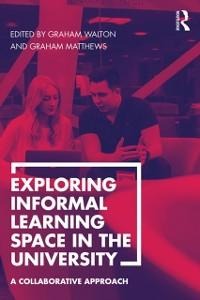
Growing student numbers, increased student expectations, new approaches to learning, and fast-paced technological advances all contribute to the need for universities to take a more strategic approach to their buildings, including formal and informal learning spaces. Exploring Informal Learning Space in the University addresses the issue of informal learning space from the perspectives of a comprehensive range of stakeholders, including students, academics, facilities managers, university managers, IT managers, architects, interior designers, and librarians. With contributions from a range of experts, practitioners and academics around the world, this book uses a combination of case studies and theoretical discussion to explore the rationale and theory of informal learning space alongside the practicalities of its planning, development and utilization. The volume is at once ambitious and pragmatic, combining innovative thinking with a firm awareness of practicalities, including the varied constraints faced by universities and the need to work in tandem with broader strategies. Advocating broad collaboration at both planning and delivery stage, the result is essential reading for anyone involved in the delivery of learning space provision - from architects and designers, to university managers and strategists. It will also be of particular interest to academics, researchers and postgraduate students engaged in the study of library & information science or higher education policy and strategy.
Graham Walton is an Honorary Research Fellow in the Centre for Information Management at Loughborough University, UK. He has over 30 years of experience in higher education and is editor-in-chief of the New Review of Academic Librarianship. During this period, he has been involved in learning space provision, including impact assessment. Graham Matthews is Professor of Information Management in the School of Business and Economics at Loughborough University, UK. He has been involved in the design and development of new and refurbished learning spaces in the university.
1. Informal Space and Learning in the University - An Introduction 2. The Strategic Perspective 3. Learning Space and Campus Planning: Theoretical Deliberations and Practical Implementations 4. The Architect's Perspective 5. Interior Design 6. Building New Informal Learning Spaces: Mini Case Studies 7. Effective Use of Information and Communication Technologies 8. A Facilities Management Perspective 9. Informal Learning Spaces in University Libraries 10. Student Perspectives 11. Evaluation and Monitoring 12. Informal Learning Space: The Future - Swimming with Whales?
Dieses eBook wird im PDF-Format geliefert und ist mit einem Adobe Kopierschutz (DRM) versehen. Sie können dieses eBook mit allen Geräten lesen, die das PDF-Format und den Adobe Kopierschutz (DRM) unterstützen.
Zum Beispiel mit den folgenden Geräten:
• tolino Reader
Laden Sie das eBook direkt über den Reader-Shop auf dem tolino herunter oder übertragen Sie das eBook auf Ihren tolino mit einer kostenlosen Software wie beispielsweise Adobe Digital Editions.
• Sony Reader & andere eBook Reader
Laden Sie das eBook direkt über den Reader-Shop herunter oder übertragen Sie das eBook mit der kostenlosen Software Sony READER FOR PC/Mac oder Adobe Digital Editions auf ein Standard-Lesegeräte mit epub- und Adobe DRM-Unterstützung.
• Tablets & Smartphones
Möchten Sie dieses eBook auf Ihrem Smartphone oder Tablet lesen, finden Sie hier unsere kostenlose Lese-App für iPhone/iPad und Android Smartphone/Tablets.
• PC & Mac
Lesen Sie das eBook direkt nach dem Herunterladen mit einer kostenlosen Lesesoftware, beispielsweise Adobe Digital Editions, Sony READER FOR PC/Mac oder direkt über Ihre eBook-Bibliothek in Ihrem Konto unter „Meine eBooks“ - „online lesen“.
Schalten Sie das eBook mit Ihrer persönlichen Adobe ID auf bis zu sechs Geräten gleichzeitig frei.
Bitte beachten Sie, dass die Kindle-Geräte das Format nicht unterstützen und dieses eBook somit nicht auf Kindle-Geräten lesbar ist.