Und dann auf "Zum Home-Bildschirm [+]".

Stöbern
genialokal zum Startbildschirm hinzufügen
Installieren Sie die genialokal App auf Ihrem Startbildschirm für einen schnellen Zugriff und eine komfortable Nutzung.
Installieren Sie die genialokal App auf Ihrem Startbildschirm für einen schnellen Zugriff und eine komfortable Nutzung.
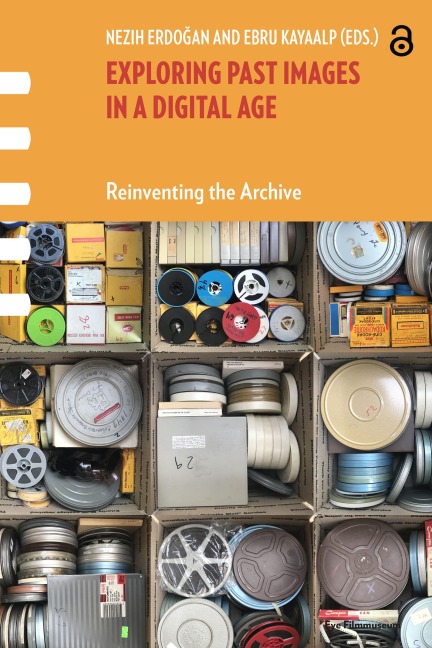
Film archives are fast spreading around the world, and with them issues surrounding archival digitisation, artistic appropriation, and academic reinterpretation of film material that demand scholarly attention. Exploring Past Images in a Digital Age: Reinventing the Archive aims to fill this demand with a thought-provoking collection of original articles contributed by renowned scholars, archivists, and artists. It urges the reader to "forget" standard ways of thinking about film archives and come to grips with the challenges of analysing and recontextualising an area in transit from the analogue to the digital. The book not only throws light on unexplored issues related to film archives but also introduces unconventional approaches and alternative sources for scholarly research and a vast range of artistic possibilities.
Nezih Erdogan has published articles and book chapters on Turkish popular cinema, and the early years of cinema in Istanbul. He is currently working at Istanbul Istinye University. His articles are published in Screen, New Cinemas, and Participations. Ebru Kayaalp is a cultural anthropologist currently working at Yeditepe University, Istanbul. Her articles are published inRegulation and Governance, Ethnologie Française, Social Anthropology, Health, Risk and Society and Environment and Planning E: Nature and Space .
Acknowledgements, Introduction: The Joys of Forgetting, Reinventing and Coping with the Archive Fever, New Frontiers? Between Absence and Presence of Archives, What Are Film Archives For? (and why we need them to change) or: Adventures in the Archive World, Viewing The Ottoman Land in Early Travel Films, How Social Media Platforms Replace Film Archives When There are No Archives , Intersecting Paths of Eveline T. Scott and Traugott Fuchs: How do Private Collections Speak to Us? , The God of Small Films or What You Have Found is not What You Have Lost, The Ethics of Appropriation: Found Footage between Archive and Internet, The Infra-Ordinary Archive: On the Turkish 8 mm Home Movies, Interview with Gustav Deutsch: Categorisation Limits, Old Footage, New Meanings. The Case of The Atomic Café, What the Prints (don't) Tell, Preservation and Resignation: A Study on Survival, Memory and Trust in a Time of Un-framing the Film Heritage, Uncontained Archives of Cinema, Bibliography, Index
Dieses eBook wird im PDF-Format geliefert und ist mit einem Adobe Kopierschutz (DRM) versehen. Sie können dieses eBook mit allen Geräten lesen, die das PDF-Format und den Adobe Kopierschutz (DRM) unterstützen.
Zum Beispiel mit den folgenden Geräten:
• tolino Reader
Laden Sie das eBook direkt über den Reader-Shop auf dem tolino herunter oder übertragen Sie das eBook auf Ihren tolino mit einer kostenlosen Software wie beispielsweise Adobe Digital Editions.
• Sony Reader & andere eBook Reader
Laden Sie das eBook direkt über den Reader-Shop herunter oder übertragen Sie das eBook mit der kostenlosen Software Sony READER FOR PC/Mac oder Adobe Digital Editions auf ein Standard-Lesegeräte mit epub- und Adobe DRM-Unterstützung.
• Tablets & Smartphones
Möchten Sie dieses eBook auf Ihrem Smartphone oder Tablet lesen, finden Sie hier unsere kostenlose Lese-App für iPhone/iPad und Android Smartphone/Tablets.
• PC & Mac
Lesen Sie das eBook direkt nach dem Herunterladen mit einer kostenlosen Lesesoftware, beispielsweise Adobe Digital Editions, Sony READER FOR PC/Mac oder direkt über Ihre eBook-Bibliothek in Ihrem Konto unter „Meine eBooks“ - „online lesen“.
Schalten Sie das eBook mit Ihrer persönlichen Adobe ID auf bis zu sechs Geräten gleichzeitig frei.
Bitte beachten Sie, dass die Kindle-Geräte das Format nicht unterstützen und dieses eBook somit nicht auf Kindle-Geräten lesbar ist.