Und dann auf "Zum Home-Bildschirm [+]".

Stöbern
genialokal zum Startbildschirm hinzufügen
Installieren Sie die genialokal App auf Ihrem Startbildschirm für einen schnellen Zugriff und eine komfortable Nutzung.
Installieren Sie die genialokal App auf Ihrem Startbildschirm für einen schnellen Zugriff und eine komfortable Nutzung.

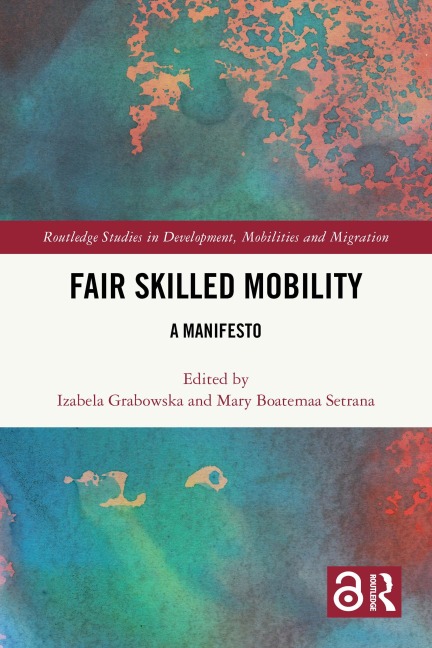
This book sets out a new approach to the global flow of skilled migration, one based on ethical, fair, balanced and sustainable frameworks. Instead of focusing on human capital loss and 'brain drain', the book argues that we should look towards mutually beneficial outcomes. In a world where demographic shifts, rapid technological advancements connected to automation and AI-enhancement, and evolving economic landscapes are reshaping labour markets, this book serves as a guide for 'doing' skilled migration, highlighting shared development, social inclusion and economic resilience opportunities. Seeking to provoke and inspire policymakers, researchers and practitioners, the book sets out a manifesto for transparent, fair and sustainable migration skill infrastructure, based on 13 theses. Based on extensive original data from across the Link4Skills consortium and its sister projects GS4S and SKILLS4JUSTICE across at least 15 countries of origin and 15 countries of destinations, the book addresses critical issues such as the depletion of labour markets in origin countries and the challenges of skill recognition and labour market integration and retention in destination countries. This important new book will be a breath of fresh air for researchers, practitioners and policymakers looking for possible solutions to global migration skill flow challenges.
Izabela Grabowska is Professor of Social Sciences, Department of Economics, Kozminski University, Poland; Scientific Coordinator of Horizon Europe Link4Skills; and Director of Centre for Research on Social Change and Human Mobility (CRASH). Mary Boatemaa Setrana is an Associate Professor at the Centre for Migration Studies, University of Ghana.
Introduction PART I. Migration skill corridors, skill mobility and talent partnerships and ethical recruitment 1 Migration Skill Corridors 2 Skills Mobility Partnerships: Addressing global skills shortages more fairly? 3 Pursuing an ethical labour migration process in transnational recruitment PART II. Empirical pathways of skill mobility: Case studies across continents 4 Reciprocal skill exchange mechanisms as a strategy to mitigate skill flow and promote mutual development: The case of Ghana 5 Who bears the costs for vocational or academic training and education? The case of Germany's skilled migration programmes 6 Bilateral labour agreements and migrant worker protection: The Philippine experience 7 The role of stakeholder engagement in skill corridors: The case of Canada 8 The impact of Russia's full-scale invasion on Ukrainian-Polish and Ukrainian-German migration skill corridors 9 Mobilising skilled people abroad: A strategic challenge for Morocco 10 Navigating skill flow: The case of India PART III. Optimum allocation of skills of migrants, skill recognition and AI-assisted skill navigation 11 Optimum allocation of skills of migrants and automation 12 Aligning skill formation and mobility strategies with sustainability goals 13 AI-driven decision support for fair migration 14 Conclusions and policy directions