Und dann auf "Zum Home-Bildschirm [+]".

Stöbern
genialokal zum Startbildschirm hinzufügen
Installieren Sie die genialokal App auf Ihrem Startbildschirm für einen schnellen Zugriff und eine komfortable Nutzung.
Installieren Sie die genialokal App auf Ihrem Startbildschirm für einen schnellen Zugriff und eine komfortable Nutzung.


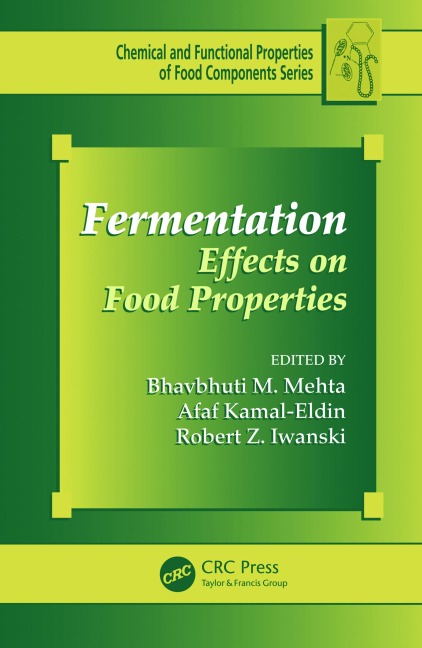
A large variety of food products all over the world are prepared by the fermentation of various raw materials. Fermentation: Effects on Food Properties explores the role of fermentation reactions in the chemical, functional, and sensory properties of food components as well as their effect on food component content and biological activity. Emphasizing the various chemical changes that take place during processing, both pre- and post-fermentation, the book explores: - The complex microbial community in fermented foods - The generation of the flavor and aroma compounds in fermented foods - The effect of fermentation on the rheological properties and the color of foods - The effect of fermentation on bioactivities of foods - How microorganisms during fermentation can remove or detoxify antinutritional compounds in raw foods - The fortification of products derived from fermentation processes and technical issues in the production and distribution of such foods - Fermentation processes for cereals, legumes, vegetables, dairy products, seafood, and meat - Food safety and adherence to the Hazard Analysis and Critical Control Points (HACCP) principles Mastering today's art of fermentation processes requires detailed knowledge of food raw materials, microbiology, enzymology, chemistry/biochemistry, physics, engineering, and technology. This volume is an important starting point in understanding the process. Presented in concise, accessible chapters contributed by food experts, the book contains ample references to enhance further, more detailed exploration of this critical topic as we search for ways to enhance food quality for better health.
Bhavbhuti M. Mehta is an assistant professor in the Dairy Chemistry Department, Sheth M.C. College of Dairy Science at Anand Agricultural University, Anand Gujarat, India. Presently, he is pursuing his Ph.D. in the field of Dairy Chemistry. He teaches various subjects on dairy and food chemistry at undergraduate as well as at the post- graduate level. His major specialty is on various occurring physico-chemical changes during milk and milk product processing and food chemistry in general. He is an associate editor of the International Journal of Dairy Technology and referee/reviewer of a number of journals. He published 25 technical research and review papers, booklets, abstracts, and monographs in national as well as international journals, seminars, and conferences. Afaf Kamal-Eldin is a professor of food science at the United Arab Emirates University in Al-Ain, UAE. Her major specialty is on the chemistry, biochemistry and nutrition related to bioactive compounds and to food chemistry in general. She is a member of the editorial boards of a number of journals and has edited/co-edited four books published by the American Oil Chemists' Society press. She has published 150 original publications and 30 reviews and book chapters in addition to a large number of conference abstracts. Afaf is conducting research and teaching in the area of food for health and has supervised a large number of M.Sc. and Ph.D. theses. Robert Z. Iwanski is an assistant professor in the Department of Food Technology at the West Pomeranian University of Technology in Szczecin, Poland. His main research interest is on the effect of lactic acid bacteria and fermentation processes on the rheological properties of various species of bread baked from conventional and unconventional types of flour. Dr. Iwanski is the author of 15 original publications and has presented numerous conference papers. As an expert of
Introduction. Complex Microbial Communities as Part of Fermented Food Ecosystems and Beneficial Properties. The Role of Fermentation Reactions in the Generation of Flavor and Aroma of Foods. Effect of Fermentation Reactions on Rheological Properties of Foods. The Role of Fermentation Reactions in Changing the Color of Foods. The Role of Fermentation in Providing Biologically Active Compounds for the Human Organism. The Role of Fermentation in the Elimination of Harmful Components Present in Food Raw Materials. Fortification Involving Products Derived from Fermentation Processes. Fermented Cereal and Legume Products. Fermented Vegetables Products. Fermented Dairy Products. Fermented Seafood Products. Fermented Meat Products. Process Control in Food Fermentation. Final Remarks. Index.
Dieses eBook wird im PDF-Format geliefert und ist mit einem Adobe Kopierschutz (DRM) versehen. Sie können dieses eBook mit allen Geräten lesen, die das PDF-Format und den Adobe Kopierschutz (DRM) unterstützen.
Zum Beispiel mit den folgenden Geräten:
• tolino Reader
Laden Sie das eBook direkt über den Reader-Shop auf dem tolino herunter oder übertragen Sie das eBook auf Ihren tolino mit einer kostenlosen Software wie beispielsweise Adobe Digital Editions.
• Sony Reader & andere eBook Reader
Laden Sie das eBook direkt über den Reader-Shop herunter oder übertragen Sie das eBook mit der kostenlosen Software Sony READER FOR PC/Mac oder Adobe Digital Editions auf ein Standard-Lesegeräte mit epub- und Adobe DRM-Unterstützung.
• Tablets & Smartphones
Möchten Sie dieses eBook auf Ihrem Smartphone oder Tablet lesen, finden Sie hier unsere kostenlose Lese-App für iPhone/iPad und Android Smartphone/Tablets.
• PC & Mac
Lesen Sie das eBook direkt nach dem Herunterladen mit einer kostenlosen Lesesoftware, beispielsweise Adobe Digital Editions, Sony READER FOR PC/Mac oder direkt über Ihre eBook-Bibliothek in Ihrem Konto unter „Meine eBooks“ - „online lesen“.
Schalten Sie das eBook mit Ihrer persönlichen Adobe ID auf bis zu sechs Geräten gleichzeitig frei.
Bitte beachten Sie, dass die Kindle-Geräte das Format nicht unterstützen und dieses eBook somit nicht auf Kindle-Geräten lesbar ist.