Und dann auf "Zum Home-Bildschirm [+]".

Stöbern
genialokal zum Startbildschirm hinzufügen
Installieren Sie die genialokal App auf Ihrem Startbildschirm für einen schnellen Zugriff und eine komfortable Nutzung.
Installieren Sie die genialokal App auf Ihrem Startbildschirm für einen schnellen Zugriff und eine komfortable Nutzung.
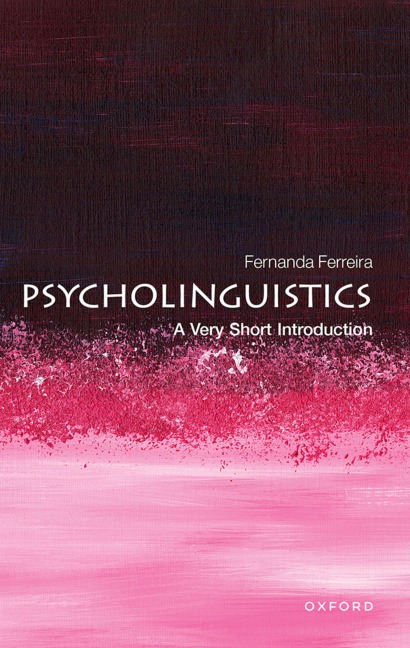
Very Short Introductions: Brilliant, Sharp, Inspiring This Very Short Introduction to psycholinguistics is an accessible and engaging description of how people use language. Talking and understanding language probably seem like simple and straightforward skills, but research in psycholinguistics has shown that complex computations take place behind the scenes when you communicate with others. Recent debates concerning how AI tools such as ChatGPT work highlight some of these core questions about the language faculty and how it is that humans comprehend, produce, and learn language. The book begins with an overview of the fields of linguistics and psychology and how they have cooperated from the earliest days of psycholinguistics. It then considers how words and sentences are interpreted, how they are generated, and how human conversation is coordinated. The book also reviews research on reading, sign language processing, and bilingualism. The closing chapter summarizes where the field is heading, with a brief discussion of Large Language Models, the role of Information Theory, the growing emphasis on the neurobiology of language, and the increasing diversity of research in psycholinguistics, both with respect to the languages studied and the backgrounds and histories of language researchers. Issues that are considered include: (1) How successfully do people adapt what they say to the needs of their audience when they design their phrases and sentences? (2) How do people read languages such as Chinese, which do not use an alphabetic writing system? (3) Do the size and efficiency of a person's memory affect how effectively people use language? (4) Is bilingualism cognitively advantageous, and if so, what are the mechanisms that lead to this so-called bilingual advantage? And (5) Do users of sign language gesture when they communicate? These questions and more are answered using insights from the latest research based on methods from the cognitive and neurosciences. ABOUT THE SERIES: The Very Short Introductions series from Oxford University Press contains hundreds of titles in almost every subject area. These pocket-sized books are the perfect way to get ahead in a new subject quickly. Our expert authors combine facts, analysis, perspective, new ideas, and enthusiasm to make interesting and challenging topics highly readable.
Fernanda Ferreira is Professor of Psychology and a member of the Graduate Program in Linguistics at the University of California, Davis. She was formerly Chair of Language and Cognition at the University of Edinburgh. She is founder and Editor-in-Chief of the journal Glossa Psycholinguistics, and has previously served as Editor-in-Chief of the Journal of Experimental Psychology: General. She co-edited with John Henderson the academic text The Interface of Language, Vision, and Action: Eye Movements and the Visual World (2004).
- 1: The relationship between psychology and linguistics - 2: Understanding Language - 3: Producing Language - 4: Conversation and dialogue - 5: Reading - 6: Individual Differences in Language Processing - 7: Being bilingual - 8: The Psycholinguistics of Sign Language and Gesture - 9: What's Next?
Dieses eBook wird im PDF-Format geliefert und ist mit einem Adobe Kopierschutz (DRM) versehen. Sie können dieses eBook mit allen Geräten lesen, die das PDF-Format und den Adobe Kopierschutz (DRM) unterstützen.
Zum Beispiel mit den folgenden Geräten:
• tolino Reader
Laden Sie das eBook direkt über den Reader-Shop auf dem tolino herunter oder übertragen Sie das eBook auf Ihren tolino mit einer kostenlosen Software wie beispielsweise Adobe Digital Editions.
• Sony Reader & andere eBook Reader
Laden Sie das eBook direkt über den Reader-Shop herunter oder übertragen Sie das eBook mit der kostenlosen Software Sony READER FOR PC/Mac oder Adobe Digital Editions auf ein Standard-Lesegeräte mit epub- und Adobe DRM-Unterstützung.
• Tablets & Smartphones
Möchten Sie dieses eBook auf Ihrem Smartphone oder Tablet lesen, finden Sie hier unsere kostenlose Lese-App für iPhone/iPad und Android Smartphone/Tablets.
• PC & Mac
Lesen Sie das eBook direkt nach dem Herunterladen mit einer kostenlosen Lesesoftware, beispielsweise Adobe Digital Editions, Sony READER FOR PC/Mac oder direkt über Ihre eBook-Bibliothek in Ihrem Konto unter „Meine eBooks“ - „online lesen“.
Schalten Sie das eBook mit Ihrer persönlichen Adobe ID auf bis zu sechs Geräten gleichzeitig frei.
Bitte beachten Sie, dass die Kindle-Geräte das Format nicht unterstützen und dieses eBook somit nicht auf Kindle-Geräten lesbar ist.