Und dann auf "Zum Home-Bildschirm [+]".

Stöbern
genialokal zum Startbildschirm hinzufügen
Installieren Sie die genialokal App auf Ihrem Startbildschirm für einen schnellen Zugriff und eine komfortable Nutzung.
Installieren Sie die genialokal App auf Ihrem Startbildschirm für einen schnellen Zugriff und eine komfortable Nutzung.
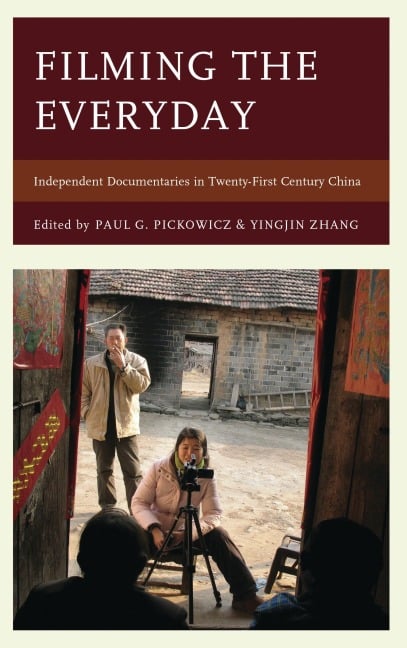
This cutting-edge book examines the rapidly developing scene of Chinese independent documentary, arguably the most courageous player in contemporary Chinese visual culture. The authors explore two areas that are of special interest to China studies and film studies, respectively: (1) filming the everyday in twenty-first-century China to foreground contestation and diversity and (2) exploring the aesthetic of remembering in an embodied documentary practice, which turns the gaze on artists themselves and encourages the viewer's engagement with the filmed subjects and environment. Highlighting documentary contestation in China, the book traces its cacophony of expressions, some of it featuring confrontations with domineering elites, some of it highlighting negotiations among the independent filmmakers themselves. Their goal is not a "movement" that seeks to establish and impose a single truth, but rather a creative dynamic that fosters a community of tolerance and respects diverse forms of expression. Independent documentary is quite literally a moving target that is witnessing ongoing and widening diversity and complexity when it comes to directors, themes, aesthetics, human subjects, audiences, and impact. The authors stress the enormous potential of cultural production that features non-elites (including amateurs) and that dwells on the everyday, the bottom up, the grassroots, the seemingly mundane, and the apparently marginal. The book's emphasis on contemporary issues and its discussion of aesthetic experiments will appeal to all readers interested in China's culture, media, politics, and society.
Paul G. Pickowicz is Distinguished Professor Emeritus of History and Chinese Studies at the University of California, San Diego. Yingjin Zhang is Distinguished Professor of Literature and Chinese Studies at the University of California, San Diego.
Acknowledgments
Part I: Cultural Context
1. Introduction: Documenting China Independently, by Paul G. Pickowicz and Yingjin Zhang
2. Who's Afraid of the Documentary Camera? Refiguring Reality, Memory, and Power in Chinese Independent Documentary, by Yingjin Zhang
3. For Whom Does the Director Speak? The Ethics of Representation in Documentary Film Criticism, by Yomi Braester,
Part II: Rural Reconfigurations
4. From Root-Searching to Grassroots: Returning to the Countryside in Contemporary Chinese Fiction and Independent Documentary Film, by Angie Chau
5. Zou Xueping's Postsocialist Homecoming, by Paul G. Pickowicz
Part III: Embodied Filmmaking
6. Looking Back while Marching Forward: Reconfiguration of Selfhood in the Folk Memory Project, by Tong Wang
7. The Memory Projectand Other Ways of Knowing: Filmmaking, Affect, and Embodied Knowledge, by Laura Kissel
Part IV: Documentary Enactments
8. Gendering Intersubjectivity in New Chinese Documentary: Feminist Multiplicity and Vulnerable Masculinity in Postsocialist China, by Alvin Wong
9. From Bumming to Roaming: Xu Tong's The Drifters Trilogy, by Yiman Wang
10. Documenting through Reenacting: Revisiting the Performative Mode in Chinese Independent Documentaries, by Hongjian Wang
Appendix: Michael Berry, "Memory/Document: In Dialogue with Wu Wenguang's Memory Project"
Documentary Filmography
About the Contributors
Dieses eBook wird im PDF-Format geliefert und ist mit einem Adobe Kopierschutz (DRM) versehen. Sie können dieses eBook mit allen Geräten lesen, die das PDF-Format und den Adobe Kopierschutz (DRM) unterstützen.
Zum Beispiel mit den folgenden Geräten:
• tolino Reader
Laden Sie das eBook direkt über den Reader-Shop auf dem tolino herunter oder übertragen Sie das eBook auf Ihren tolino mit einer kostenlosen Software wie beispielsweise Adobe Digital Editions.
• Sony Reader & andere eBook Reader
Laden Sie das eBook direkt über den Reader-Shop herunter oder übertragen Sie das eBook mit der kostenlosen Software Sony READER FOR PC/Mac oder Adobe Digital Editions auf ein Standard-Lesegeräte mit epub- und Adobe DRM-Unterstützung.
• Tablets & Smartphones
Möchten Sie dieses eBook auf Ihrem Smartphone oder Tablet lesen, finden Sie hier unsere kostenlose Lese-App für iPhone/iPad und Android Smartphone/Tablets.
• PC & Mac
Lesen Sie das eBook direkt nach dem Herunterladen mit einer kostenlosen Lesesoftware, beispielsweise Adobe Digital Editions, Sony READER FOR PC/Mac oder direkt über Ihre eBook-Bibliothek in Ihrem Konto unter „Meine eBooks“ - „online lesen“.
Schalten Sie das eBook mit Ihrer persönlichen Adobe ID auf bis zu sechs Geräten gleichzeitig frei.
Bitte beachten Sie, dass die Kindle-Geräte das Format nicht unterstützen und dieses eBook somit nicht auf Kindle-Geräten lesbar ist.